Topical THC rarely causes sleepiness because it doesn’t enter the bloodstream or reach the brain, unless formulated as a transdermal. Most users feel relief without fatigue.
However, pain relief may help you relax, making it easier to fall asleep.
If you’re wondering whether applying THC cream before bed will knock you out, or worse, make you too tired to function during the day, you’re not alone.
People often confuse topicals with transdermals, worry about drug tests, or fear unexpected drowsiness.
But most of those fears vanish with a little clarity:
- Microdosing for focus or mood? Topicals stay local, no interference.
- Recreational user? Topicals won’t get you high unless it’s transdermal.
- Managing anxiety or depression? Pain relief may help calm your system, improving sleep without sedation.
- Avoiding the taste of raw mushrooms? Topicals are a non-digestive option for relaxing rituals.
- Chasing wellness trends? Topical THC aligns beautifully, no intoxication, only targeted support.
Still wondering how to choose the right THC product? Curious about which forms actually affect sleep, or how topicals compare to edibles, vapes, or transdermals?
We’ll break that down, along with what you need to know about safety, side effects, effectiveness, and how to read the label right.
And if you’re ready for real, restful comfort without the high, Sweet Releaf’s Comfort+ body butter and Ayurvedic roll-ons offer deep, localized relief that’s trusted by chronic pain warriors and sleep seekers alike.
Want to know how it all works? We’ve got you covered, keep reading.
What Is Topical THC and How Does It Work?
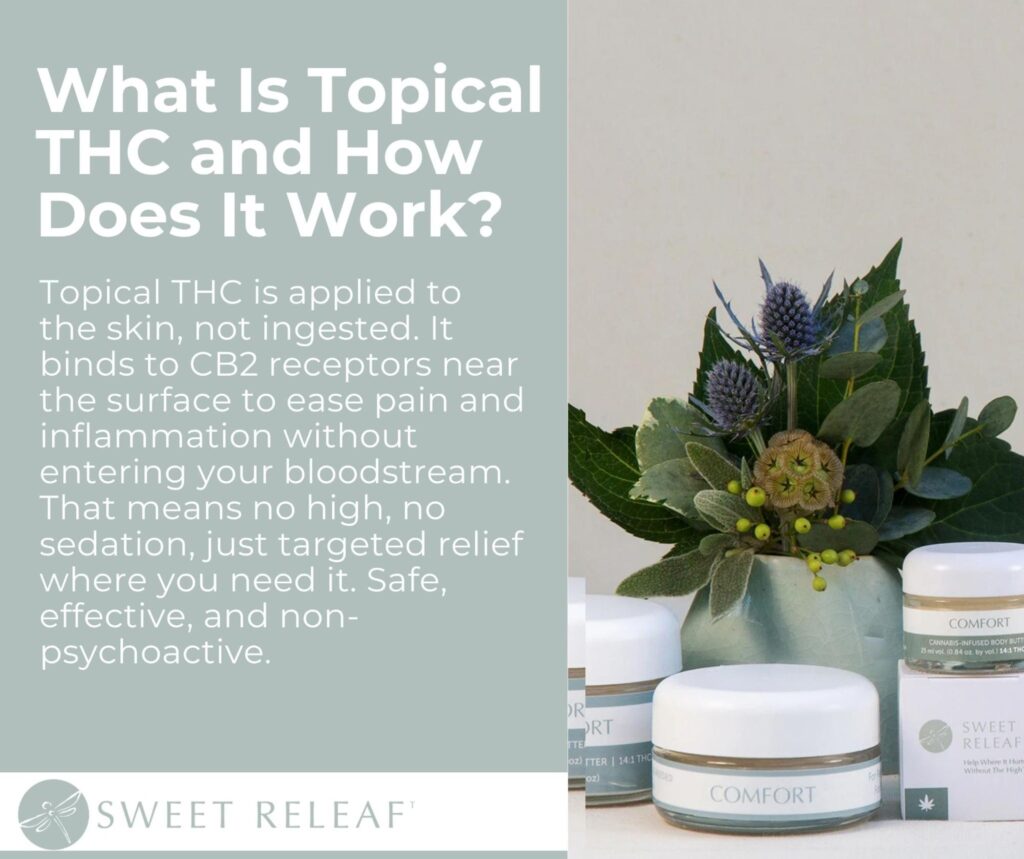
Topical THC refers to cannabis-infused products like creams, oils, salves, or balms that are applied directly to the skin.
Unlike edibles or tinctures, which are absorbed through the digestive tract or mucous membranes, topicals interact only with the skin’s outer layers and localized tissues underneath.
Here’s how it works: your skin houses a dense network of CB2 receptors, part of the body’s endocannabinoid system, designed to interact with cannabinoids like THC.
When applied topically, THC binds to these receptors, helping modulate inflammation, tension, and localized pain. But, and this is key, it does not travel through your bloodstream or reach the brain.
So no, you won’t get high. There’s no altered mental state, no euphoria, and no impairment. This is why topicals are considered non-psychoactive, even when they contain high levels of THC.
That said, not all skin-applied cannabis products are created equal. Transdermals, often patches or products with chemical enhancers, are designed to penetrate deeper and enter the bloodstream.
These can have systemic effects, including drowsiness or even a mild high, depending on dosage.
When: Unless it’s labeled as a transdermal, topical THC stays where you put it. You’ll feel relief in your shoulder, knee, or back, but you won’t feel it in your head.
Can THC Cream Make You Sleepy? Here’s the Truth
Localized Relief vs. Systemic Sedation
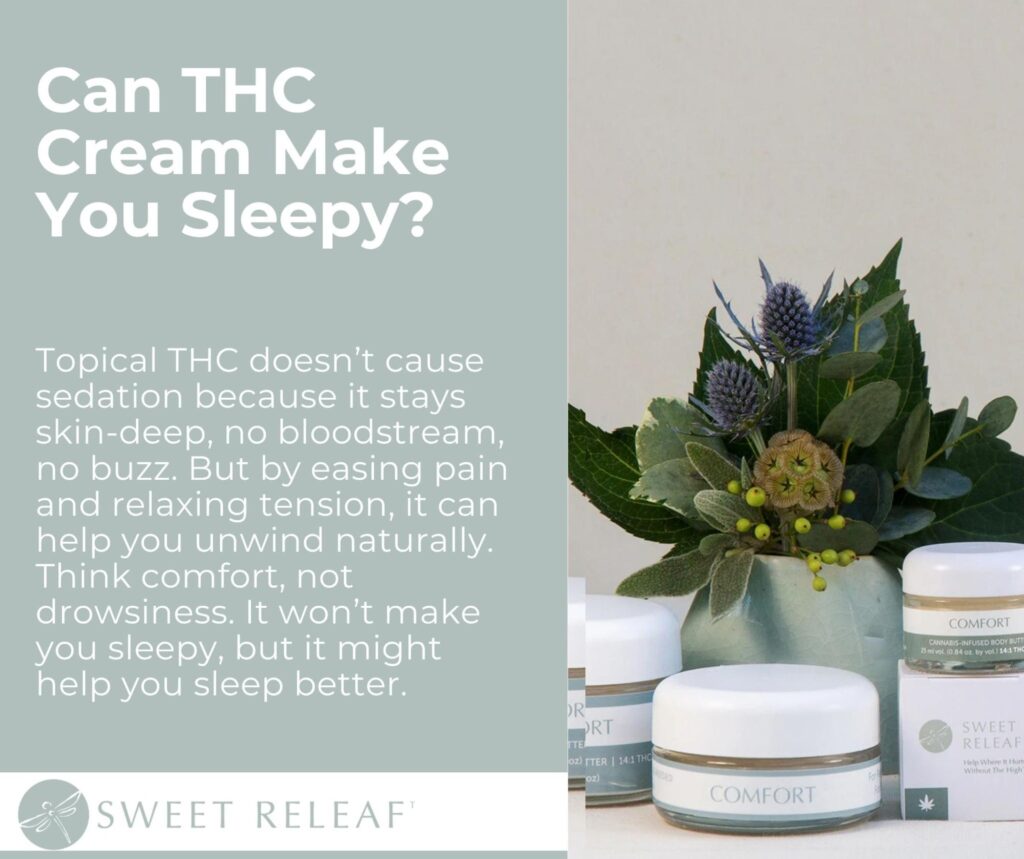
When you apply a THC cream, what you’re really getting is local relief. These products work where you need them, on sore joints, tight muscles, or inflamed tissues, not in your bloodstream.
That means they won’t sedate you in the way edibles, tinctures, or vape pens can.
That said, there’s a nuance worth mentioning: pain relief itself can feel like relaxation.
And if you’re using a topical before bed, especially in a quiet room, lights low, maybe after a warm shower, your body may interpret that release of tension as a cue to wind down.
It’s not sedation, but it’s definitely a shift toward restfulness.
In other words, THC creams don’t make you sleepy, they make you comfortable. And comfort is often what we need to fall asleep naturally.
Who Might Experience Sleepiness?
Could a THC topical ever cause drowsiness? It’s rare, but not impossible, and usually only under very specific circumstances.
Your unique body chemistry, existing health conditions, or expectations might influence your experience. Here’s how it can vary:
- Microdosing for focus or mood: Topicals won’t interfere, they don’t enter your bloodstream, so your mental clarity stays intact.
- Using THC for anxiety or depression: Relief from physical discomfort may indirectly reduce anxiety, creating a calmer mental state that supports sleep.
- Following wellness or psychedelic trends: Topicals align beautifully with holistic, mindful self-care routines. They offer support without any psychoactive risks.
- Avoiding oral THC or mushrooms: If you’re steering clear of ingestibles for health or taste reasons, topicals provide a no-nonsense alternative with zero “high.”
- Recreational user with THC tolerance: You may not feel much unless you expect a full-body effect, because these don’t deliver that. They’re not designed for a buzz.
So, can a THC cream make you sleepy? Not in the direct way many people imagine, but by reducing pain and calming the body, it might help you ease into sleep more naturally.
Addressing the Most Common Concerns
Will I Feel Drowsy After Using a THC Cream?
The short answer is no, THC creams are not sedatives. Sedation is more typical of THC consumed through edibles or tinctures, which enter your bloodstream and interact with your central nervous system.
Topicals, on the other hand, stay local.
But if pain is what’s making you feel drained or irritable, easing that discomfort can feel like a weight being lifted.
You might find yourself exhaling more deeply, loosening up, or naturally getting sleepy, not because the cream is putting you to sleep, but because your body finally can.
Can THC Enter My Bloodstream Through a Cream?
Not unless it’s specifically formulated as a transdermal. Standard
If it’s a patch, gel, or cream labeled “transdermal,” it’s designed to go deeper, and potentially cause full-body effects, including drowsiness or testable THC levels.
What If I Already Feel Tired? Will It Make Me Sleepier?
Not unless you’re mistaking comfort for fatigue. When your body is less tense and sore, it’s normal to feel more grounded, more still.
Some people describe this as “melting into bed” or feeling “ready to rest,” but that’s very different from feeling sedated.
What you’re experiencing is not fatigue, it’s relief. And that’s exactly the kind of tired we want: the kind that lets you drift off, not the kind that knocks you out.
When Topical THC Can Help You Sleep (Indirectly)
Let’s be clear, topical THC is not a sleeping pill. But for many of us, sleep is less about sedation and more about comfort.
If you’re lying awake at night with throbbing knees, a tight lower back, or the kind of soreness that keeps you shifting under the covers, relief is the gateway to rest.
That’s where THC topicals shine. By calming inflammation and easing tension right where it hurts, they help your body downshift from discomfort into stillness.
And sometimes, that’s all it takes to finally fall asleep.
Even the act of applying a cream or body butter can be part of the solution. It becomes a bedtime ritual: slowing down, tuning in, and massaging tension out of your muscles.
Add in essential oils like lavender, chamomile, or sandalwood, and you’re engaging beyond only your body, you’re calming your mind too.
Stories From the Community
We’ve heard it again and again, not only from Sweet Releaf customers, but from thousands of people exploring cannabis topicals: “It’s not that it made me sleepy. It’s that I wasn’t in pain anymore.”
One longtime Sweet Releaf user told us she finally made it through the night without waking up from post-surgery aches.
Another said our Comfort+ Extra Strength body butter helped her fall asleep after weeks of restless tossing, “not because I was high or sedated, but because my body stopped screaming.”
In our experience, that kind of quiet comfort is what truly sets topicals apart. They don’t make you sleep, they make sleep possible.
Which Forms of THC Make You Sleepy?
If your goal is to understand which THC products can actually make you feel drowsy, it helps to know how each delivery method interacts with your body.
Not all THC is created equal, especially when it comes to sedation.
- Topicals: These don’t enter the bloodstream and won’t make you sleepy. They provide localized relief only. Think of them as a calming tool, not a knock-out one.
- Transdermals: These are the exception. Designed to penetrate the skin barrier, transdermal patches or creams can deliver THC into your bloodstream. That means they can cause sedation, especially if used at night or in high concentrations.
- Edibles & Capsules (including RSO): These are your most sedating options. When THC is metabolized by the liver (as it is with edibles), it becomes more potent and long-lasting. RSO (Rick Simpson Oil), in particular, is known for its heavy, full-body effects and is often used for sleep or chronic pain.
- Vapes or Tinctures: These vary widely depending on the strain and dose. Indica strains and products high in myrcene or linalool tend to be more calming, while sativa-leaning formulas may be more stimulating. Tinctures taken sublingually can be fast-acting and useful for nighttime wind-down, if formulated for that purpose.
So, if you’re trying to avoid drowsiness but still want pain relief? Stick with traditional topicals.
If sleep is your mission, look toward carefully dosed transdermals or nighttime edibles, and always start low, go slow, and pay attention to how your body responds.
What to Look for in a Topical THC Product
Choosing the right THC topical is not only about THC content but about the whole experience: how it feels on your skin, how it interacts with your body, and whether it delivers real relief without compromise.
Here’s what I tell anyone looking for a topical that actually works:
- High-Potency THC (Not Only CBD!): Many products on the market rely heavily on CBD with only trace amounts of THC. That might be fine for light discomfort, but if you’re managing chronic pain or stubborn tension, you need a topical with real levels of Delta-9 THC. It’s the compound most responsible for localized pain relief when used in a non-psychoactive form like a topical.
- Full-Spectrum Cannabis Oil: Isolates and distillates strip away the supporting cast, terpenes, minor cannabinoids, flavonoids. A full-spectrum formula delivers the entourage effect, where all those plant compounds work together to increase efficacy, especially when it comes to pain relief and calming the nervous system.
- Non-Greasy, Quick-Absorbing Emulsion: You don’t want to feel sticky, shiny, or smell like a bong. Emulsions, like the ones we make at Sweet Releaf, are cosmetically elegant, silky smooth, and absorb deep into the skin fast. Unlike greasy salves, they actually penetrate to where the relief is needed.
- Calming Essential Oils: Ingredients like lavender, chamomile, frankincense, and sandalwood don’t only smell nice, they’re proven to soothe the senses and promote a calming effect, especially when applied during nighttime routines.
- No Synthetic Preservatives or Misleading Marketing: Transparency matters. A lot of topicals get away with vague labeling or flashy wellness claims. Look for third-party lab testing, clear THC/CBD content, and real ingredient lists you can pronounce.
We built our formulas around these values, because pain deserves better than guesswork.
Ready to Try a Non-Drowsy Topical That Actually Works?
If you’ve made it this far, chances are you’re searching for real relief, something that soothes without sedating, that supports your sleep without stealing your clarity.
Many of our customers come to us skeptical. They’ve tried CBD creams that didn’t do much. They’ve worried about getting high or feeling groggy.
They’ve read labels, spent the money, and still ended up uncomfortable at night.
That’s why we created Sweet Releaf.
Comfort+ Extra Strength Body Butter: A high-THC, full-spectrum emulsion that goes deep, fast. Designed to relieve stubborn pain, reduce inflammation, and restore nighttime comfort. No high, no haze, only rest.
Comfort Cools or Warms Roll-On: Ideal for post-hike joints or end-of-day back tension. Cooling when you need calm.
Warming when you need flow. Easy to apply, no mess, perfect for travel or bedside.
We’ve heard customers say things like, “I slept better than I had in weeks,” and “I forgot what it felt like to fall asleep without tossing and turning.”
Not because our topicals sedate, but because they work.