THC oil typically lasts 1-3 years if stored in a cool, dark, airtight container. Heat, light, and air speed up potency loss and rancidity.
Fresh oil smells earthy or herbal; if it tastes rancid or smells off, it’s time to replace it.
Knowing how long THC oil lasts is not only about a date on the label but preserving its potency, flavor, and safety so you get the benefits you paid for.
Below, we’ll cover how to spot spoilage, extend shelf life, and answer common questions like “Does THC have an expiry date?” and “Is it safe to use old oil?”
If you’re looking for a product designed for lasting therapeutic effectiveness, Sweet Releaf’s high-THC, whole-plant topicals are formulated for potency that stays reliable; day 500 can feel as good as day one.
Keep reading for the full breakdown.
The Real Shelf Life of THC Oil
Medical-grade oils are designed to hold their potency for at least 12-36 months if stored correctly: cool, dark, and sealed against air.
These stability timelines come from batch testing and are reflected in the expiration dates on regulated products.
Full-spectrum concentrates, which retain cannabinoids, terpenes, and flavonoids, can last up to three years when unopened and properly stored.
However, once diluted into tinctures with carrier oils like MCT, hemp seed, or olive, shelf life shortens.
Carrier oils can turn rancid within a year at room temperature, even if the cannabinoids are still chemically stable.
Carrier oil choice matters:
- MCT oil: More resistant to oxidation, offering the longest shelf life.
- Olive oil: Healthy but more prone to flavor change over time.
- Hemp seed oil: Nutrient-rich but oxidizes faster, especially if exposed to light.
In regulated markets, expiry date labeling is part of quality compliance. It’s not only a legal requirement, it’s a consumer safeguard, ensuring the product you open still delivers the relief, flavor, and effects promised on day one.
Factors That Affect How Long THC Oil Stays Good
Even the best cannabis oil is not immune to time. The difference between a bottle that’s as potent a year later and one that’s flat and flavorless often comes down to how it’s made and how it’s stored.
Storage Conditions – The #1 Potency Protector
The three biggest enemies of THC oil are light, heat, and air.
- Light, especially UV exposure, breaks down both cannabinoids and the carrier oil, speeding rancidity.
- Heat above 25°C accelerates oxidation and terpene loss, muting both effects and aroma.
- Air introduces oxygen, which slowly converts THC into CBN, a less psychoactive compound with primarily sedative effects.
Ideal storage conditions keep THC oil in a cool (15–21°C), dark place with minimal temperature fluctuation.
Avoid high humidity, which can encourage microbial growth if even a trace of moisture gets inside.
For occasional users, refrigeration can extend shelf life by slowing oxidation, especially for hemp seed– or olive oil–based tinctures.
Let refrigerated oil come to room temperature before use to preserve consistency.
Extraction Method Matters
CO₂ extraction is considered the gold standard for shelf stability. This solvent-free process yields a clean, pure extract that resists degradation longer.
In contrast, cheaper butane or ethanol extractions can leave trace solvents behind. If not fully removed, these residues can affect flavor, shorten lifespan, and raise safety concerns over time.
Product Formulation Differences
Isolates, pure THC or CBD, are chemically stable and may resist degradation for years, but lack the entourage effect many patients value.
Full-spectrum oils contain a range of cannabinoids and terpenes, which can be more volatile. While they offer richer therapeutic benefits, these compounds are more sensitive to heat and light, requiring stricter storage.
If added flavors or terpenes are part of the formulation, expect them to fade before cannabinoids degrade.
For some users, a flavor change is the first sign the oil’s profile is shifting, even if the potency is still strong.
How to Tell If THC Oil Has Gone Bad
Even the highest-quality THC oil won’t last forever. Over time, cannabinoids degrade, terpenes evaporate, and carrier oils can spoil.
The key is learning to spot when your oil has crossed from simply “aged” into “ineffective” or “unsafe.”
Signs of Potency Loss
- Milder effects than usual: If your usual dose is not delivering the same relief or experience, it may be a sign that THC has partially degraded into less active compounds.
- Fading aroma: Terpenes are often the first to go. A once-vibrant herbal or earthy scent turning faint is a clue that your oil’s therapeutic profile is changing.
Signs of Spoilage
- Rancid smell or taste – This is almost always due to the carrier oil oxidizing, not the cannabinoids themselves. Fresh oil smells clean and herbal; rancid oil can smell sour, metallic, or like stale nuts.
- Cloudiness or separation – Some natural separation is normal, but persistent cloudiness or thick sediment can indicate contamination or breakdown of components.
- Color change – A shift from a bright golden or amber hue to a darker brown suggests oxidation and possible cannabinoid degradation.
Is It Dangerous?
- Expired THC oil is not usually toxic if it’s been stored properly; it’s only less effective.
- Mold or contamination risks arise if moisture enters the container, especially in unregulated or poorly sealed products. If you ever see visible mold or smell anything off, it’s safest to discard it.
How Long Do the Effects Last Once You Take THC Oil?
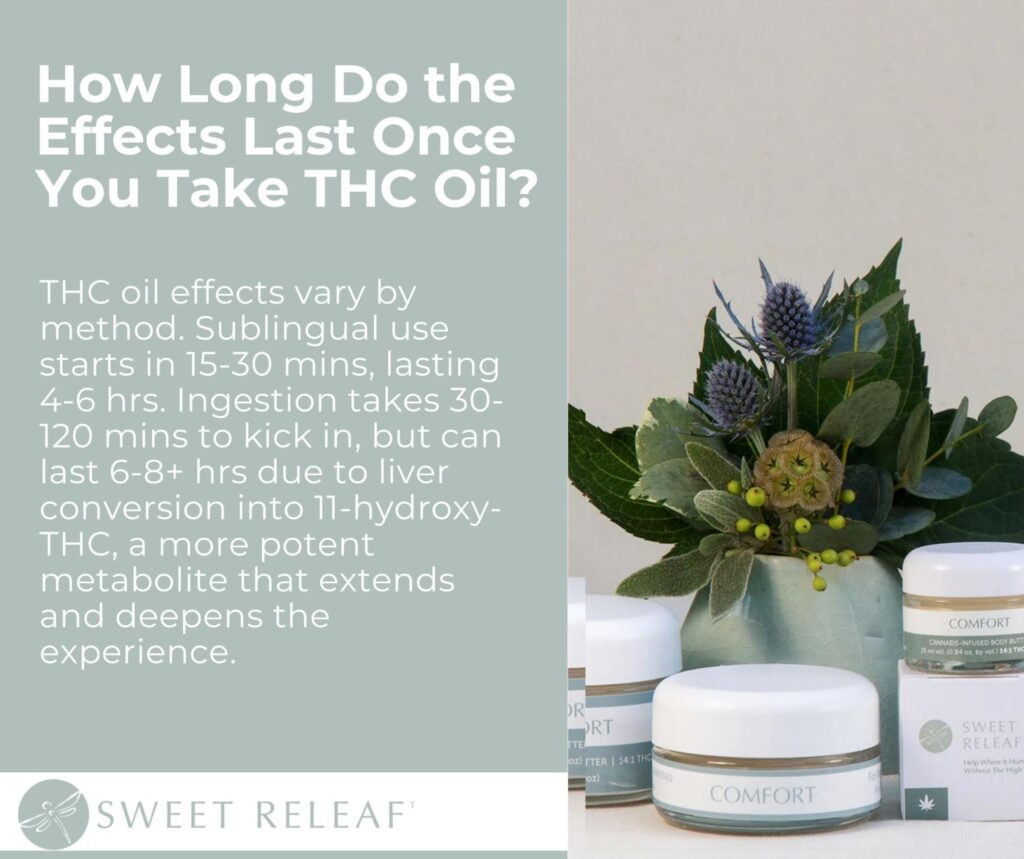
The effects of THC oil depend heavily on how you take it.
- Sublingual use – Placing drops under your tongue allows cannabinoids to absorb directly into your bloodstream through the mucous membranes. You’ll typically feel the first effects in 15–30 minutes, with relief or euphoria lasting 4–6 hours.
- Ingestion – Swallowing THC oil directly or adding it to food means it must pass through the digestive system and liver before entering your bloodstream. This delays onset to 30–120 minutes but extends duration to 6–8+ hours.
Does THC Oil High Last Longer?
Yes, when ingested, THC undergoes a process called first-pass metabolism in the liver, where it’s converted into 11-hydroxy-THC.
This metabolite is more potent and has a longer half-life than delta-9 THC, which is why the effects can last significantly longer than smoking or vaping.
For medical users, this longer duration can mean fewer doses per day and more stable symptom management.
For recreational users, it can provide a sustained experience, though dosing carefully is important to avoid taking too much too soon.
Real-World Insights From Patients and Long-Time Users
For many medical cannabis patients, the appeal of THC oil is its consistency.
When stored properly, each dose delivers the same level of relief day after day, a vital factor for those managing chronic pain, inflammation, or sleep issues.
That reliability is hard to match with smoking or vaping, where potency can fluctuate.
Some long-time users have found THC oil more cost-effective than flower, especially when microdosed. A small measured amount can provide hours of relief, reducing the total product used over time.
One often-overlooked culprit in spoilage? Light exposure. Even if your oil never sits in direct sun, consistent ambient light can slowly degrade both cannabinoids and carrier oils.
A dark, airtight bottle in a closed cabinet makes a big difference.
Practical considerations matter, too, especially for patients who carry oil on the go.
Spillage and breakage risks can be minimized by transferring small amounts into sturdy travel-size containers, avoiding the heartbreak of losing an entire month’s supply to an accident.
Sweet Releaf takes potency preservation seriously.
Our high-THC, non-psychoactive topicals use whole-plant cannabis and emulsion technology to deliver deep, lasting relief without the potency drop-offs that can happen with many other brands over time.
By formulating for both stability and effectiveness, we help ensure your product works as well on the last day of the jar as it did on the first.
How to Store THC Oil to Maximize Value
THC oil is an investment in your wellness, and like any investment, it needs protection. The right storage practices can keep it potent, flavorful, and safe for months or even years.
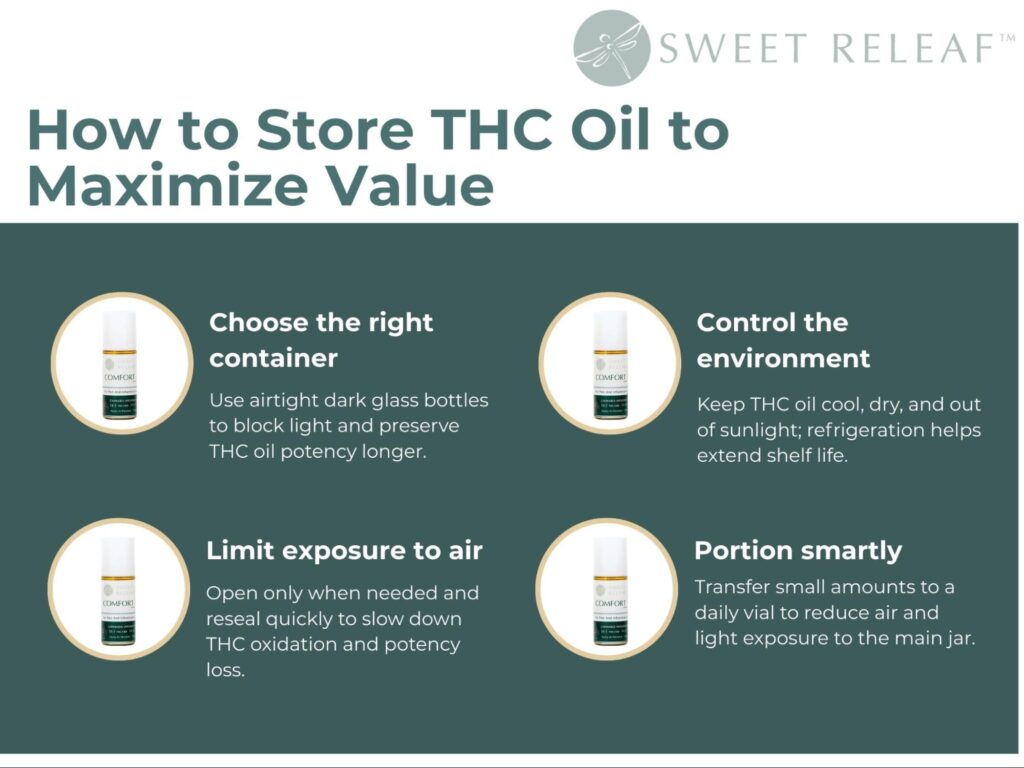
- Choose the right container – Dark glass bottles with airtight seals are the gold standard. They block light, minimize oxygen exposure, and help maintain cannabinoid stability.
- Control the environment – Store in a cool, dark location away from heat sources. For occasional users, refrigeration can further extend shelf life, especially for hemp seed or olive oil-based tinctures.
- Limit exposure to air – Every time you open the bottle, oxygen enters and starts the slow process of THC oxidation. Open only when you need to, and reseal immediately.
- Portion smartly – If you buy in large bottles, transfer a week’s or month’s supply into a smaller, airtight vial for daily use. This reduces how often the main bottle is exposed to air and light.
These small habits can help you avoid the frustration of finding your oil weakened or spoiled before you’ve had the chance to use it all.
Why Sweet Releaf Products Maintain Potency Longer
We design every product with both effectiveness and stability in mind, because relief should last from the first application to the last.
- Whole-plant, full-spectrum formulation – We use the entire cannabis plant, preserving a rich range of cannabinoids and terpenes. Our higher therapeutic THC levels are tailored for meaningful pain relief, even for those who’ve found CBD-only products ineffective.
- Emulsion-based creams – Unlike salves or oils that sit on the surface, our emulsions penetrate deeper into the skin for faster, longer-lasting effects, without the greasy feel.
- Ayurvedic-inspired roll-ons – Available in targeted warming or cooling formulas, these roll-ons blend cannabis with botanical ingredients to soothe, invigorate, or relax where you need it most.
- Always tested, always fresh – Every batch is small-batch crafted, lab-tested, and free from harmful preservatives. That means you get a clean, consistent product every time.
Whether you’re storing for months or using daily, starting with a product designed for lasting effectiveness matters.
Sweet Releaf’s Comfort+ Extra Strength and Ayurvedic roll-ons combine optimal cannabinoid stability with premium natural ingredients, so your relief is as strong on day 500 as it was on day 1.
Common Questions People Ask
Does THC Have an Expiry Date?
Yes, regulated products list an expiry date both for compliance and for quality assurance. The exact shelf life varies by product type, formulation, and storage, but most medical-grade THC oils will remain effective for 1–3 years under optimal conditions.
Is It Safe to Use Old THC Oil?
If the oil has been stored in a cool, dark, airtight container and still smells and tastes fresh, it’s usually safe to use, though the potency may be reduced.
For medical users who rely on consistent dosing, that drop in strength can be the difference between relief and breakthrough symptoms.
Do THC Extracts Expire?
Yes. Cannabinoids naturally degrade over time. THC slowly converts to CBN, terpenes evaporate, and carrier oils can oxidize.
While oils last longer than dried cannabis flower, they will still lose potency and flavor eventually, even under ideal storage.
Is It Safe to Smoke Old THC Oil?
Smoking or vaping degraded oil is not recommended. Oxidation can alter cannabinoids and produce harsh or unpleasant flavors.
If you’re looking for safe, reliable relief, fresh oil or topicals are always the better choice.