Finding the right THC dose for pain relief depends on your condition, tolerance, and delivery method.
Most people start low, around 2.5–5 mg, and adjust upward slowly. Topicals and microdoses may ease pain without intoxication, while higher doses (10-20 mg) may be needed for severe cases.
How dosing can differ by situation:
- Chronic pain relief – Steady, low-to-moderate doses maintain relief without fogginess.
- Post-surgery recovery – Targeted short-term relief; topicals avoid strain on healing tissue.
- Cancer-related pain management – Often requires higher dosing with professional guidance.
- Avoiding opioids – Gradual THC titration with possible CBD pairing.
- Athletic or injury recovery – Microdoses or topicals to curb inflammation without performance loss.
Finding your “sweet spot” means balancing relief with safety, avoiding unwanted side effects, interactions, or a high you don’t want.
The right dose can restore movement, confidence, and quality of life.
If you’re ready to go beyond the numbers, I’ll walk you through science-backed guidelines, expert recommendations, and real-world insights.
I will also review how Sweet Releaf’s THC-forward topicals fit into the picture for fast, non-psychoactive relief.
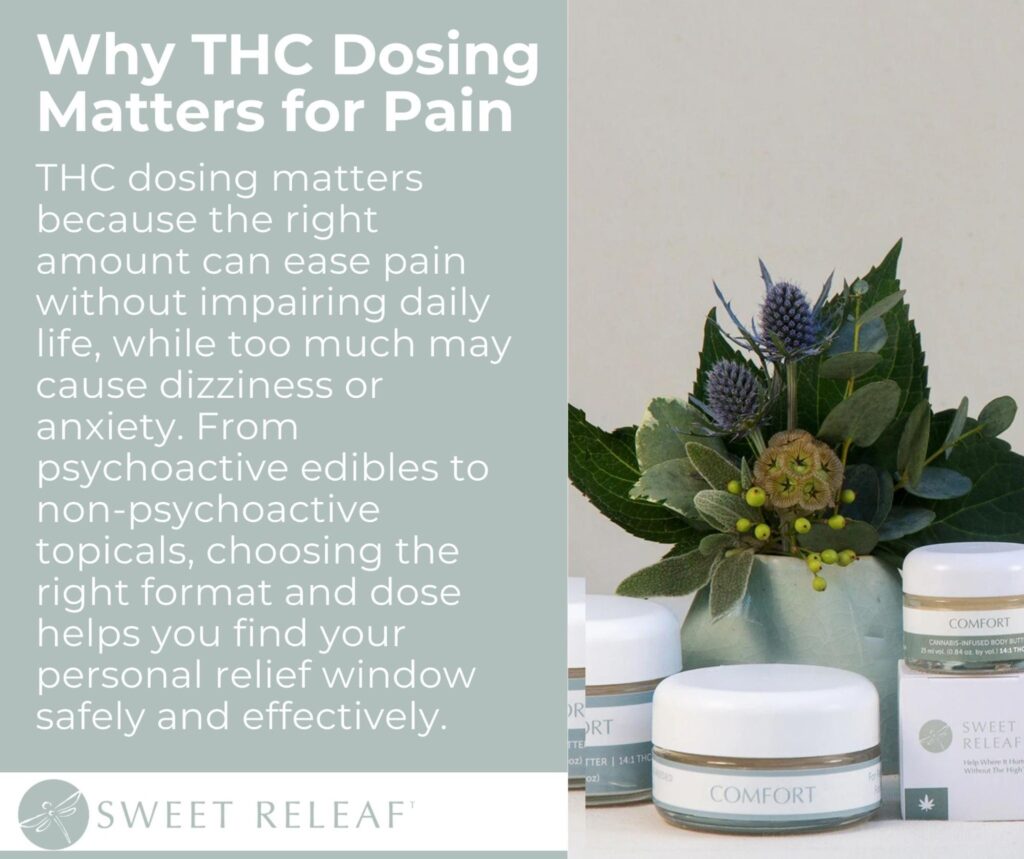
Why THC Dosing Matters for Pain
When pain takes hold, whether it’s from arthritis, injury, surgery, or something you carry every day, it’s not only discomfort.
It can change how you move, sleep, and even think. THC (tetrahydrocannabinol) offers an alternative path: instead of masking symptoms with heavy pharmaceuticals, it works by interacting directly with the body’s endocannabinoid system to modulate pain perception at the source.
But with THC, the dose is everything. The right amount can quiet pain without impairing your ability to work, drive, or focus; too much can tip you into dizziness, anxiety, or an unwanted high.
That’s why safety and personalization go hand in hand; what works for one person might overwhelm another.
Formats matter too. Psychoactive options like inhalation and edibles deliver THC into the bloodstream, often bringing whole-body effects.
Non-psychoactive options, like topicals, work locally, binding to cannabinoid receptors in the skin, fascia, and joints without crossing the blood–brain barrier.
Tinctures sit somewhere in the middle, allowing precise dosing and faster onset.
Done right, THC dosing is less about chasing a number and more about finding your personal therapeutic window, where relief is real, side effects are minimal, and life opens back up.
Quick Reference: How THC Needs Differ by Situation
Chronic Pain Relief
For ongoing conditions like arthritis or back pain, many people find success with steady, low-to-moderate doses, often between 2.5 and 10 mg taken consistently.
The goal is to maintain a baseline of relief without the mental cloudiness that can come with larger amounts. For some, layering a morning microdose with an evening edible or tincture provides round-the-clock comfort.
Post-Surgery Recovery
In the days or weeks after surgery, relief often needs to be targeted and gentle.
Low-dose edibles, tinctures, or non-psychoactive topicals can ease localized inflammation without the strain that inhalation can put on healing tissues.
Sweet Releaf’s Comfort+ has been used by post-op customers for its fast onset and 4–6 hours of relief, without the high.
Cancer-Related Pain Management
When pain is severe or tied to treatment side effects, higher THC doses, often 10–20 mg or more, may be recommended under medical supervision.
Here, dosing is about striking a balance between strong relief and preserving alertness, sometimes in combination with CBD for a broader therapeutic effect.
Avoiding Opioids
THC can be a tool for gradual opioid tapering, helping reduce withdrawal discomfort and the anxiety tied to medication dependence.
Many find success starting with low-dose THC (2.5–5 mg) and slowly increasing, often alongside CBD to keep sedation and tolerance in check.
Athletic or Injury Recovery
Active people often need relief that won’t sideline them. Microdoses, 1–2.5 mg, or topical applications can target inflammation and soreness without impairing reaction time or focus.
For overuse injuries or post-training soreness, a THC-forward body butter can reduce downtime while keeping performance intact.
The Science of THC for Pain
THC works by engaging with the body’s endocannabinoid system (ECS), a network of receptors, enzymes, and signaling molecules that help regulate pain, inflammation, mood, and more.
When THC binds to CB1 receptors (primarily in the brain and central nervous system) and CB2 receptors (found in immune cells and peripheral tissues), it can change how pain signals are processed and perceived.
This interaction can dampen pain transmission, reduce inflammatory responses, and, in some cases, relax muscle tension. Importantly, cannabinoids don’t work in isolation.
When THC is paired with CBD and other plant compounds like terpenes, the so-called “entourage effect” can amplify therapeutic benefits, offering broader relief than THC alone.
CBD may also help temper some of THC’s psychoactive effects, making higher doses more tolerable for sensitive users.
There’s also what I call the “Euphoria Effect”, not about getting high, but about the mental lift that comes when pain loosens its grip.
For many, that shift in mood and comfort is as valuable as the physical relief, helping restore confidence, sleep, and a sense of normalcy.
Helpful Resources=> Does THC Help Pain? Science, Relief & Safe Use Tips
Recommended Starting Doses
When it comes to THC for pain, the best results often come from starting low and going slow.
This lets you find your “therapeutic window”, the smallest amount that gives relief without unwanted side effects.
Microdosing (1–2.5 mg)
Ideal for mild pain, THC-sensitive users, or those completely new to cannabis.
Microdosing can help take the edge off without noticeable intoxication, making it suitable for daytime use or when you need to stay alert.
Low Dose (2.5–5 mg)
A comfortable starting range for most new users and a safe choice for daytime relief.
Many find this dose improves both pain and mood while allowing them to work, drive, or socialize without impairment.
Moderate Dose (5–10 mg)
Often used when pain is more persistent or intense. These doses can be taken in the evening or before rest, as they may bring deeper relaxation or mild drowsiness.
High Dose (10–20 mg)
Typically reserved for severe pain conditions and taken under medical guidance. This range is more likely to produce psychoactive effects, but can be key for certain cancer, neuropathic, or post-surgical pain cases.
Very High Dose (>50 mg)
Only appropriate for extreme, medically supervised scenarios, such as advanced illness or highly tolerant patients.
Doses that are this high carry a much greater risk of side effects and should be closely monitored by a healthcare professional.
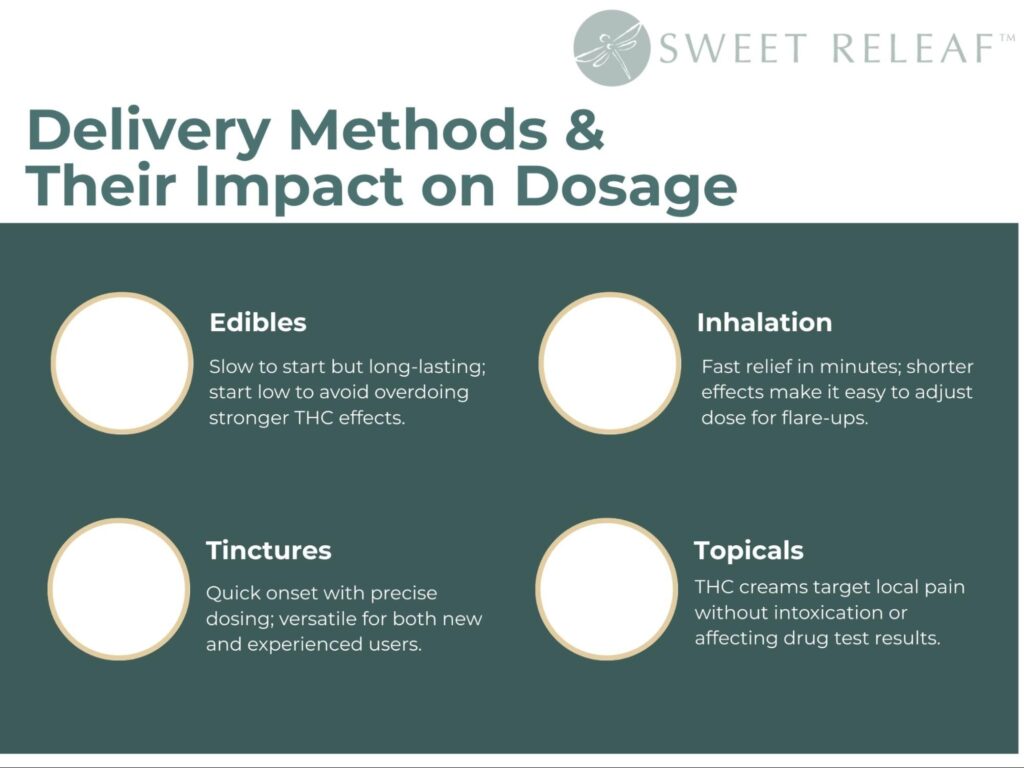
Delivery Methods & Their Impact on Dosage
How you take THC matters as much as how much you take.
Different delivery methods change how quickly THC kicks in, how long it lasts, and how it feels, making them better suited for certain pain situations.
Edibles
Edibles pass through the digestive system and liver before entering the bloodstream, creating a delayed onset (30–120 minutes) but longer-lasting relief, often 6–8 hours.
They also tend to feel stronger milligram-for-milligram because the liver converts THC into a more potent metabolite.
This is why it’s key to start low (2.5–5 mg) and wait before taking more.
Inhalation
Smoking or vaping delivers THC directly into the bloodstream via the lungs, providing relief within minutes.
The tradeoff is shorter duration, usually 2–4 hours, which makes it easy to titrate (adjust) on the fly for flare-ups or breakthrough pain.
Tinctures
Taken under the tongue, tinctures are absorbed through oral mucosa for quicker onset (15–45 minutes) and more predictable effects than edibles.
They offer precise dosing and easy adjustments, making them a versatile option for both new and experienced users.
Topicals
Applied to the skin, high-THC body butters or roll-ons bind to local cannabinoid receptors in the skin, fascia, and joints, providing targeted relief without intoxication or risk of failing a standard drug test.
They’re ideal for localized pain, inflammation, or post-surgical care where you want the benefits of THC without systemic effects.
Addressing Common Worries
Accidentally getting high
If you’re nervous about intoxication, start at the very bottom, 1–2.5 mg, and increase gradually.
Non-psychoactive options like topicals give you the benefits of THC without affecting your headspace.
Side effects
Some people experience dry mouth, dizziness, or mild anxiety at higher doses.
Pairing THC with CBD may help temper these effects, and pacing your dose increases can reduce the risk of discomfort.
Drug test concern
If testing is a concern, avoid ingesting THC in any form.
High-THC non-transdermal topicals, like Sweet Releaf Comfort and Comfort+, work locally and are unlikely to enter the bloodstream in amounts that trigger a standard test.
Interactions with medications
THC can interact with certain sedatives, antidepressants, or blood thinners. If you’re on prescription medication, it’s best to consult a healthcare professional before starting or adjusting your THC regimen.
Legality issues
Cannabis laws vary widely by state and country.
Always verify local regulations before purchasing, traveling with, or using THC products, especially if you’re crossing state or international borders.
When to Increase Your Dose
Recognizing tolerance vs. need
If you notice your usual dose no longer delivers the same relief, first ask whether it’s due to increased pain or rising tolerance.
A temporary break or switching delivery methods can sometimes reset sensitivity without upping your intake.
Tracking pain levels and functionality
Keep a simple log of your pain scores, activity levels, and how long relief lasts.
If you can move more freely, sleep better, or reduce other medications, your dose may already be optimal, even if pain is not gone entirely.
Using the “start low, go slow” principle
When you do increase, make changes in small steps, such as adding 1–2 mg at a time.
This minimizes the chance of side effects and helps you pinpoint your true therapeutic window instead of overshooting into discomfort.
Unique Insights from Community & Clinical Experience
5-15 mg combined THC/CBD daily works for many
Across patient stories and clinician observations, this range often strikes the right balance for chronic pain, enough relief to improve quality of life, without the side effects that come with higher doses.
Multiple microdoses can beat one large dose
Some people stay sharper and more active by taking several 1–3 mg doses throughout the day instead of a single larger dose. This can keep pain in check while avoiding grogginess or a strong high.
Topicals target pain without mental effects
High-THC creams, butters, and roll-ons have helped users manage arthritis stiffness, back pain, and nerve flare-ups, delivering relief right where it’s needed without affecting clarity or mood.
Layering for nighttime relief
Those with severe pain at night sometimes combine a topical for local relief with a moderate edible or tincture to relax the body and extend comfort through the night.
Athletic recovery without loss of performance
Athletes and active individuals benefit from THC’s anti-inflammatory properties at conservative doses, enough to speed recovery and reduce soreness, but not so much that focus or reaction time is compromised.
Finding Comfort with Sweet Releaf
If you’re ready to experience pain relief without the high, Sweet Releaf offers a range of high-THC topicals designed to fit your needs.
Our Comfort and Comfort+ body butters deliver fast, localized relief, while our Ayurvedic-inspired roll-ons make it easy to target sore joints, muscles, or post-injury areas on the go.
Because these are non-psychoactive, you can work, drive, or care for loved ones without worrying about intoxication or failing a standard drug test.
Our customers have shared incredible results:

Wherever you are on your pain journey, managing chronic conditions, healing from surgery, or staying active, Sweet Releaf has a product to match your lifestyle and comfort level.
Questions People Ask (and the Answers)
Will 10 mg of THC help with pain?
For many people, yes, especially if they have moderate to severe pain or some prior THC experience. Beginners may find 10 mg overwhelming, so starting at 2.5-5 mg and working up is a safer approach.
Is 20 mg of THC per day a lot?
This is considered a moderate-to-high daily dose, and it’s not unusual for people with chronic or intense pain to land here. Still, splitting it into smaller doses throughout the day can help manage side effects while keeping relief steady.
How often should I take THC for pain?
It depends on your delivery method. Edibles can last 6-8 hours, so twice daily may work for full-day coverage. Inhalation wears off in 2-4 hours, so it’s best for spot relief between longer-lasting doses. Tinctures and topicals fit somewhere in between, offering flexible timing.
Is 100 mg of THC a lot?
Yes, 100 mg is a very high dose. While some highly tolerant or medically supervised patients take this much, it’s well beyond typical pain-management ranges. Doses that are this high increase the risk of side effects and should only be used under professional guidance.