The best THC: CBD ratio for pain depends on pain type, tolerance, and desired psychoactivity.
Many find 1:1 ideal for balanced relief, but chronic pain, nerve pain, or post-surgical recovery often respond best to THC-forward formulas, especially in non-psychoactive topicals like Sweet Releaf.
Here’s how the ideal ratio often changes depending on your needs:
- Chronic pain relief – THC-forward or 1:1 for strong, lasting relief without overwhelming psychoactivity.
- Arthritis and inflammation – Higher CBD for inflammation + enough THC to tackle discomfort.
- Post-surgery recovery – THC-rich topicals for deep tissue relief and reduced movement pain.
- Nerve-related pain (fibromyalgia/neuropathy) – Balanced 1:1 ingestibles or high-THC topicals to address both nerve and muscle discomfort.
- Safer alternative to opioids – High-THC topicals can cut pain without the risks of addiction or sedation.
Finding your personal sweet spot means weighing relief against side effects, understanding product labels, and knowing the difference between psychoactive and non-psychoactive options.
In the sections ahead, we’ll explore how THC and CBD work together, how to choose your starting point, and how Sweet Releaf’s approach delivers effective, non-intoxicating pain relief, so you can move, sleep, and live with less discomfort.
If you’re ready to go beyond generic advice, keep reading.
You’ll learn how to match your pain type to the right ratio, avoid common mistakes that waste time and money, and see why our high-THC, whole-plant topicals stand apart from anything else on the market.
Why Ratio Matters for Pain Relief
How THC and CBD Work Together
THC and CBD each bring unique strengths to pain relief. THC engages directly with CB1 receptors in the nervous system, offering central analgesia, muscle relaxation, and a stronger blockade against pain signals. CBD, while less directly analgesic, helps reduce inflammation, eases anxiety, and can temper some of THC’s more stimulating effects.
When used together, these cannabinoids can produce the entourage effect, a synergy where the combination is more effective than either compound alone.
This balance allows you to target multiple pain pathways at once, addressing both the physical and emotional components of discomfort.
Helpful Resources => Do THC Topicals Really Work? Pain Relief Explained
Topical vs. Ingestible Ratios
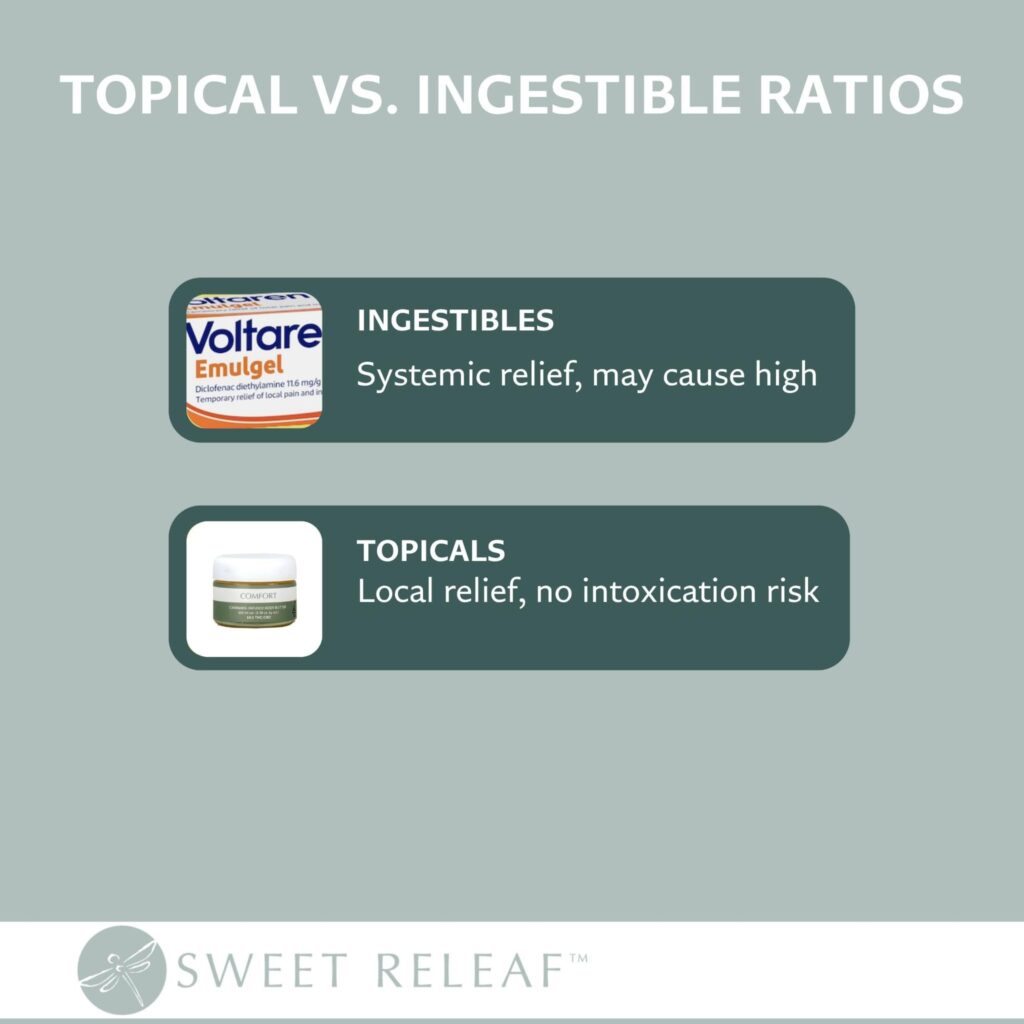
Ingestibles, like oils, tinctures, edibles, and capsules, send cannabinoids through your digestive system and into your bloodstream.
With these formats, the psychoactive threshold matters: higher THC usually means more “high,” so starting low and adjusting gradually is key.
Topicals, on the other hand, work differently. Sweet Releaf’s formulas combine high THC, THCa, and CBD in an aloe-based emulsion that penetrates skin and fascia deeply, but does not enter the bloodstream.
This means you can take advantage of THC’s potent pain-relieving properties without the intoxication, making high-THC ratios safe for daytime, driving, or work without fear of impairment.
Matching Ratios to Pain Types
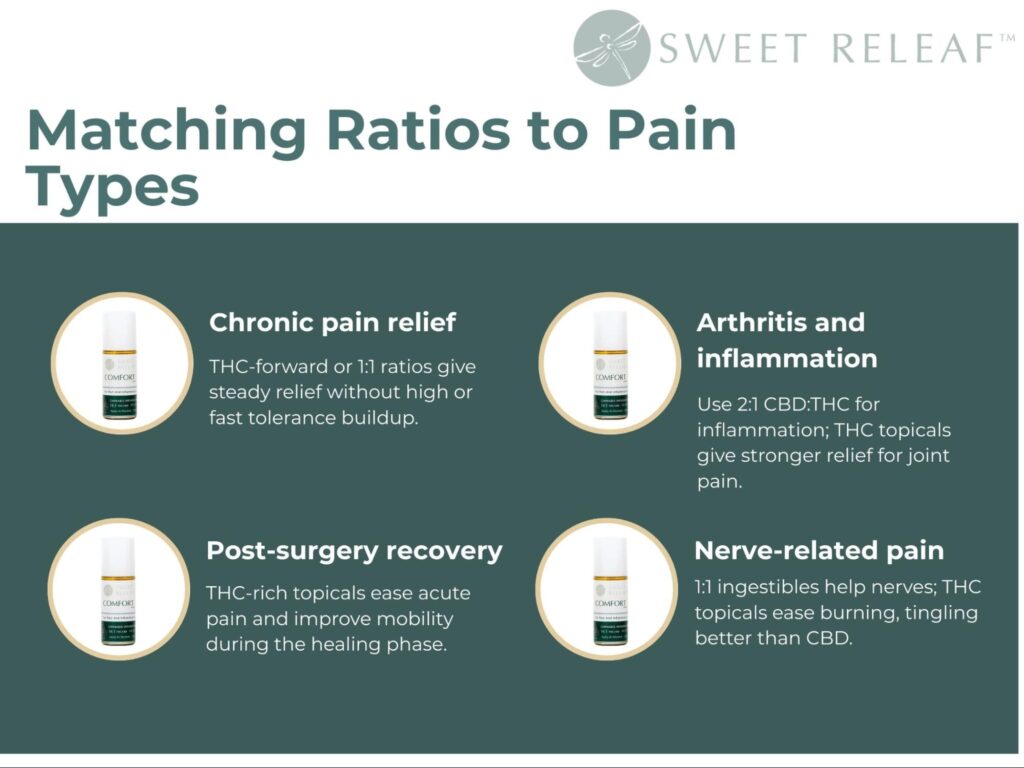
- Chronic pain relief – A THC-forward or 1:1 ratio often provides the most consistent relief. High-THC topicals are ideal for daily, repeated use since they target pain locally without causing systemic side effects or tolerance spikes as quickly as ingestibles.
- Arthritis and inflammation – A higher-CBD ratio (such as 2:1 CBD: THC) in ingestibles can calm inflammation, while enough THC supports deeper pain relief. For localized joint pain, a THC-forward topical can outperform CBD-heavy creams by delivering stronger local analgesia.
- Post-surgery recovery – THC-forward ratios target intense, acute pain effectively. Sweet Releaf’s aloe-emulsion body butters penetrate into fascia and connective tissue, helping maintain mobility and comfort during the healing process.
- Nerve-related pain (fibromyalgia/neuropathy) – A balanced 1:1 ingestible can help with both nerve and muscle discomfort, while high-THC topicals often succeed where CBD-only products fail, particularly for burning or tingling pain that resists other treatments.
- Safer alternative to opioids – THC-forward topicals can offer strong pain relief without the risks of addiction, sedation, or impaired function, making them a valuable tool for reducing or replacing opioid use.
How to Choose the Right Ratio for You
Start Low, Go Slow
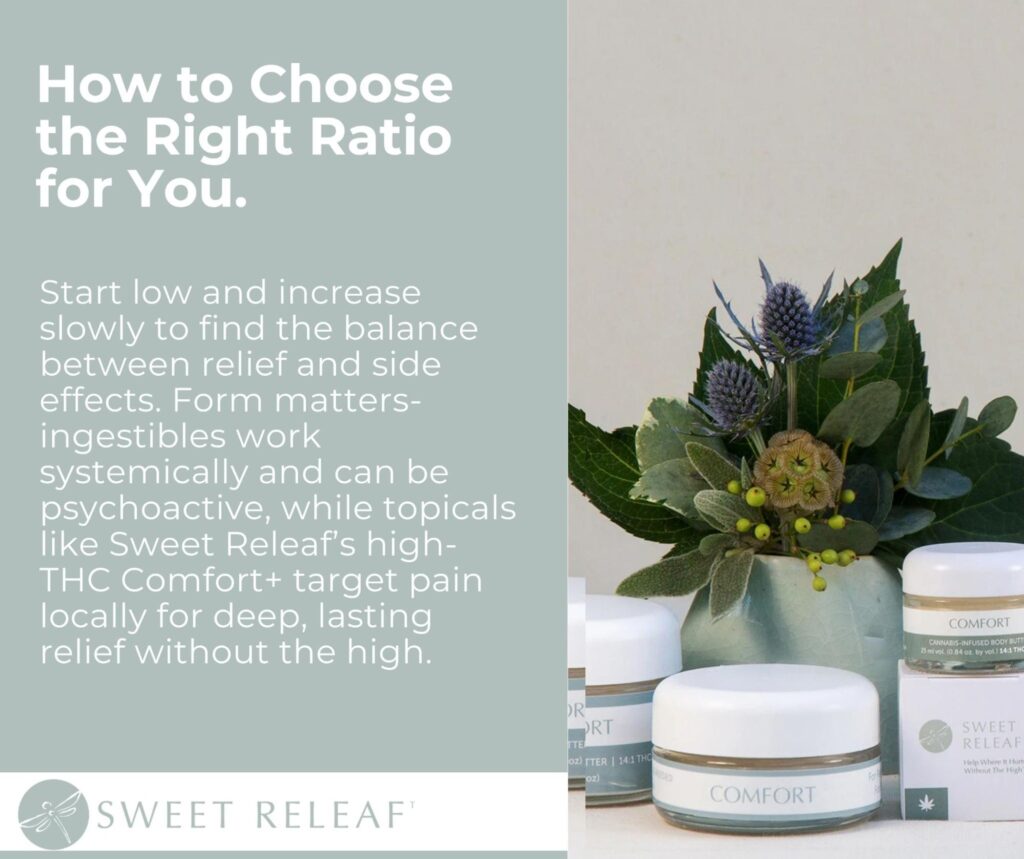
When trying a new THC: CBD ratio, begin with a low dose and increase gradually. This lets you measure relief against any side effects like dizziness or fatigue.
By adjusting in small increments, you can avoid overshooting your THC tolerance and still find your optimal comfort zone.
Form Factor Matters
Even with the same ratio, the delivery method changes the experience. Oils, gummies, tinctures, and vapes work systemically, affecting the whole body and often producing psychoactive effects if THC content is high.
Creams, body butters, and roll-ons act locally, making them ideal for targeting specific pain points without altering your mental state.
Real-World Example
Sweet Releaf’s Comfort+ is a 14:1 THC: CBD non-psychoactive topical designed for serious, localized pain.
It is an aloe-based emulsion that penetrates deep into muscles, joints, and fascia for longer-lasting relief, outperforming traditional salves in both comfort and consistency.
This high-THC formula lets you benefit from THC’s pain-blocking power without the high.
Addressing Common Worries
Will I Get High?
With true topicals like Sweet Releaf, cannabinoids remain in the skin and underlying tissues; they don’t enter the bloodstream, so you won’t feel intoxicated.
The euphoria some users describe is actually the emotional lift of pain relief, not the altered perception of a THC “high.”
What if I Pick the Wrong Ratio?
A safe starting point is a balanced ratio such as 1:1. From there, you can adjust toward more THC for stronger pain relief or more CBD for reduced psychoactivity.
Keep in mind, for many pain conditions, especially nerve pain, CBD-only products may not deliver enough relief on their own.
Can I Fail a Drug Test?
With Sweet Releaf topicals, the risk is extremely low because cannabinoids don’t travel into the bloodstream.
However, transdermal patches are different; they’re designed for systemic delivery and can result in a positive test.
Side Effects & Interactions
Ingesting THC can sometimes cause dizziness, dry mouth, or anxiety, especially in higher doses. CBD, while generally well-tolerated, can interact with medications metabolized by the CYP450 enzyme system.
Always consult your healthcare provider before starting or adjusting cannabis-based treatments.
Taking Action: 3 Steps to Smarter, More Effective THC CBD Use
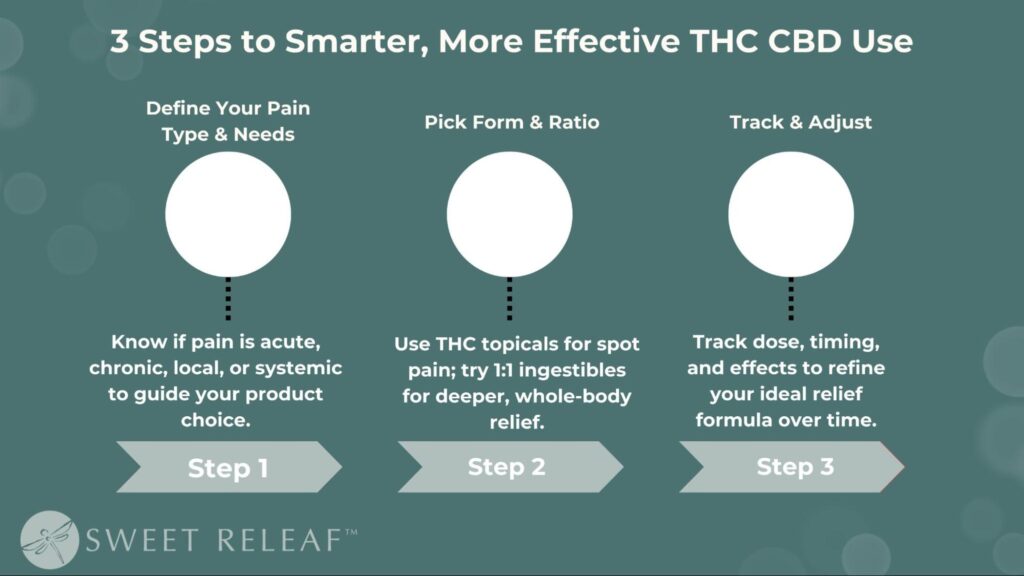
Step 1 – Define Your Pain Type & Needs
First, clarify what you’re dealing with. Is your pain acute (short-term) or chronic (long-term)? Is it localized to one area, like a knee or shoulder, or systemic, affecting multiple areas at once?
Do you need relief that preserves daytime function, or something stronger to help you rest at night? Your answers will guide both ratio and product choice.
Step 2 – Pick Form & Ratio
For localized pain, choose a high-THC topical like Sweet Releaf Comfort+ to target the source without systemic effects.
For whole-body pain, start with a balanced ingestible (1:1 THC: CBD) to address multiple pathways. Adjust up or down in THC or CBD content based on how your body responds.
Step 3 – Track & Adjust
Keep a simple relief log. Record the dose, timing, ratio, and your pain level before and after use.
Over time, this helps you identify your ideal range and avoid unnecessary increases in dose. Small adjustments based on real feedback are the surest way to long-term, sustainable relief.
Why Sweet Releaf is Different
Sweet Releaf was built on a simple but powerful idea: deliver real relief where it hurts, without the high.
Our formulas are high in THC and made from whole-plant cannabis, so you get the full therapeutic spectrum of cannabinoids and terpenes working together.
Unlike greasy salves that sit on the surface, our aloe-emulsion body butters sink deeply into muscles, fascia, and joints, providing long-lasting comfort.
Each product blends THC, THCa, and CBD for a three-way synergy that tackles pain, inflammation, and muscle tension in ways other topicals miss.
Our topicals are trusted by seniors staying active, post-surgery patients regaining mobility, and chronic pain warriors who’ve tried everything else.
And because our products never enter the bloodstream, you can enjoy the benefits of high-THC relief without psychoactive effects.
Choose from our tailored lines, Comfort for daily aches, Comfort+ for extra strength, and Warms or Cools for targeted sensation.
Shop Comfort+ Extra Strength for deep chronic pain relief, or explore our full collection to find your perfect pain solution, Help Where It Hurts Without the High.
Common FAQs
Can you buy mushroom chocolate online?
Legal status varies by location. In many states and countries, psilocybin-containing products remain illegal to sell or purchase online, even if marketed as “edibles” or “chocolate treats.” Always check local laws before attempting to buy.
What are chocolate mushrooms made of?
They’re typically made by blending psilocybin mushrooms into chocolate, sometimes with added flavorings or nuts to mask the earthy taste. These products are intended for psychedelic use, not culinary purposes.
How long do chocolate mushrooms stay in your body?
The effects usually last 4–6 hours, depending on dose and metabolism. However, psilocybin and its metabolites can be detectable in drug tests for several days, so they’re not a risk-free choice if testing is a concern.