We have been making cannabis topicals for more than a decade, and we can tell you this right away: two creams can sit side by side on a dispensary shelf and deliver completely different results. The jar might look similar. The label might mention CBD or THC. What truly determines whether it works comes down to three variables.
- THC content
- CBD percentage
- Absorption mechanism
A low-dose hemp cream with trace THC behaves very differently from a high-potency, whole-plant formulation. A salve that stays on the surface of the skin performs differently than an emulsion that carries cannabinoids deeper into tissue.
Those distinctions matter far more than branding or fragrance.
When people ask about cannabis topical ratios, they are usually choosing between a few core formats:
- 20:1 CBD:THC for mild inflammation and skin support
- 1:1 CBD:THC for balanced relief and moderate discomfort
- 14:1 or higher THC:CBD for deep, stubborn pain that interferes with movement
THC topicals, when properly formulated for local use, do not produce a psychoactive effect. The cannabinoids stay in the tissue where you apply them. You can use a high-THC cream and still drive, work, and think clearly.
Sweet Releaf develops premium products based on high-potency, THC because that is where we consistently saw real pain relief for chronic conditions. In the sections ahead, we will walk you through how topicals are made, how different ratios behave on the body, and how to find the one that fits your pain.
A Closer Look at How Cannabis Topicals Are Made
Before we debate ratios, we need to look at what is actually inside the jar and how it got there.
The way cannabinoids are extracted and formulated has a direct impact on how they behave once they meet your skin. A cream can list impressive numbers on the label and still fall short if the plant was processed poorly or the base cannot deliver it effectively.
Extraction vs Whole-Plant Formulation
Cannabinoids begin as resin inside the trichomes of the cannabis flower. To use them in a topical, they must be separated from the plant material.
Many manufacturers use CO₂ extraction, which pulls cannabinoids and terpenes from the plant using pressurized carbon dioxide. From there, the extract may go through refinement steps that remove waxes, fats, and sometimes entire groups of compounds.
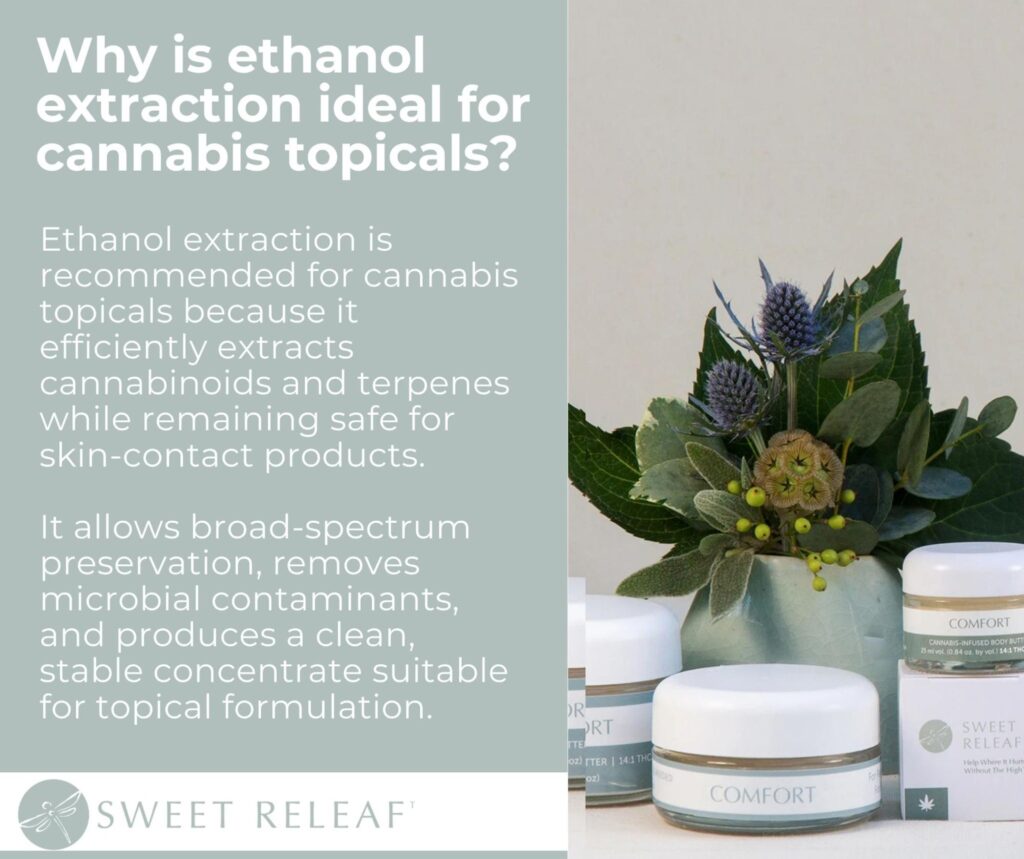
More quality-minded manufacturers like Sweet Releaf use ethanol extraction, where food-grade alcohol washes over the plant material to dissolve cannabinoids and terpenes. The alcohol is then evaporated, leaving behind a concentrated extract. Depending on how it is handled afterward, this process can preserve a broad range of plant compounds or be further refined to remove waxes, lipids, and minor constituents.
How cannabis is processed affects how it performs on the body. A full-plant extract retains minor cannabinoids and terpenes that interact with receptors in layered ways. An isolated compound delivers a narrower signal. On skin, where absorption is already selective, that distinction becomes noticeable.
But extraction is only half the story.
Delivery Is Just as Important as the Ratio
You can have the ideal THC:CBD ratio on paper and still experience minimal relief. Cannabinoids must move through the outer barrier of the skin and reach receptors in underlying tissue.
Many topicals rely on simple oil and wax bases. These formulas tend to:
- Sit largely on the surface
- Leave a greasy film
- Absorb slowly or shallowly
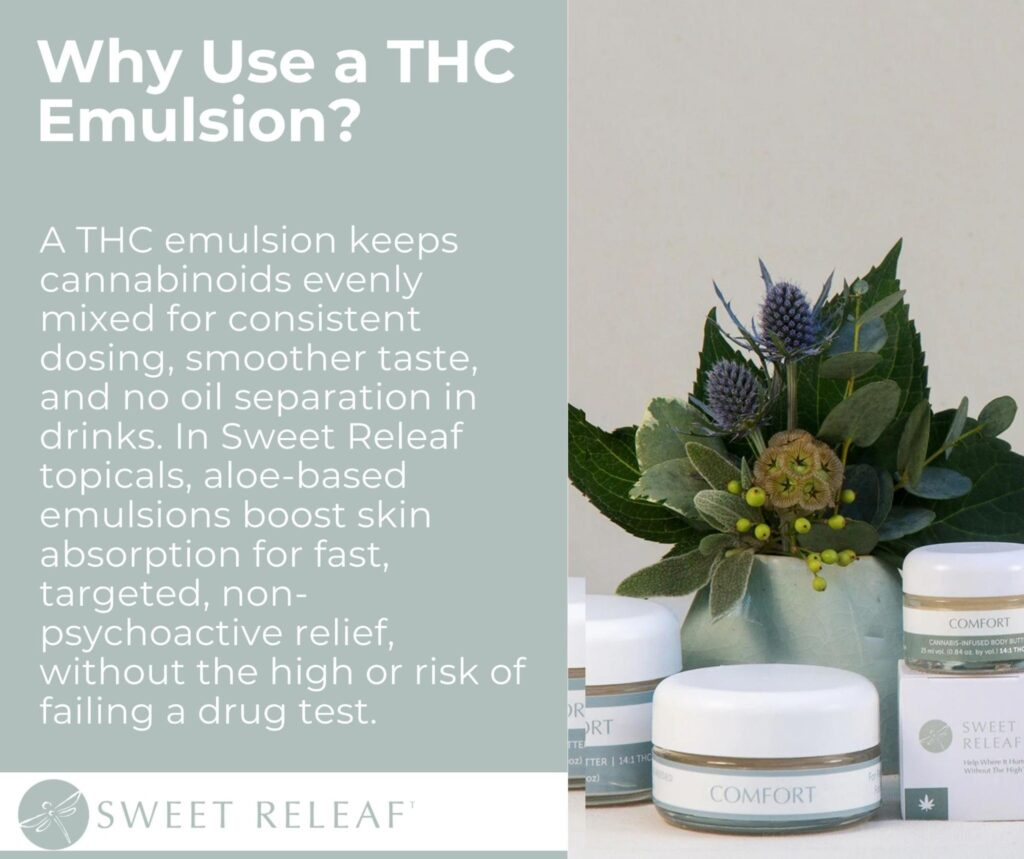
Emulsion-based creams take a different approach. They:
- Blend oil and water phases into a stable system
- Improve penetration by distributing cannabinoids more evenly
- Feel lighter and more refined on the skin
When people say a cannabis cream failed them, the issue may lie in delivery rather than dosage. A well-designed emulsion allows the ratio you choose to actually do its job.
CBD-Dominant Topicals: Gentle Touch
CBD-heavy creams often serve as an entry point into cannabis topicals. They appeal to people who want to move cautiously, support irritated skin, or explore plant medicine without diving into high THC concentrations. In certain situations, that lighter approach makes sense.
Who CBD-Heavy Ratios Are Best For
CBD-dominant ratios such as 20:1 or 10:1 CBD to THC are generally suited for:
- Mild inflammation from overuse or minor strain
- Sensitive or reactive skin
- People uneasy about THC exposure
- First-time cannabis users testing how their body responds
At these ratios, CBD does most of the signaling work. The small amount of THC present may support overall activity in the tissue without becoming the primary driver. For light discomfort, redness, or surface-level irritation, this can be adequate.
Where CBD-heavy formulas tend to struggle is with deeper joint pain, structural inflammation, or long-standing chronic conditions.
Isolate vs Full-Spectrum CBD Creams
Many CBD creams are made from hemp-derived isolate. That means the product contains a purified CBD molecule separated from the rest of the plant. It is clean, measurable, and easy to formulate. It is also limited in scope.
We have spoken with many people who tried CBD and concluded it simply did nothing. Online discussions echo the same pattern, with users reporting they needed 30 to 50 milligrams of oral CBD before noticing any shift.
That gives you a sense of how gently CBD interacts with the body.
CBD does not bind strongly to CB1 or CB2 receptors the way THC does. Its influence is more indirect and regulatory. For skin support or mild inflammation, that may be sufficient.
Balanced Ratios: Where Synergy Lives
Balanced formulas built around a 1:1 CBD to THC ratio gained traction because they offer a middle path. For many people, this ratio feels like a measured approach that engages both major cannabinoids without leaning heavily in one direction.
Why 1:1 Became So Popular
A 1:1 ratio pairs THC’s direct receptor activity with CBD’s regulatory influence. THC binds more readily to cannabinoid receptors in peripheral tissue, especially CB2. CBD interacts more indirectly, shaping inflammatory signaling and cellular response.
This ratio is often chosen for:
- Neuropathic pain, where nerve signaling becomes amplified
- Individuals sensitive to higher THC concentrations
- Situations where inflammation and irritation occur together
The appeal of 1:1 in topical form lies in its balanced signaling at the tissue level rather than any systemic effect.
Does 1:1 Matter as Much in Topicals?
With properly formulated creams, cannabinoids remain localized. Psychoactive effects are not part of the equation because the compounds do not cross into the bloodstream in meaningful amounts.
For skin application, THC primarily engages CB2 receptors in peripheral tissue. These receptors influence inflammatory response and immune signaling. CBD can modulate that response by affecting enzyme activity and cytokine expression in the same region.
In a topical, synergy means layered anti-inflammatory communication in the tissue itself.
Some people worry THC could worsen pain or trigger anxiety. That concern makes sense when THC reaches the brain. In a localized cream, the effect stays where you apply it. The focus becomes joint mobility, reduced swelling, and improved comfort during movement.

THC-Forward Topicals: Added Power
There comes a point where gentle support and balanced formulas stop moving the needle. When pain is structural, persistent, or tied to inflammation that has been brewing for years, higher THC concentrations often deliver a more decisive response at the tissue level.
Who High-THC Ratios Are Designed For
High-THC ratios such as 14:1 THC to CBD or stronger tend to serve people dealing with:
- Arthritis and joint degeneration
- Chronic joint pain that limits daily movement
- Post-surgical recovery where inflammation lingers
- Neuropathy with sharp or burning sensations
- Athletes managing repetitive strain
- Individuals reducing or replacing opioid medications
We hear the same questions repeatedly.
“Is it different for everyone?” Yes. Biology varies. Receptor density varies. Inflammation patterns vary. Yet many long-term pain sufferers eventually land on THC-forward topicals because the receptor activation is stronger and more direct.
“What if it doesn’t work?” In many cases the issue is potency rather than cannabis itself. A lightly infused cream will not behave the same way as a high-concentration formula.
“How many milligrams should I use?” With topicals, the total concentration in the jar matters more than the size of each scoop. A high-potency formula delivers more active compound per application without requiring you to layer it excessively.
Unique Advantages of THC-Dominant Creams
THC interacts more directly with CB2 receptors located in peripheral tissue. This produces:
- Stronger CB2 receptor activation
- Deeper anti-inflammatory signaling
- Faster onset for localized discomfort
- No intoxicating effect when formulated for topical use
Because the cannabinoids remain localized, you get receptor engagement where you apply the cream. Mental clarity stays intact.
Why Sweet Releaf Is the Name to Know for High-Potency Topicals
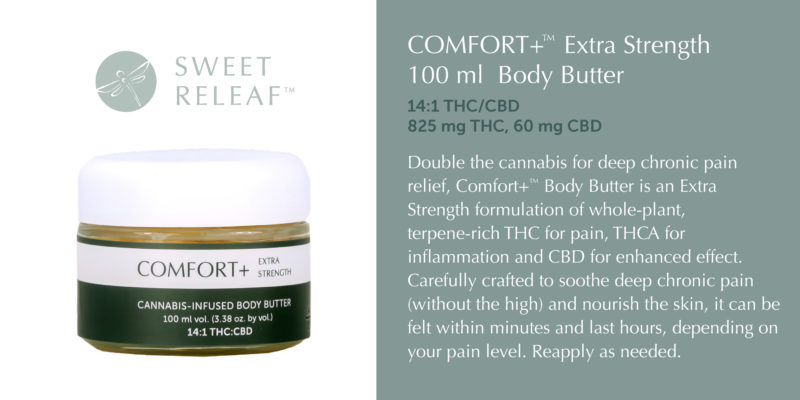
At Sweet Releaf, we focus on high concentrations of whole-plant THC because that is where we consistently observed meaningful pain reduction. We use raw trichomes rather than stripped distillates, preserving the broader cannabinoid profile.
Our body butter is built as an emulsion, which absorbs more effectively than wax-heavy salves. There are no distillate shortcuts and no dilution of potency.
For those seeking stronger support, here are a few possibilities:

Finding Your Personal Cannabis Topical Ratio
Charts and comparisons can only help as much, and your own experience must be the ultimate judge. Ratios guide you, but your body gives the final answer. The key is knowing how to evaluate what you are using instead of applying it randomly and hoping for change.
How to Read a Label
Start by looking at the total milligrams of cannabinoids in the container. A jar listing 200 milligrams of THC total delivers a very different experience than one containing 1000 milligrams. Then consider how that translates per gram of product.
Higher concentration means more active compound in each application.
Pay attention to ratio notation. A label that reads 20:1 CBD:THC signals something very different from 14:1 THC:CBD. The order matters. It tells you which cannabinoid leads the formulation.
Next, check whether the product is full-spectrum or isolate. Full-spectrum formulas retain minor cannabinoids that may influence tissue response. Isolate products rely on a single compound.
Finally, confirm whether the product is a true topical or a transdermal. A topical acts locally in the tissue where applied. A transdermal is designed to enter the bloodstream and behaves differently.
How to Test and Adjust
Apply the product to a small area first. Use it consistently for several days rather than making a decision after one application. Observe how quickly relief begins, how long it lasts, and whether your mobility improves during daily movement.
If discomfort decreases but returns quickly, a higher potency may provide longer coverage. Increasing concentration is often more effective than simply applying a larger quantity of a low-dose cream.
If THC ever causes localized irritation or unexpected sensitivity, scale back. If nothing changes at all, the potency may be too low for the level of inflammation you are managing.
If you are transitioning away from opioid medication, give your body time to recalibrate. Tissue receptors adapt gradually. Steady, consistent application tends to produce clearer results than abrupt changes.
Pain Is Personal. Ratios Should Be Too.
Finding the right cannabis topical ratio is less about chasing numbers and more about restoring confidence in your body. Sometimes that means starting gently. Sometimes it means choosing a formula with enough THC to meet the level of inflammation you are actually carrying.
Your skin has receptors ready to respond. The question is whether you are giving them a formulation strong enough and well built enough to do the job.
If you are curious which direction makes sense for you, explore the Sweet Releaf collection or reach out. We are always glad to talk it through and help you find relief that fits your life.