For decades, cannabis meant one thing: getting high. That limited narrative shaped policy, family conversations, and personal health decisions.
Today, cannabis appears in oncology settings, in post surgical recovery plans, and in the daily routines of people who care deeply about mobility and long term wellness. The vast majority of them would never describe themselves as stoners, potheads, hippies, or rastafarians. They are just normal Americans looking for something that helps them day-to-day.
The public image is evolving, and cannabis topicals are the clearest proof. Here is what’s so different about them:
- No intoxication
- No smoking, vaping, or ingesting
- No social stigma of being high
- Localized relief instead of whole body alteration
- Used by seniors, athletes, and post surgical patients
- Often explored as an alternative to opioids and NSAIDs
When properly formulated, topical cannabinoids interact with receptors in the skin and underlying tissues. They remain localized to the area of application. There is no altered perception, no impairment, and no shift in awareness.
The effect is physiological rather than recreational.
Sweet Releaf began in a kitchen in Marin county, and was run by a single family ever since. Our formulations rely on emulsion based body butters that blend oil and water phases for deeper absorption and a refined cosmetic finish. The focus has always been meaningful pain relief without psychoactive effects, using whole plant cannabis at concentrations designed to perform.
If you have ever said, “Cannabis is not for me,” it may be time to reconsider what that word actually means.
Where Anti-Cannabis Attitudes Come From
Resistance to cannabis rarely appears out of nowhere. It was built over decades through messaging, media, and policy. Much of that messaging focused on extremes rather than nuance.
A plant that contains hundreds of compounds with varied physiological effects became flattened into a single identity. For many adults who came of age in the 70s, 80s, and 90s, that identity still lingers.
The “Stoner” Stereotype That Won’t Die
For years, cannabis culture was portrayed through exaggerated characters and recreational imagery. Movies, music, and advertising emphasized intoxication and rebellion.
Medical use received little airtime, even as patients quietly explored relief for chemotherapy side effects, multiple sclerosis, and chronic pain.
That imbalance shaped perception. Cannabis became associated with disengagement rather than functionality.
Yet today, a large portion of cannabis consumers are parents, professionals, veterans, retirees, and athletes. They are integrated into their communities, running businesses, raising families, and maintaining active lives.
The image shifted, though the stereotype still echoes.
Legal Confusion Makes It Worse
Layered over cultural memory is a complicated legal landscape. State laws have evolved rapidly, allowing medical and adult use in many regions. Federal scheduling, however, has historically lagged behind. This contradiction sends mixed signals.
Regulatory ambiguity adds another layer. Agencies such as the FDA and NHS acknowledge therapeutic potential while also citing limited high quality trials. For a cautious consumer, that mixed messaging reads as uncertainty.
Rapidly changing laws reinforce the sense that the ground is still moving.
The Real Problem: Reliable Information Is Hard to Find
Clinical data on topical cannabinoids remains limited and quite difficult to verify. Study design, dosing, and product variability differ widely. Even the main conclusions reached by separate studies may contradict one another.
At the retail level, standardization is inconsistent. Potency can vary. Formulations can be poorly constructed. Hemp derived CBD creams flooded the market with bold claims and modest results, leaving many consumers disappointed.
Online forums reflect that frustration. People question whether relief is genuine or placebo. They worry about spending significant money on products that underperform.
Skepticism grows when early experiences fall short. Without clear education on formulation, potency, and delivery method, it becomes difficult to separate ineffective products from well designed ones.
Cannabis Topicals Are Not “Weed”
For many people, the word “weed” immediately brings up images of smoke, intoxication, and altered behavior. That reaction makes sense given how cannabis has been portrayed for decades.
Topicals belong in a completely different category. They are applied to the skin, used for specific physical concerns, and designed to work locally rather than mentally. Lumping them together with smoked or edible cannabis misses how differently they function.
External Application for Targeted Impact
Human skin contains cannabinoid receptors, particularly CB2 receptors, within immune cells and peripheral nerve endings. When a topical formulation is applied, cannabinoids interact with these receptors at the site of application.
The activity remains concentrated in the skin and underlying tissues.
This localized action is what separates a cream from a joint or an edible. There is no systemic circulation at meaningful levels when a product is formulated as a standard topical. Properly constructed creams are not designed to cross into the bloodstream, but rather to remain in peripheral tissues, modulating inflammation and signaling pathways where they are applied.

Most Topicals Cannot Get You High
A distinction exists between topical and transdermal products. Transdermal patches are engineered to deliver cannabinoids through the skin and into systemic circulation. Standard creams and body butters are not formulated for that level of penetration, which is why they are simply unable to produce any noticeable head buzz or even body high.
Most over the counter and dispensary topicals are intended for localized health benefits. They are used for joint stiffness, muscle soreness, scar massage, and inflammatory conditions.
What About Addiction Risk?
Addiction risk correlates with reinforcement cycles that involve the brain’s reward pathways. Inhaled or ingested substances can engage those pathways when they reach central circulation. A topical that remains localized does not create that loop.
More broadly, THC carries a lower dependency profile compared with opioids and many prescription pain medications. When used externally in a non psychoactive format, the risk of addiction becomes negligible.
Why Cannabis Topicals Can Work for Anti-Cannabis People
For someone who has spent years keeping cannabis at arm’s length, trying a topical can feel like crossing a line. In reality, it is often the most measured way to explore what modern cannabis has become and what it can contribute to your physical health and overall wellbeing.
Beginner-Friendly by Design
Cannabis topicals are straightforward tools. They are applied directly to the area that needs support, and their effects remain localized. There is no ritual to learn and no recalibration of daily habits.
With topicals you can count on:
- No systemic effects
- No learning curve
- No dosage anxiety
- No lifestyle change required
A small amount is massaged into the skin and allowed to absorb. The body does the rest.
For those wary of psychoactive experiences, this predictability provides reassurance. The experience stays physical and specific, rather than systemic.
Socially Invisible, Personally Powerful
Many anti-cannabis attitudes stem from concerns about impairment or social perception. Topicals sidestep both. They can be used discreetly at home, at work, or before heading out for the day. There is no alteration in awareness and no decrease of alertness.
They do not carry the strong scent associated with smoked cannabis. Well formulated creams have a clean, subtle aroma derived from botanical ingredients.
There is no visible sign of use and no behavioral shift that would draw attention. A person can apply a topical before driving, before exercise, or during a busy workday without concern about performance or judgment.
Legal and Practical Considerations
THC topicals are sold through licensed dispensaries operating under state regulations. Products are subject to mandated laboratory testing for potency, contaminants, and consistency. That framework provides a level of accountability that was absent in earlier eras of cannabis access.
Within states where cannabis is legal, topical products fall under the same regulatory structures as other cannabis goods. They are permitted because they meet compliance standards. For cautious consumers, that legal clarity and testing oversight create a more stable foundation for exploration.
What Can Cannabis Topicals Actually Help With?
Cannabis topicals are designed for localized issues. They are not broad, whole-body solutions. They work best where discomfort lives close enough to the surface for cannabinoids to interact with tissue and peripheral nerves.
In translation, cannabis-based creams are not going to heal serious conditions on their own, but they can be quite useful for resolving specific issues and improving quality of life.
Here is where people tend to see the most noticeable results.
Muscle & Joint Pain
Muscle tissue and joint capsules respond to stress with localized inflammation. When cannabinoids are applied directly to the area, they interact with CB2 receptors in immune and nerve cells within the skin and surrounding tissues.
That interaction can soften inflammatory signaling and reduce peripheral nerve sensitivity.
Post workout soreness is a common entry point. Tight quadriceps after cycling. Stiff shoulders after lifting. Calves that protest after a long hike. A high-THC topical applied directly to the area often reduces that heavy, reactive feeling and restores range of motion more comfortably.
The same principle applies to daily physical life. Gardening, climbing stairs, carrying groceries, playing with grandchildren. Active aging requires tissue support. Local application allows relief without affecting awareness or coordination.
Arthritis & Chronic Conditions
Arthritic joints involve ongoing inflammation and structural wear. In these cases, potency becomes relevant. Higher THC concentrations create stronger receptor engagement in peripheral tissues. Low-potency creams frequently fail to register noticeable change for moderate to severe joint discomfort.
Topicals in this category function as long-term management tools. They help reduce daily stiffness and improve functional movement. They do not reverse degenerative processes. They support the ability to move with less resistance and less hesitation.
Post-Surgical Recovery & Scar Massage
After surgical healing has progressed and incisions are closed, tissues remodel and reorganize. Scar tissue can feel tight and hypersensitive. Incorporating a cannabinoid-rich topical into scar massage can support localized circulation and tissue pliability.
The mechanical action of massage combined with anti-inflammatory modulation often improves comfort during movement. Areas that once felt guarded begin to integrate more smoothly into normal motion.
Neuropathic & Surface-Level Nerve Irritation
Peripheral nerve irritation close to the skin often responds well to topical application. Burning sensations, tingling zones, and localized hypersensitivity can calm when cannabinoid signaling influences peripheral nerve endings.
Deep central neuropathic pain rooted in the spinal cord or brain requires broader approaches. Topicals perform best when the source of discomfort is accessible through the skin and surrounding tissue.
Finding the Best Cannabis Topical to Start With
Choosing a first topical should feel straightforward. The goal is ]to find a formulation that performs reliably and fits into daily life without friction. Potency, plant source, and delivery system all matter more than branding language.
Why THC Creams Are Better Than Pure CBD Creams
Many CBD creams on the market are hemp-derived and formulated at low concentrations. They moisturize well but often provide limited or short-lived relief for moderate to persistent discomfort. CBD plays a supportive role in inflammation signaling, yet on its own it frequently falls short when deeper joint or chronic pain is involved.
THC interacts more directly with CB1 and CB2 receptors that influence peripheral pain signaling. In topical form, higher THC concentrations create stronger localized engagement in the tissues where the cream is applied. That difference becomes noticeable in joints that ache daily or muscles that remain tight long after activity.
Full-spectrum, whole-plant formulations add another layer. Rather than isolating a single compound, they retain a broader range of cannabinoids and plant constituents that work together at the receptor level. This wider engagement tends to produce more consistent, measurable results than isolated CBD alone.
Sweet Releaf as a Safe, Reliable Source
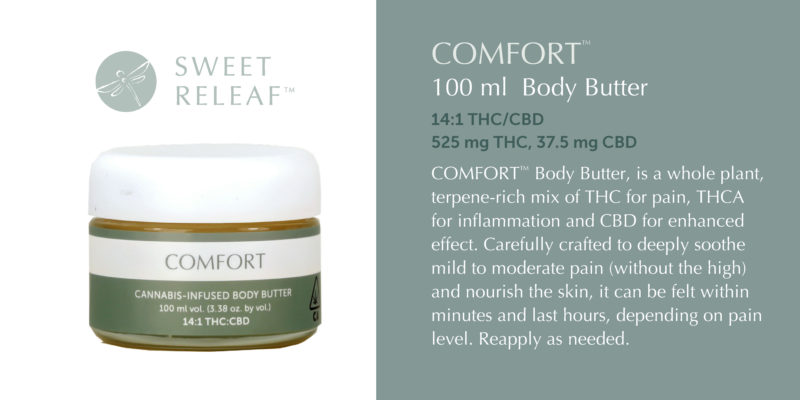
Sweet Releaf developed its formulas in a family setting long before cannabis became a mainstream wellness category. The focus has remained on high-THC, full-spectrum topicals built for real pain management.
The cannabis we use is always whole-plant, never distillate-based, which preserves the integrity of the original compounds. Each batch is produced under strict supervision and tested for potency and purity, providing transparency for cautious consumers.
Great Sweet Releaf Products to Start With
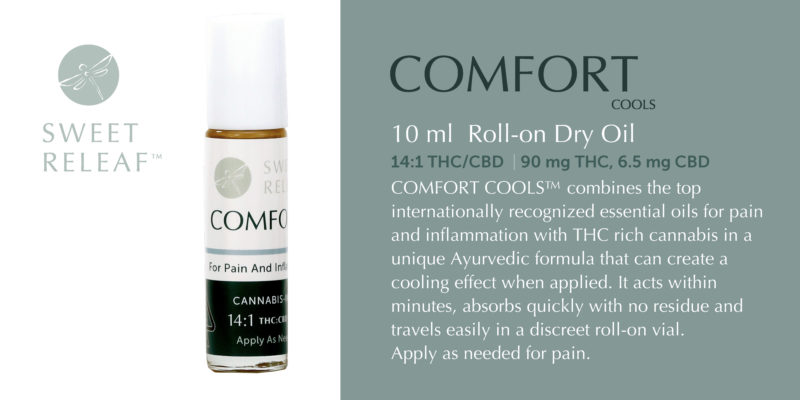
Get Relief Today
There’s a difference between rejecting something and outgrowing the version of it you were first shown.
Sometimes we hold onto an idea long after the world around it has changed. Cannabis carries decades of cultural baggage, and most of it has very little to do with a cream rubbed into a sore shoulder after a long day.
Topicals exist in the practical corners of life. They sit beside the heating pad and the ice pack. They come out when a knee stiffens before a walk or when hands feel tight at the end of the afternoon. The experience is grounded and physical.
There is no other way to change your opinion about cannabis than to try one of the legal, completely non-intoxicating topicals from Sweet Releaf.
You can find our products in selected dispensaries all over the state of California.