
THC creams typically begin working within 10–30 minutes, with some users feeling effects in as little as 5–15 minutes. Full relief may take up to 45–60 minutes depending on skin type, potency, and application method. Effects usually last 3–6 hours.
Nobody Wants to Wait When in Pain
Pain has a way of setting the pace for your day, and most people are looking for something that works on their timeline, not later.
When someone reaches for a THC cream, the first question is simple: how fast will this actually work?
Here’s what real-world use and formulation science show:
- Most people feel relief in 10 to 30 minutes
- Faster results are possible with proper application, often 5 to 15 minutes
- Full effects can take up to 45 to 60 minutes depending on the area
- Relief typically lasts around 3 to 6 hours
That range tells a story. Timing is not random, and it is not purely about the ingredient list. It depends on how the product is built, how it moves through the skin, and how you apply it in the moment.
Sweet Releaf has been working in this space long before THC topicals became a shelf category. These formulas came out of real need, built to move quickly through the skin using high-THC, whole-plant inputs and absorption-focused design rather than surface-level oils.
That approach changes the experience from “wait and see” to something far more predictable.
So what actually determines whether you feel relief in 5 minutes… or 50?

How Fast THC Cream Works?
Timing with a THC cream follows a pattern, though it rarely feels identical from one person to the next. What you feel first is not always the full effect, and what happens at minute five can be very different from minute thirty.
The key is knowing what each phase actually means so you don’t write it off too early or expect instant numbing that was never the goal.
The First Signs: What You’ll Feel in the First 5–15 Minutes
Early sensations tend to show up quickly, especially with well-formulated creams. You might notice a gentle warmth, a cooling shift, or a subtle loosening in the area you applied it. That initial change is often enough to tell you something is happening beneath the surface.
Many people describe this stage as the moment when the “edge” starts to lift. The pain is still present, though it feels less sharp or demanding. This is where confusion can set in. Some assume this is the full effect, while others dismiss it because the pain has not fully settled.
That first phase blends two things. Sensory ingredients like menthol or warming botanicals create immediate feedback, while cannabinoids begin interacting with receptors in the skin. The deeper relief builds after this point, not before it.
The 10–30 Minute Window Most People Fall Into
This is where most THC creams do their real work. Across products and use cases, this window shows up again and again as the point where relief becomes noticeable and usable.
It is a steady shift rather than a sudden drop-off in pain, which is why it feels reliable once you recognize it.
This timing works especially well for:
- Joint stiffness that limits movement early in the day
- Muscle soreness from activity or repetitive use
- Inflammatory flare-ups where swelling drives discomfort
For many people, this becomes the expectation they plan around. Apply, give it a few minutes, and get back to what you were doing with less resistance in the body.
When It Takes Longer (Up to 45–60 Minutes)
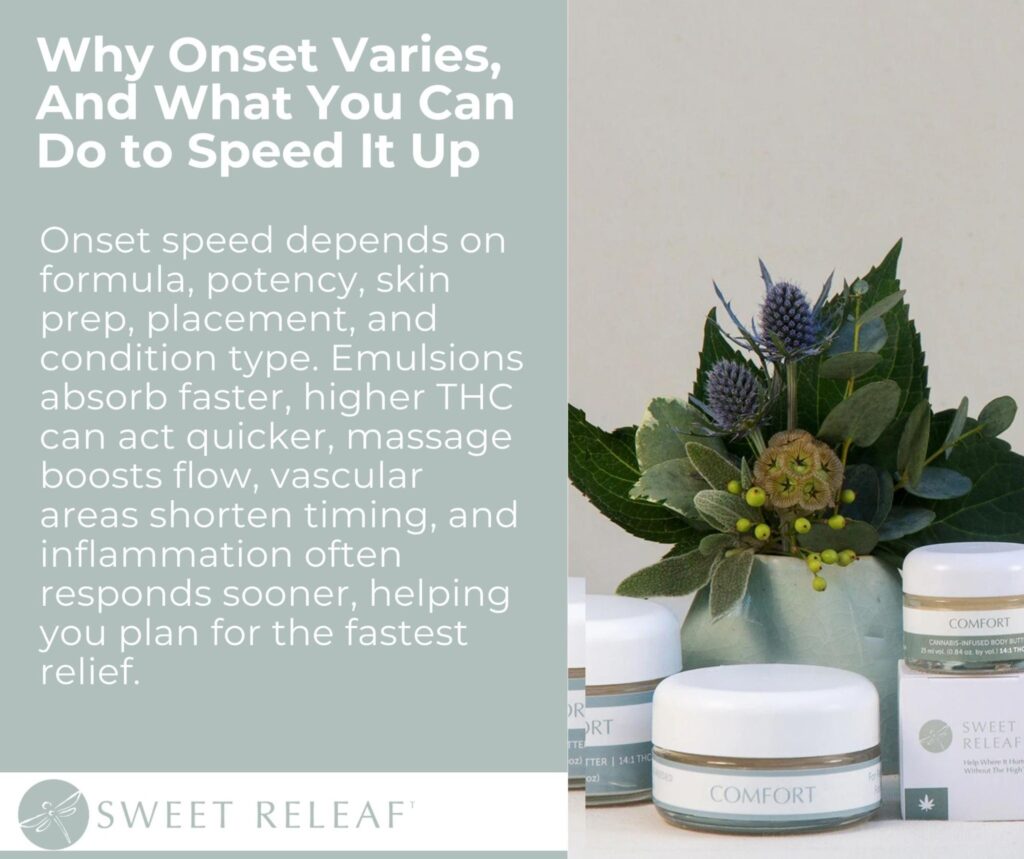
Some situations ask for more time. Deep nerve pain tends to sit farther below the surface, which slows how quickly a topical can reach it. Areas like the knees or lower back have thicker skin and less immediate absorption, which can stretch the timeline.
Formulation plays a role here as well. Products that sit on the skin instead of moving through it delay the entire process. Skipping massage has a similar effect since circulation helps carry cannabinoids where they need to go.
The Dosage Question
At some point, almost everyone tries this: the pain is still there, so you scoop a little more cream and rub it in again, hoping that this time it kicks in faster.
It feels logical. More product should mean quicker relief.
In practice, that’s rarely how it plays out.
Does More Cream Work Faster?
Once your skin is covered, adding more cream doesn’t speed anything up. It creates a thicker layer that has to work its way in before the cannabinoids can reach the tissue underneath.
What tends to work better is a small amount applied with intention. A thin layer, worked into the area for 30 to 60 seconds, gives the formula a clear path into the skin. That’s where timing improves.
There’s also a natural ceiling. The skin can only absorb so much at once. After that, extra product just sits there, waiting its turn instead of accelerating the process.
Keep Track of Potency
Where speed really shifts is in how much THC is available the moment absorption begins.
Higher THC content means more active compounds are ready to engage right away. That often shows up as a quicker, more noticeable change in the area.
Lower-dose creams tend to feel slower. People wait, apply more, and still get a muted response. That pattern shows up often with products that simply don’t carry enough THC to drive a strong effect.
When to Reapply THC Cream
Relief from a topical has a rhythm to it. It builds, holds steady for a while, then gradually fades. Knowing when to reapply keeps that rhythm smooth instead of letting the pain creep back in and take over the pace again.
How Often Should You Use THC Cream?
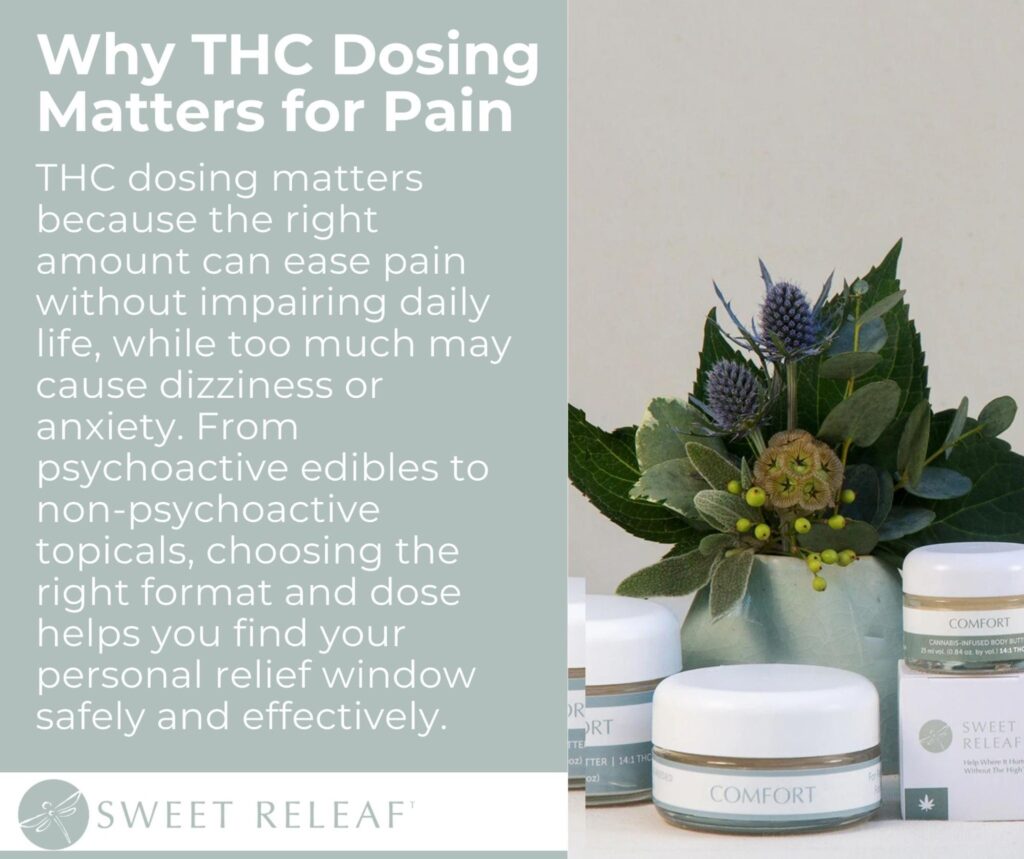
For most people, relief lasts somewhere in the three to six hour range. That window gives you a simple guideline. Reapply when you feel the effects starting to taper rather than waiting until discomfort is fully back.
With occasional soreness or activity-related pain, that might mean using it once or twice in a day. For ongoing issues like arthritis or chronic joint stiffness, a more consistent pattern tends to work better. Two to three applications spaced throughout the day can help keep the area feeling stable instead of cycling between relief and flare-ups.
Over time, this kind of steady use often leads to a more even baseline, where the highs and lows of pain feel less dramatic.
Is There a Limit to How Much You Can Use?
Topical THC stays local to the area where it is applied, which changes how you think about frequency. There is no strict ceiling on daily use in the way people think about ingestible cannabis.
What matters more is the quality of the formula and how your skin responds to it. A well-made cream with skin-friendly ingredients can be used multiple times a day without issue. Many people build it into a routine, applying in the morning, after activity, and again in the evening.
It becomes part of maintenance rather than a last resort.
The “Rebound Pain” Some Users Notice
Some users describe a brief period where the pain feels sharper as the cream wears off. It can catch people off guard, especially if the earlier relief was strong.
This tends to be a contrast effect rather than a sign of dependence. When the body shifts from a more comfortable state back to its baseline, the change can feel amplified for a short time before settling.
Timing helps smooth that transition. Reapplying as the effects begin to fade, instead of waiting until the discomfort peaks, keeps things more even and avoids that sudden swing.
How to Make THC Cream Work Faster
Speed comes down to what happens the moment the cream touches your skin. The way you apply it can shift onset from slow and uneven to quick and consistent. A few small adjustments make a noticeable difference.
Precise Application Equals Better Targeting
THC topicals work where you place them, so accuracy matters. Take a second to locate the exact source of discomfort instead of covering a general area.
A stiff knee often has a specific point that drives the tension. The same goes for shoulders, hands, or lower back. Applying directly to that spot gives the cannabinoids a shorter path to the tissue that needs support.
When the cream is spread too broadly, the effect gets diluted. A focused application keeps the response stronger and more immediate.
Massage Changes Everything
Massage is where things start to shift. Spending 30 to 60 seconds working the cream into the skin increases circulation in that area, which helps move cannabinoids below the surface.
That movement improves penetration and brings the active compounds closer to the receptors involved in pain signaling. The difference is noticeable. The same formula often feels faster and more effective with proper massage than with a quick, surface-level application.
It also helps the cream settle evenly, which supports a more consistent response across the treated area.
Small Tweaks That Speed Things Up
A few simple habits can noticeably shorten the time it takes to feel relief:
- Apply to clean skin so absorption is not blocked
- Use after a warm shower or heat exposure to help the skin open up
- Apply before pain peaks, when the area is more responsive
These steps create better conditions for the cream to do its job. When everything lines up, the timeline becomes shorter and far more predictable.
What to Look for In THC Cream?
You can try five different THC creams and get five completely different experiences. One barely registers. Another actually changes how your body feels within minutes. That difference usually comes down to how the cream is built and how it behaves once it hits your skin.
What Makes a THC Cream Actually Fast-Acting
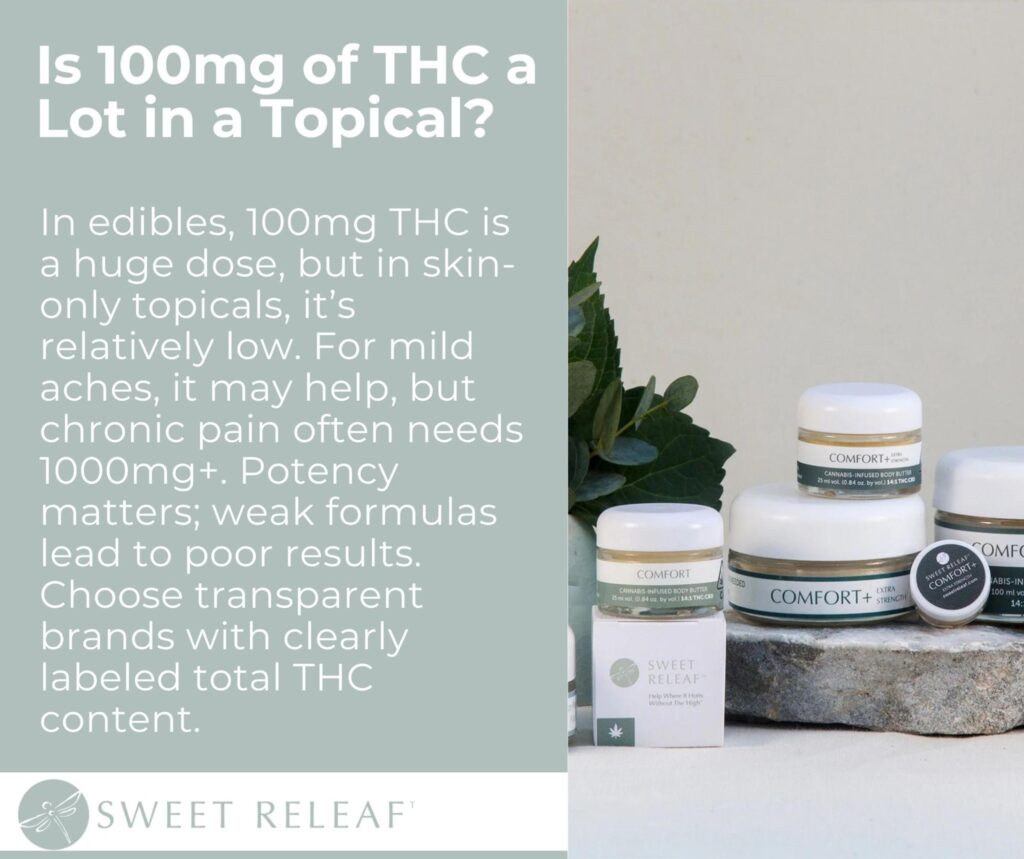
Speed starts with how much THC is actually present. If there isn’t enough there, nothing happens quickly no matter how much you apply. When the concentration is higher, you feel it sooner and more clearly.
Full-spectrum formulas tend to land better for a reason. You’re getting more than just THC, and that combination shows up as a fuller, more noticeable shift in the area you’re treating.
Then there’s how the cream moves. Some products sit on top of the skin and take their time. Others sink in almost immediately and keep going. Emulsion-based creams fall into that second group. They don’t linger on the surface, which is why they tend to feel faster and more direct.
Why Sweet Releaf Formulas Feel Different
These formulas didn’t come out of a trend cycle or a branding exercise. They started with someone trying to solve real, ongoing pain and not finding anything that worked well enough.
That’s why whole-plant THC is used instead of isolates. You get the full profile of the plant, and it shows up in how the cream performs once it’s applied.
The focus has always been on getting below the surface. When a cream actually reaches deeper tissue, the relief feels different. It holds longer and makes a bigger dent in the problem instead of just softening it for a few minutes.
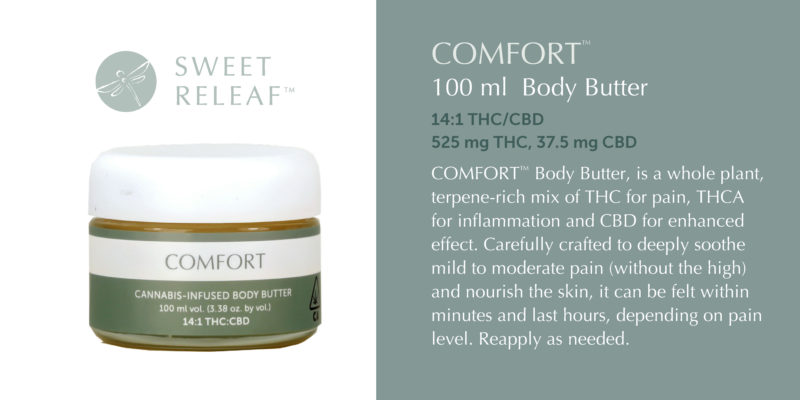
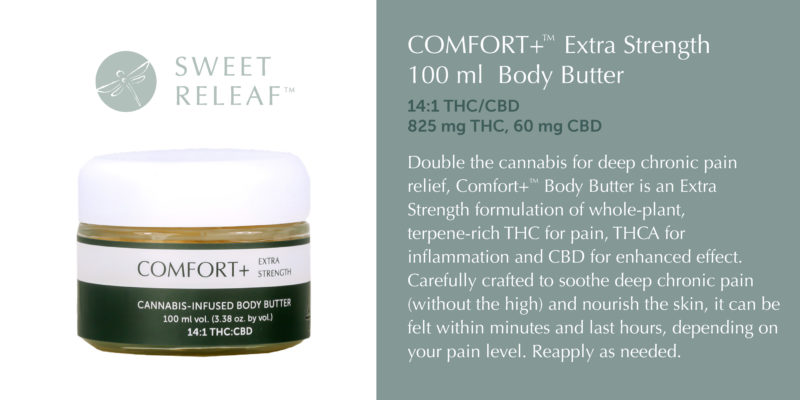
Fast-Acting Sweet Releaf Creams You Will Love
Plant Rewards Patience
THC cream isn’t built for drama. It earns its place the second or third time you use it, when the same spot settles faster and stays that way longer.
You apply it, give it a few minutes, and get on with your day. Next time, it shows up quicker. After that, you stop thinking about whether it’ll work at all.
That’s the shift.
The right formula does its job, again and again, until relief feels normal instead of temporary.
If you’re ready for something that actually delivers, take a look at Sweet Releaf products. They are available all over California and have just the kind of fast-acting formula you need.