Cannabis creams are one of the most misunderstood tools in the plant medicine world. Because they don’t intoxicate and don’t enter the bloodstream in meaningful amounts, they often get dismissed as “lightweight.”
In reality, a well-formulated topical can be one of the most precise ways to work with cannabinoids. It delivers them directly to the tissue that needs support and keeps the conversation local.
That precision gives cannabis creams range. They are not limited to post-workout soreness or occasional tension. When skin becomes reactive, inflamed, or persistently irritated, a topical can engage that activity at the surface without affecting cognition, mood, or daily function.
Eczema is one of the clearest examples of where this matters. It is driven by ongoing inflammatory signaling in the skin. Hydration helps, but hydration alone rarely settles the pattern. A topical with meaningful THC content interacts more directly with the skin’s receptor network.
Sweet Releaf was built around that principle and can do a few things for eczema:
- Help calm localized inflammation
- Reduce itch intensity
- Ease discomfort in cracked or irritated patches
- Support barrier recovery without systemic exposure
- Provide relief without intoxication
Sweet Releaf comes out of California’s legal cannabis movement, handcrafted by a family-run team that believes in whole-plant, full-spectrum medicine. High THC content paired with carefully selected ingredients because potency and formulation determine outcomes.

In the sections ahead, we will look at why eczema feels persistent, why many cannabis creams disappoint, and how to use Sweet Releaf in a way that produces measurable change in the skin.
Living With Eczema: Why the Discomfort Feels Constant
Eczema has a way of settling into the background of daily life without ever truly leaving. It may quiet down for a stretch, then resurface in the same familiar spots, almost as if the skin remembers where it struggled before.
That persistence creates a subtle kind of fatigue. The condition is rarely dramatic all at once, yet it lingers long enough to shape routines, clothing choices, and even sleep patterns.
The Itch-Scratch Cycle That Never Ends
The ongoing discomfort traces back to inflammation that never fully resolves. When the skin barrier weakens, moisture escapes more easily and irritants penetrate more readily. That combination keeps the tissue slightly agitated.
The itching that follows is a signal from inflamed nerve endings embedded in already compromised skin.
Scratching brings brief relief, but it also creates microscopic damage that deepens the inflammatory response. Over time, those repeated disruptions lead to rough texture, thickened patches, and areas that feel perpetually sensitive.
Night amplifies the cycle. Without movement or distraction, awareness of the skin sharpens. Many people wake up to find that the irritation has escalated during sleep, reinforcing the sense that the condition never fully settles.
Why Sleep, Mood, and Skin Are Connected
Eczema rarely shuts off at night. In fact, many people notice that itching intensifies once the lights go out. Body temperature rises slightly during sleep, and that subtle shift can make already inflamed skin feel hotter and more reactive.
Without daytime distraction, sensation sharpens. The result is restless sleep, repeated scratching, and skin that looks worse in the morning than it did the night before.
Mood follows a similar rhythm. Chronic irritation wears on patience and concentration. Heightened stress feeds immune activity, and immune activity shows up in the skin. It becomes a loop: poor sleep fuels inflammation, inflammation fuels itching, itching disrupts sleep again.
Meet Sweet Releaf: High-THC Cream Your Skin Will Love
In the cannabis topicals world, potency without craft is loud but ineffective, and craft without potency is decorative.
Sweet Releaf sits at the intersection of both.
The formulation respects the plant in its whole form and respects the skin as living tissue that responds to texture, absorption, and balance. When those variables are handled correctly, a topical stops being an afterthought and becomes a serious therapeutic tool.
What Goes Into Our Creams
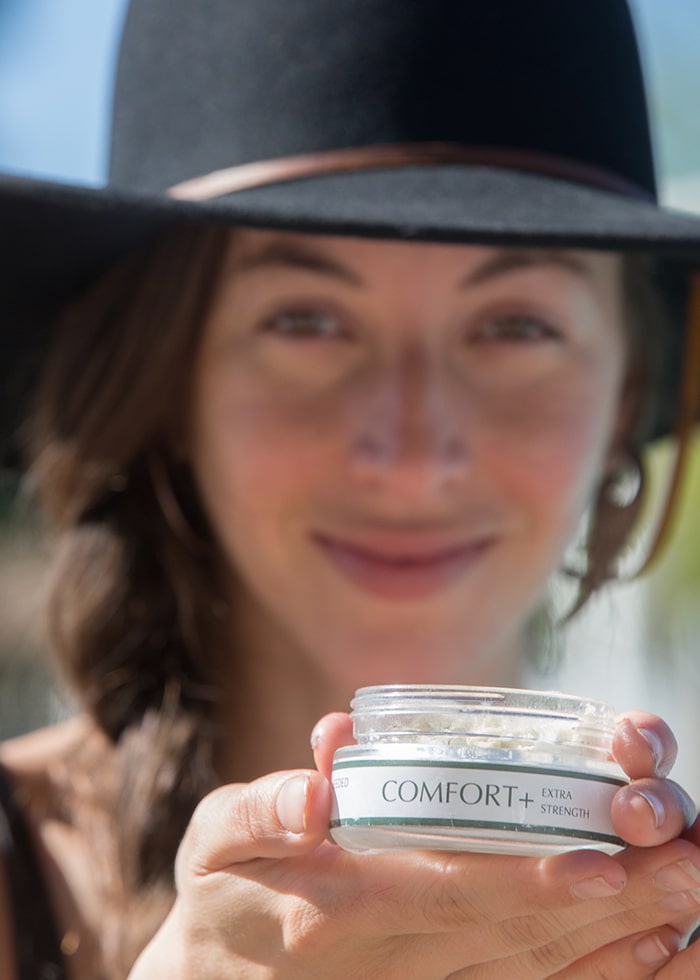
Sweet Releaf begins with the plant in its most intact form. Instead of relying on stripped-down extracts, the formulation uses the resin glands themselves, preserving the cannabinoids and terpenes as they naturally occur together.
That decision shapes how the cream performs on the skin. The profile remains balanced, layered, and grounded in the way the plant evolved.
At the center of every jar:
- Raw cannabis trichomes rather than distillate
- Full-spectrum Delta-9 THC supported by a modest amount of CBD
- Coconut oil, shea butter, and cocoa butter for structure and skin conditioning
- Aloe vera to support hydration and cannabinoid penetration
- Essential oils selected through an Ayurvedic lens
- No synthetic preservatives
- No isolated cannabinoids
Each component plays a role in both performance and feel. The butters condition without heaviness. The aloe hydrates while supporting delivery. The whole-plant cannabinoids remain intact, which many users find produces a more complete and stable response in the skin.
The Emulsion Difference: Our Cream Is a Smooth Operator
Most cannabis salves are oil-heavy and sit where they are placed. Sweet Releaf body butters are emulsions, meaning oil and water are heated separately at precise temperatures before being brought together under high shear.
That process transforms them into a stable, buttercream texture that spreads easily and absorbs with purpose.
Aloe vera makes up a significant portion of the base, encouraging hydration while helping cannabinoids move into the skin rather than lingering on the surface. The finish feels refined and breathable, closer to high-end skincare than to a traditional balm.
Will It Get Me High?
When applied topically, cannabinoids bind to receptors located within the skin itself. They remain local, supporting tissue where they are placed without shifting cognition or mood. This approach differs from transdermal systems designed to move cannabinoids into circulation.
Sweet Releaf body butters are formulated to stay at the surface level of action. That distinction matters for people who want relief that integrates seamlessly into daily life.
Sweet Releaf Recommends for Eczema
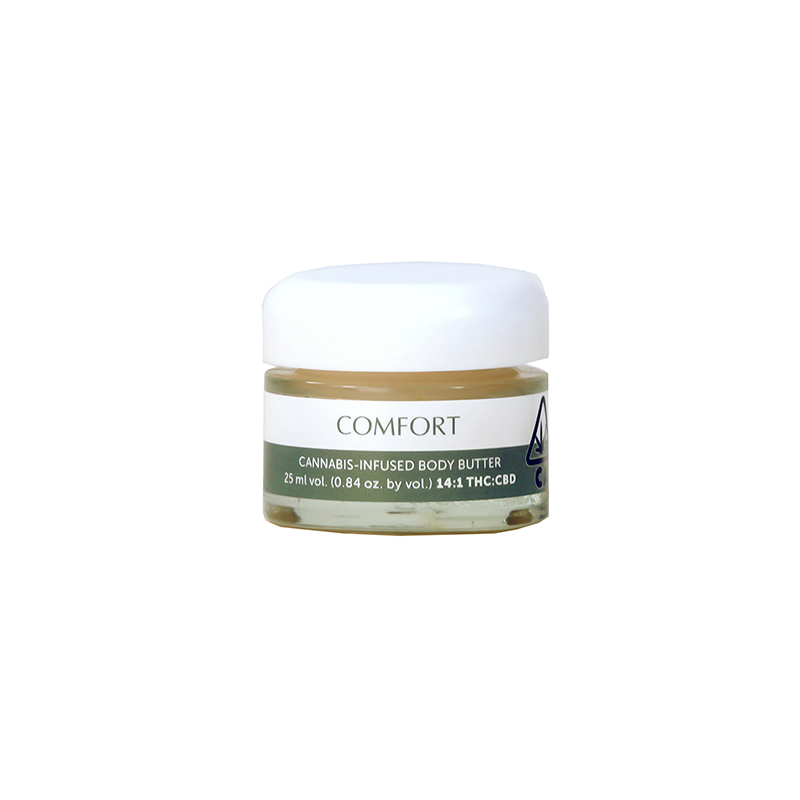
- Comfort Body Butter
A balanced introduction to high-THC topical care, well suited for daily use and for skin that responds best to steady, consistent support.
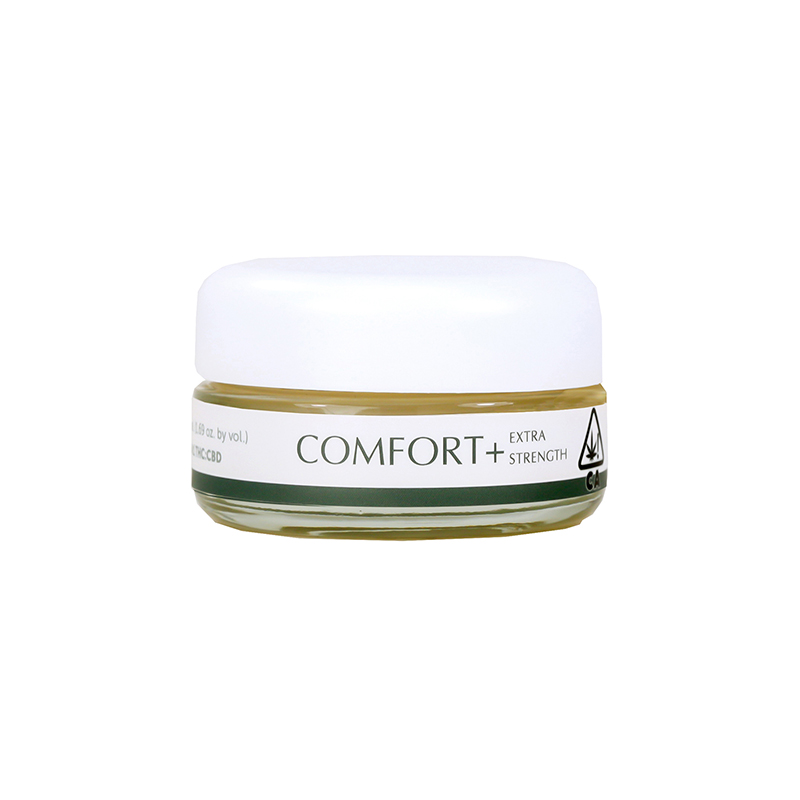
- Comfort+ Extra Strength Body Butter
A higher concentration option for areas that remain stubborn or cyclical, especially when lower-potency creams have delivered limited change.
What Sweet Releaf Cream Can Do for Your Eczema
Relief from eczema is rarely about a single dramatic change. It is about shifting the pattern. When irritation settles, even slightly, the skin begins to behave differently.
A high-THC topical works at the level where that pattern forms, engaging the signaling processes inside the skin rather than simply coating the surface.
How THC Interacts with Inflamed Skin
The skin contains cannabinoid receptors, including CB2 receptors that help regulate inflammatory responses. When THC is applied topically, it binds locally to those receptors and influences the chemical messengers that drive redness, swelling, and itch.
Instead of numbing sensation, it modulates the activity underneath it. That distinction matters. It means the cream supports immune balance in the skin rather than masking discomfort.
Many people associate THC primarily with its psychoactive effects, yet at the skin level it functions differently. Applied topically, it stays local and works directly within inflamed tissue.
The result is reduced local pain and a decrease in the itch signaling that fuels scratching cycles. For eczema sufferers, that shift can feel immediate and practical rather than abstract.
Short-Term Benefits You May Notice
Early changes are often tactile. Itching may soften within minutes as receptor activity settles. Redness can appear less intense. The skin feels more supple as hydration and reduced irritation begin working together.
Most noticeable is a quieter urge to scratch. That small shift alone can interrupt the cycle that keeps eczema active.
Long-Term Use: What Changes Over Time
With consistent use, patterns begin to stabilize. Flares may still occur, but their intensity often decreases. Skin that once rebounded sharply after steroid use can feel steadier, without the abrupt cycles of suppression and return. The barrier has space to recover, and micro-cracking becomes less frequent.
Improved sleep frequently follows. When nighttime itching diminishes, rest deepens. Better sleep reduces inflammatory activity the following day, creating a reinforcing loop in the opposite direction. Over time, that steadier baseline becomes more valuable than any single dramatic improvement.
How Sweet Releaf Compares to Other Eczema Options
Eczema treatment often becomes a progression. People move from gentle moisturizers to stronger interventions, sometimes landing on prescription drugs that carry cost and systemic considerations.
Understanding how each option behaves helps clarify where a high-THC topical fits.

Prescription meds can deliver strong results, yet they come with significant cost and a commitment to systemic immune modulation. For many, the idea of long-term immune suppression raises hesitation. Others reach that stage only after trying numerous creams that provided surface comfort without deeper change.
Sweet Releaf offers a localized approach that addresses inflammation where it lives while preserving clarity and daily function.
How to Use Sweet Releaf for Eczema
Using a high-THC topical for eczema is less about volume and more about rhythm. Skin that flares responds to consistency and thoughtful contact. The cream should feel like it belongs there, not like it was layered on in desperation.
Applying the Cream Properly
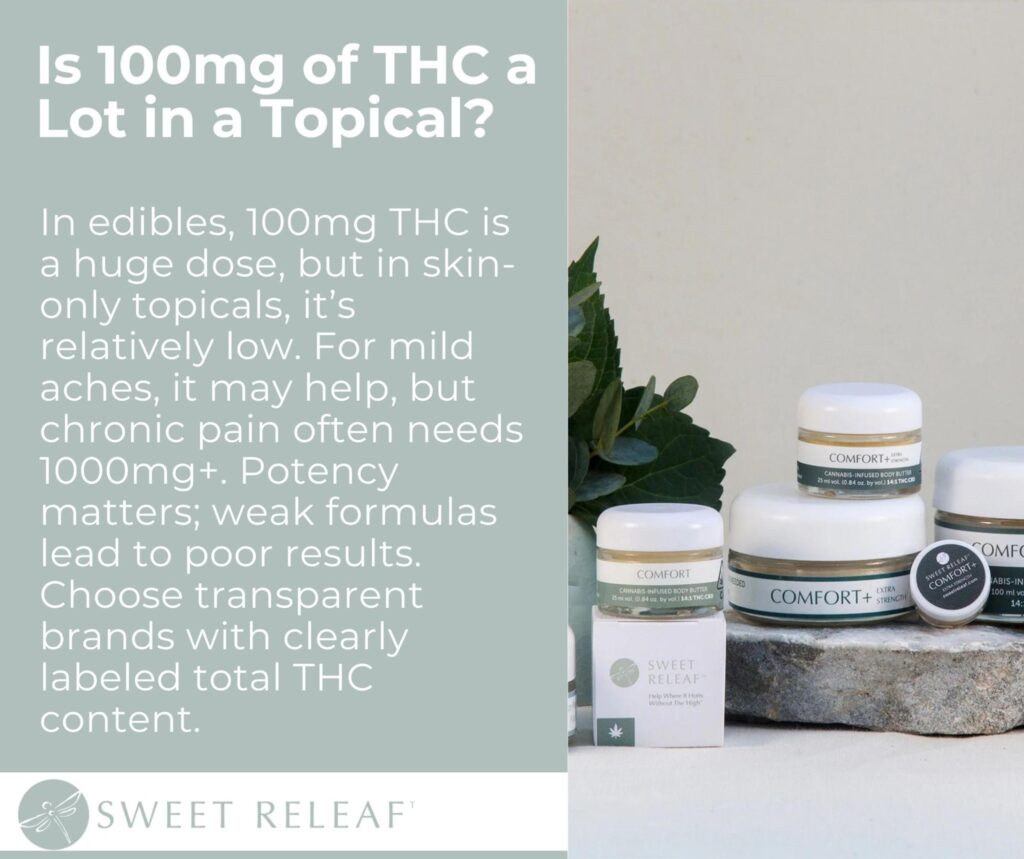
A small amount is enough. For an area about the size of your palm, think in terms of a pea or slightly more. Work it into the skin in a thin layer and take a moment to actually massage it in.
Thirty seconds of gentle pressure allows the emulsion to settle into the tissue instead of sitting at the surface. The texture was designed to disappear into the skin, so once it has absorbed, it should feel integrated rather than coated.
Freshly washed skin tends to receive it well, especially after bathing when pores are open and the barrier is more receptive. Pat dry, then apply. The contact should be deliberate but light. Eczema-prone areas already carry enough irritation; they do not need friction.
Match Frequency to the Flare
Daily irritation calls for daily attention. A single application can keep baseline inflammation from building momentum. When a flare begins to heat up, increase frequency and space applications throughout the day so the skin remains supported. The shift often feels more controlled when the cream is applied at the first hint of itching rather than after hours of aggravation.
Areas that tend to cycle back again and again benefit from steady use over several weeks. That steadiness allows the skin to rebuild resilience instead of reacting in waves.
Smart Tips to Maximize Absorption
Technique influences outcome more than people realize. The cream was built to absorb cleanly, and when it fully integrates into the skin, cannabinoids can engage the tissue more effectively. That means giving it enough contact time to settle rather than treating it like a quick swipe-and-go product.
A few adjustments make a measurable difference:
- Apply before bed to reduce nighttime scratching and give the skin uninterrupted contact time
- Reapply after washing hands or showering to maintain steady cannabinoid presence
- Focus on edges of flare zones, not just the reddest center
- Track patterns for two weeks instead of judging performance after one application
When Will You Notice Results?
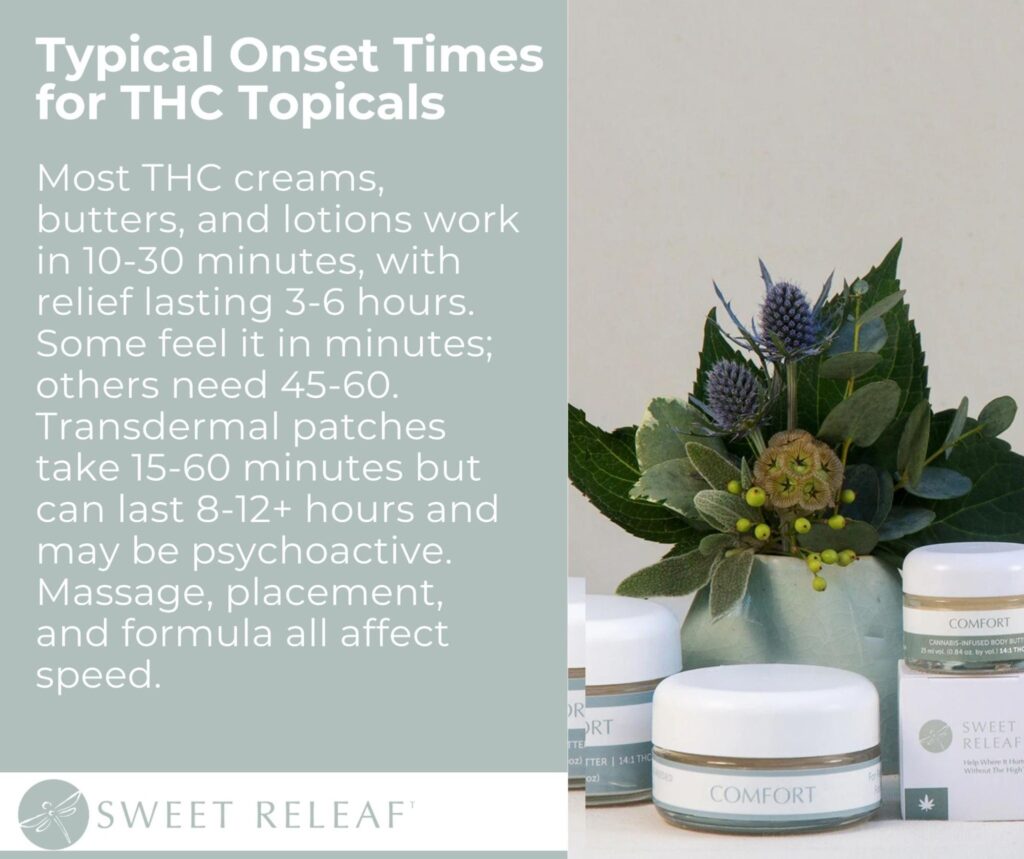
Some people feel a difference right away. The itch settles down. The skin feels less irritated. That first bit of relief can happen within minutes, especially during an active flare.
For others, the change builds more gradually. Skin that has been inflamed for a long time often needs steady support before it starts behaving differently. After a week or two of consistent use, many people notice that flare-ups feel less intense and less frequent.
Chronic eczema rarely shifts because of a single application. It shifts because the skin receives the same signal over and over again. Consistency creates stability. The more regular the routine, the more predictable the response tends to become.
Sweet Releaf Cream Will Take You Through the Rough Patches
Living with eczema wears people down. It forces adjustments, compromises, and constant awareness of what your skin might do next.
Over time, you learn small tricks just to stay comfortable. What changes the experience is finding something that actually steadies the pattern.
Sweet Releaf can become that quiet advantage. A high-THC cream used consistently gives the skin direct support without complicating the rest of your day. It works at the surface where the irritation lives, helping you manage flare cycles instead of chasing them.
You owe it to yourself to try a solution built with real potency. Look for Sweet Releaf at a dispensary near you and see what your skin does with steady support.