The entourage effect is the theory that cannabinoids, terpenes, and other compounds in cannabis work together to influence the plant’s overall effects. Instead of acting alone, these compounds may interact synergistically, potentially altering therapeutic outcomes compared to isolated THC or CBD.
Cannabis Is More Complex Than We Pretend
Cannabis is often reduced to a single number on a label. In reality, the plant is a biochemical ecosystem. More than 500 identified compounds have been documented so far, and research continues to uncover new interactions inside the human endocannabinoid system.
Skin tissue alone contains cannabinoid receptors that respond to plant-derived compounds in ways researchers are still mapping.
The entourage effect proposes that cannabis compounds influence each other when they remain together in a full-spectrum extract. Rather than isolating one molecule and expecting it to carry the entire therapeutic load, this theory suggests coordinated activity across multiple constituents.
Some key aspects of the entourage effect include:
- Interaction between THC and CBD
- Influence of minor cannabinoids like CBG and THCA
- Potential terpene modulation of receptor signaling
- Differences between whole-plant and isolate products
- Synergistic versus independent compound activity
Sweet Releaf was built around this systems-based view of the plant. High-potency Delta 9 THC is preserved alongside supportive cannabinoids and naturally occurring compounds because the goal is functional relief at the site of discomfort, delivered through the skin, without intoxication.
So what does science actually show? Where did the idea originate? And how should someone dealing with real pain think about it today? You’ll find out if you keep reading.
Some Background for the Entourage Effect Theory
The cannabis industry moves fast. Terms get adopted, stretched, polished, and printed on packaging before most people ever see the original research. “Entourage effect” is one of those phrases. It shows up in dispensaries, in product descriptions, in online debates.
But its roots are far less commercial and far more clinical than many realize.
The Original 1998 Research
The term was introduced in 1998 by Israeli researchers studying the body’s own endocannabinoids. They were not analyzing strain menus or terpene charts. They were looking at how naturally occurring compounds inside the human body behaved at the cellular level.
What they observed was simple and intriguing. Certain inactive fatty compounds enhanced the activity of 2-AG, one of the body’s primary endocannabinoids.
These helper molecules did not produce strong effects on their own, yet they amplified the impact of another compound when present together. That cooperative behavior was labeled the “entourage effect.”
At that stage, the concept described internal biochemistry. It had nothing to do with THC percentages or full-spectrum branding. The phrase was born in a lab, not in a retail environment.
How Legalization Changed the Conversation
As legalization expanded, cannabis entered a competitive marketplace. Consumers needed a quick way to compare products. THC percentage became the sorting mechanism. Higher numbers drew attention, and cultivation followed demand.
When potency began leveling across brands, differentiation shifted. Terpene profiles appeared on labels. Whole-plant synergy entered the marketing language. The entourage effect moved from academic literature into everyday sales conversations.
Online forums reflect a mixed response. Some consumers embrace the theory. Others question whether the term has been stretched beyond its evidence. Reports of lab variability, sometimes within a margin of roughly 15 percent, add to that uncertainty. The conversation evolved from highest THC wins to highest terp wins.
How the Entourage Effect Is Supposed to Work
At its core, the entourage effect is a simple idea.
Cannabis contains multiple active compounds. When those compounds stay together, they may influence how each other behaves inside the body. The theory suggests that separating them into isolated molecules changes the overall effect.
To see how that might happen, it helps to look at the main players.
THC + CBD: A Dynamic Relationship
THC binds directly to CB1 receptors in the brain. That binding is what produces intoxication. It is also tied to measurable effects on pain signaling, muscle tone, and inflammation pathways.
CBD works differently. It does not strongly attach to CB1 receptors. Instead, it influences how receptors respond and how the body processes cannabinoids. Some research suggests CBD can temper certain effects of THC, including anxiety or rapid heartbeat, though results are mixed.
Real-world experience adds another layer. Some people say CBD feels incomplete without a little THC alongside it. Others report that broad-spectrum CBD works perfectly well for them. There are also individuals who feel anxious from even very small amounts of THC and prefer to avoid it entirely.
All of those responses make biological sense. The endocannabinoid system varies from person to person. Genetics, tolerance, and overall health all shape the outcome.
Minor Cannabinoids: The Supporting Cast
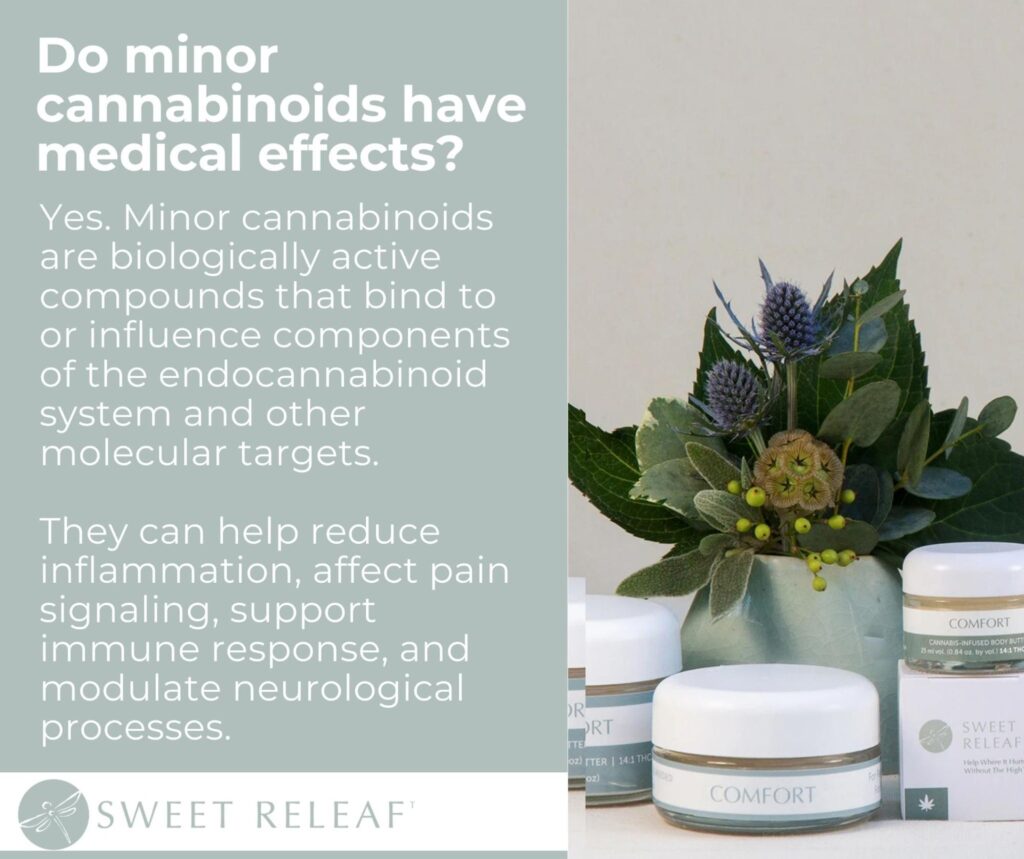
THC and CBD get most of the attention, but the plant produces many additional cannabinoids that shape how cannabis behaves in the body, including:
- CBG – Often called the “parent” cannabinoid because other cannabinoids develop from its acidic precursor during growth. It is often associated with focus and anti-inflammatory effects.
- THCA – The raw, non-intoxicating form of THC found in fresh cannabis. It converts to THC when heated but has its own biological activity before that transformation.
- CBC – A cannabinoid that interacts with receptors involved in inflammation and mood regulation, contributing to the plant’s broader therapeutic profile.
- CBN – Typically formed as THC ages. It is commonly linked to relaxation and nighttime formulations.
- Other minor cannabinoids still being studied – Each present in smaller concentrations, each interacting with the body in distinct ways.
Terpenes: Aroma or Active Players?
Terpenes are the aromatic compounds responsible for scent. Common examples include:
- Myrcene
- Limonene
- Pinene
- Linalool
- Beta-caryophyllene
Some animal studies show behavioral changes when terpenes are combined with cannabinoids. However, direct receptor binding at CB1 and CB2 appears limited in many laboratory models. Several researchers describe the current evidence as incomplete.
If terpenes do not strongly bind to cannabinoid receptors, does that weaken the entourage theory? Possibly. Or it may mean their influence operates through different pathways such as absorption, inflammation signaling, or neurotransmitter balance.
Is the Entourage Effect Real?
The entourage effect sits at the intersection of hypothesis and experience. Researchers approach it cautiously. Patients often speak about it with certainty.
Both perspectives deserve to be heard.
Scientific Evidence Is Mixed
Skeptics argue that the evidence for a strong, receptor-level entourage effect remains limited. A 2020 paper by Finlay et al. evaluated whether common cannabis terpenes directly activate CB1 or CB2 receptors. The authors found that several major terpenes did not meaningfully stimulate those receptors on their own.
If synergy depends on direct receptor co-activation, the data from the study above does not strongly support that claim.
That position reflects a broader scientific concern. Many human trials isolate single cannabinoids because they are easier to standardize. Regulatory approval pathways favor purified compounds.
At present, there is no FDA-approved optimal THC to CBD ratio for general therapeutic use. Large, controlled human trials comparing full-spectrum products to isolates remain limited.
On the other side, researchers point to findings that suggest interaction may occur through more subtle mechanisms. A meta-analysis of CBD-rich extracts in epilepsy treatment reported that patients often achieved seizure reduction at lower doses compared to purified CBD alone.
That does not prove receptor synergy, but it raises the possibility that compounds within the extract influence absorption, metabolism, or signaling pathways. Some reviews describe these effects as pharmacokinetic or modulatory rather than direct receptor binding.
The current scientific landscape does not deliver a definitive yes or no. It delivers complexity.
A Lot of Patients Swear By It
Clinical caution contrasts with lived experience.
Many individuals report that isolates feel narrower in effect. Some describe escalating CBD isolate doses with minimal change, then experiencing broader relief from full-spectrum formulas. Others find that combining THC and CBD produces a smoother, more manageable effect than THC alone.
There are also people who prefer products without THC and respond well to broad-spectrum formulations. Sensitivity to cannabinoids varies widely. Genetics, enzyme activity, receptor distribution, and tolerance all shape response.
The consistent theme is variability. The entourage effect may not function as a universal rule. It may express itself differently depending on dose, delivery method, and individual biology. That variability complicates the research and explains why the debate continues.
How This Debate Affects Real-World Use
The entourage effect debate directly shapes how cannabis products are made and how they perform. Whether cannabinoids work better together or in isolation determines how extracts are refined, how labels are written, and how consumers experience relief.
The Limits of Isolates and Distillates
When cannabinoids are isolated, the plant’s chemistry is stripped down to a single molecule. That makes manufacturing cleaner and standardization easier. It also removes the minor cannabinoids and native compounds that were originally present alongside it.
Distillates refine the process even further. Heat and repeated separation concentrate one dominant cannabinoid, often THC or CBD, while reducing the rest of the plant’s profile. Some products add terpenes back in afterward to recreate a scent or strain identity. The label shows a high potency percentage. The experience may feel sharp, narrow, or shorter in duration.
Cannabis does not behave like a single active ingredient pharmaceutical. When most of its chemical diversity is removed, the effect can change.
Lab numbers describe concentration. They do not fully predict response.
How Full-Spectrum Shapes the Cannabis Experience
Full-spectrum extracts keep the broader cannabinoid profile intact. THC remains alongside minor cannabinoids. Naturally occurring compounds stay in the mixture. The result is a chemical environment closer to what the plant originally produced.
For some people, that broader profile translates into a steadier effect. Duration may feel longer. Tolerance may develop differently. Side effects may shift.
In topical use, the conversation changes again.
Cannabinoids interact locally in the skin rather than circulating through the bloodstream. When that localized interaction includes multiple cannabinoids instead of one isolated compound, the signaling may unfold differently at the tissue level.
The debate about synergy may continue in journals. In practice, the difference often shows up in how complete the relief feels.
Taking Advantage of the Entourage Effect To Create Effective Cannabis Topicals
Talking about synergy is one thing. Building it into a product that actually relieves pain is another.
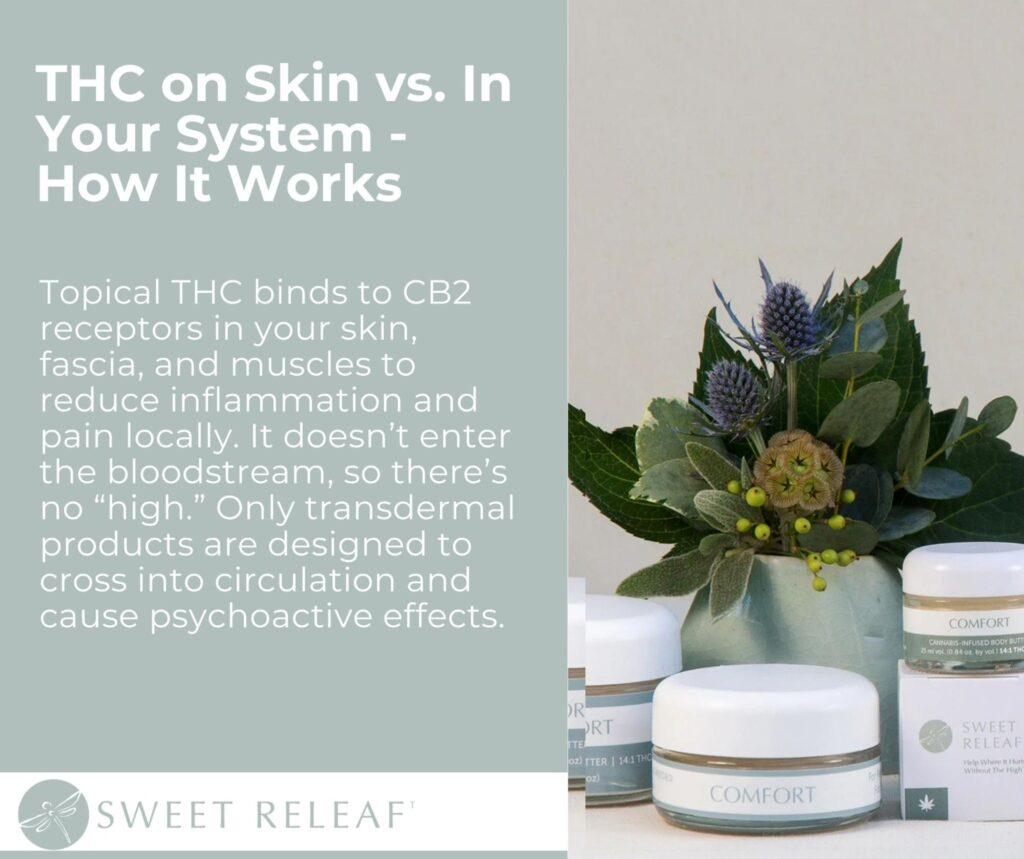
Topicals are where the entourage discussion becomes tangible. When cannabinoids are applied to the skin, they engage local receptors in muscle, fascia, and connective tissue.
The question becomes simple: does preserving the plant’s chemistry change how that local signaling behaves?
Why Whole-Plant Creams Make Biological Sense
When a topical is made from an isolate, the formulation depends on a single cannabinoid to do all the work. That can function in mild situations, but pain signaling is rarely simple. Inflammation pathways involve multiple receptors, enzymes, and cellular messengers.
Reducing cannabis to one molecule assumes a single-key solution to a multi-lock system.
A whole-plant extract maintains cannabinoid diversity. THC remains present alongside minor cannabinoids. Native plant compounds are preserved rather than reconstructed. When cannabis extracts are applied to the skin, this broader chemical profile interacts with CB2 receptors concentrated in the skin and peripheral tissues.
The effect stays localized. There is no intoxication.
For people who tried hemp CBD creams and felt little change, potency and spectrum often explain the gap.
How Sweet Relief Controls What Goes Into Topical Products
The secret of our success is that we don’t use cannabis distillate. Distillation strips the plant down and rebuilds it in fragments. Instead, whole-plant, full-spectrum cannabis is preserved at high Delta 9 THC concentrations, supported by naturally occurring minor cannabinoids.
The formulation decisions are deliberate:
- High-potency Delta 9 THC for measurable pain relief
- Minor cannabinoids left intact to support broader signaling
- No synthetic cannabinoids
- No artificial terpene reconstruction
- Emulsion-based body butter for deeper skin penetration
The emulsion base is just as important. Oil-only salves tend to sit on the surface. An emulsion allows both oil and water phases to work together, helping cannabinoids absorb more effectively into tissue.
Try High THC Topicals from Sweet Releaf
If you want to evaluate whether full-spectrum synergy makes a difference, start here:
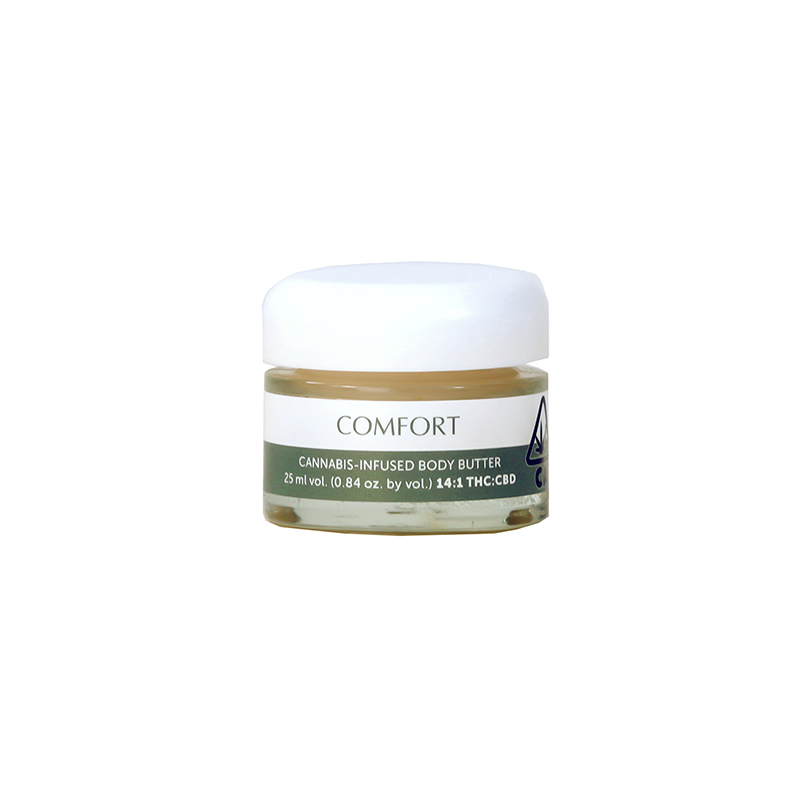
- Comfort Body Butter
High-potency, full-spectrum Delta 9 THC in an emulsion base designed for deep muscle and joint relief without psychoactive effects.
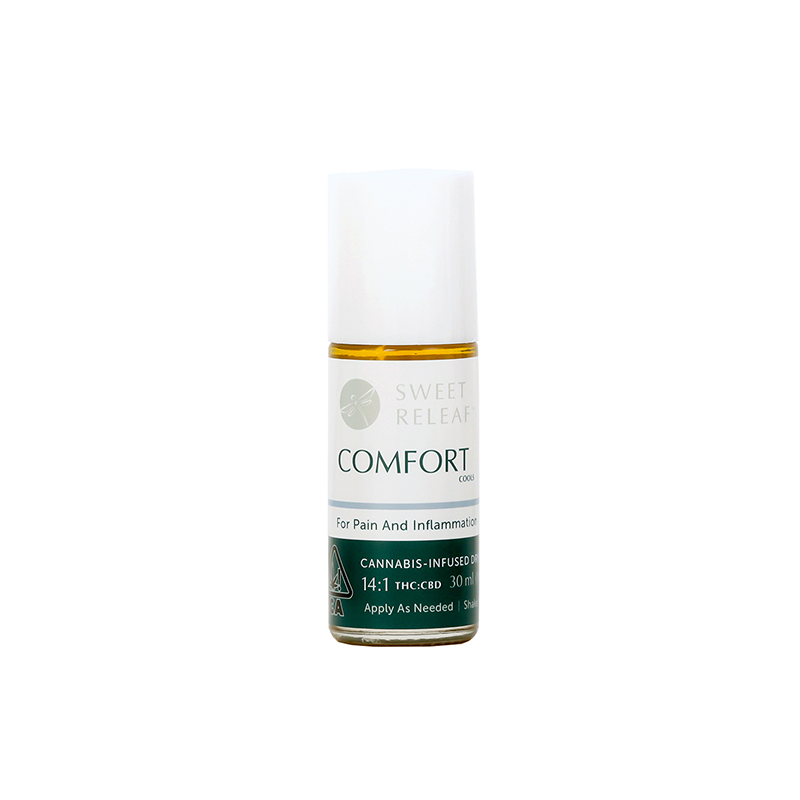
- Comfort Cools
A cooling Ayurvedic-inspired roll-on combining whole-plant cannabis with targeted botanical ingredients for fast, localized application.
Make Your Own Judgement about the Entourage Effect
For all the debates, for all the studies that conclude with “maybe” and “more research needed,” and for all the online threads dissecting isolate versus full-spectrum like it’s a final exam, the real question remains much simpler than the arguments surrounding it.
When you are in pain, does it work?
The entourage effect may continue to be examined in journals and questioned in lab settings, and researchers may keep refining their models of how cannabinoids and terpenes interact.
This won’t do much to resolve the dilemma for anyone in need of real herbal medicine.
If you want to decide whether whole-plant synergy is meaningful, the answer will not be found in a chart or citation. It will be found in a jar of Sweet Releaf topical cream, which you can find in a California dispensary near you