Standard THC pain creams rarely show up on drug tests. Most cannabis topicals act locally in the skin and do not enter the bloodstream. Drug tests detect THC metabolites produced after systemic absorption. Transdermal cannabis products can enter the bloodstream and may trigger a positive test.
Testing Keeps People Away from Potent Solutions
Drug testing carries real weight for many people exploring cannabis for pain relief. A single positive result can threaten employment or eligibility.
Because of that reality, many people hesitate before trying cannabis based products, even when pain is limiting how they move, work, or sleep.
Topical cannabis offers a practical path for people in that situation.
Creams and body butters infused with cannabinoids work through the skin rather than through the bloodstream. That difference changes how the body processes THC and why these products fit into a test sensitive lifestyle.
Here is the basic science behind it.
- Most THC topicals stay in the skin
- They do not enter the bloodstream
- Drug tests detect THC metabolites formed in the liver
- Without bloodstream absorption those metabolites never form
- Standard cannabis topicals are non intoxicating
For many years our team at Sweet Releaf has focused on this exact category of relief. We produce THC rich body butters and oils designed for localized application where joints, muscles, and connective tissue need support. The formulas use whole plant cannabis rather than isolated compounds, which preserves the natural balance of cannabinoids found in the plant.

Let’s take a closer look at how drug testing works, why cannabis topicals behave differently from other forms of THC, and when you should pay attention to the details.
Why Is Drug Testing Such a Problem?
A surprising number of conversations about cannabis pain relief circle back to the same issue. Someone finds relief from a topical cream, then a second thought arrives almost immediately. What happens when the next drug test comes around?
Workplace testing policies create that tension. Pain still needs attention, joints still stiffen, muscles still complain after long days of physical work. Yet many people operate inside industries where testing programs are routine and consequences carry real weight.
Before getting into how topical cannabis behaves in the body, it helps to look at why these policies exist and what they actually measure.
Where THC Testing Is Most Common
Drug testing programs grew out of safety regulations designed to protect workers, coworkers, and the public. Many employers operate under federal guidelines or insurance requirements that require regular screening.
Industries that regularly use THC testing include:
- Commercial driving and transportation
- Military and law enforcement
- Healthcare and emergency services
- Construction and heavy equipment operation
- Professional sports and athletics
- Certain corporate workplaces with formal safety programs
In these environments, the goal centers on preventing impairment during work hours. A single mistake around heavy machinery or public transportation can cause real harm. Because of that, testing policies tend to run strict and predictable.
For people living with chronic pain, this creates a strange crossroads. Traditional medications bring their own problems. Cannabis offers relief for many conditions. The testing policies sitting over these professions make people pause before trying anything connected to THC.
What Drug Tests Are Actually Looking For
Another detail surprises people when they first look into drug testing. Most screening programs do not search directly for THC itself.
Instead, the tests look for the chemical traces created after the body processes THC. When THC enters the bloodstream, the liver begins converting it into metabolites. Those metabolites circulate through the body and eventually appear in samples collected during screening.
Workplace programs typically rely on several testing methods:
- Urine tests, the most widely used screening method
- Blood tests used after incidents or accidents
- Saliva tests that capture recent exposure
- Hair follicle tests that reveal longer term patterns
The critical point sits inside that metabolic process. THC must first enter the bloodstream before the liver produces the metabolites that testing programs detect. Without that bloodstream step, the metabolic trail never develops.
What Happens If a Test Comes Back Positive
Testing policies carry real consequences in regulated industries. Each employer sets its own procedures, yet several outcomes appear frequently across workplace programs.
Possible results include:
- Job loss or disciplinary action
- Loss of athletic eligibility
- Military penalties
- Suspension from safety sensitive duties
With stakes this high, many people hesitate before trying cannabis products of any kind. That hesitation explains why topical cannabis raises so many questions among people dealing with pain while working inside a testing environment.
THC Topicals: A Different Way to Heal with Cannabis
Cannabis can enter the body through lungs or digestion, and those routes send cannabinoids into circulation. A topical takes a quieter path. It stays close to the surface, works with the tissue you apply it to, and keeps the experience grounded in the body instead of the head.
That is why people looking for pain relief with a clear mind often gravitate toward creams and body butters.
They Work Where You Apply Them
When you rub a THC cream into a shoulder, knee, wrist, or low back, cannabinoids meet receptors located in the skin and nearby tissue.
The skin has its own endocannabinoid system activity, and that system influences how the body signals discomfort and regulates local irritation. Cannabinoids can interact with those receptors in a way that supports calmer signaling in the area you treated.
This is the practical piece that matters day to day. You apply a topical where you feel the issue, then you give the skin a chance to do its job as a communication hub.
People describe the effect as targeted. The relief tends to show up in the same neighborhood where the cream went on, which makes sense when the activity stays local. This approach pairs well with massage, gentle movement, heat, or stretching because the topical supports the tissue while you work with it.

Why Topicals Don’t Get You High
A psychoactive effect requires THC to reach the brain through systemic circulation. That pathway starts with absorption into the bloodstream, then transport through the body, then receptor activity in the central nervous system.
Standard pain creams are built for surface level delivery, so the skin barrier limits how much THC moves past the outer layers.
In real life, people tend to notice three things: the area feels better, their thoughts stay clear, and their day continues without a mental shift.
That pattern shows up in long term users too. Many people apply THC topicals regularly for years and describe steady localized relief without an intoxicating experience, even with consistent use.

Why Topicals Don’t Show Up on Drug Tests
Most drug tests detect THC metabolites formed after the liver processes THC that entered the bloodstream. With standard topical use on intact skin, THC absorption remains minimal, so meaningful bloodstream levels usually never develop.
Without systemic circulation, the liver has little to convert into the metabolites that tests measure. The presence of THC on the label does not automatically translate into drug test risk when the product functions as a true topical rather than a transdermal delivery system.
When THC Applied to the Skin Could Affect a Drug Test
Most cannabis pain creams are formulated to stay in the skin and provide localized relief. That localized action is why standard THC topicals rarely influence drug testing. Still, the way cannabinoids behave in the body depends on how a product is designed and how it is used.
A few situations can change the equation and allow THC applied to the skin to move beyond surface tissues.
Transdermal Cannabis Products
A topical cream and a transdermal product both go on the skin, yet they are built to behave in completely different ways. Traditional topicals are meant to interact with receptors in the skin and nearby tissue. The cannabinoids remain near the surface, which keeps the effect localized.
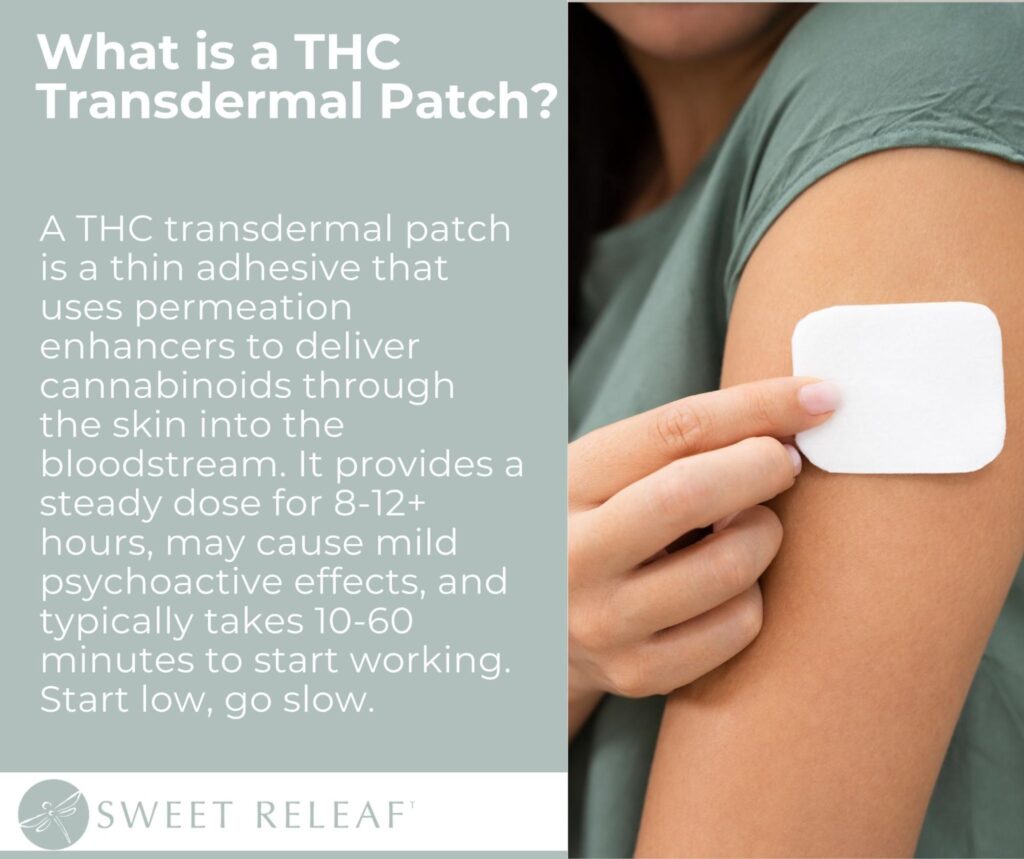
Transdermal cannabis products are engineered to push cannabinoids through the skin barrier and into the bloodstream. Once THC enters circulation, it travels through the body and eventually passes through the liver. At that point the body produces THC metabolites, the compounds most drug tests are designed to detect.
Products that fall into this category include THC patches and certain transdermal gels. Labels sometimes describe these formulas with terms such as transdermal, systemic, or extended release. Those words signal that the product is designed to deliver cannabinoids deeper into the body rather than keeping them in the skin.
Accidental Contamination
Some people also worry about accidental exposure while applying a topical. Touching a cream and later ingesting a trace amount, applying near a small cut, or transferring residue from hand to mouth can sound concerning when someone depends on a clean drug test.
In practice these situations rarely produce detectable metabolites. The amount of THC transferred through casual contact is extremely small and the skin barrier still limits absorption. Simple habits reduce even that small possibility.
Washing hands after applying a topical, keeping the product away from the eyes and mouth, and applying it to intact skin keeps the experience focused on localized relief.
Never Fail a Test with Sweet Releaf THC Pain Creams
For people living under drug testing policies, pain relief has to come with clarity and confidence. A topical cannabis product should soothe sore joints and muscles while staying where it is applied.
That principle sits at the center of Sweet Releaf’s formulations. These creams were created for people who need meaningful relief yet still have to pass a screening at work, on the field, or in regulated professions.
Why Sweet Releaf Topicals Are Different
Sweet Releaf products were developed around one goal: strong localized relief from cannabis without intoxication. The formulas use whole plant cannabis oil rich in naturally occurring cannabinoids rather than isolated compounds.
Potency also plays a role. Higher THC levels give the topical enough cannabinoid content to influence irritated tissue and support calmer signaling in sore joints and muscles. Instead of relying on weak hemp extracts, we use robust concentrations that reach 14/1 THC to CBD ratio.
The delivery system matters as well. Sweet Releaf body butters are made as emulsions that combine oil and water phases. This structure allows cannabinoids to move more effectively through the upper layers of the skin compared with traditional oil based salves. The cannabinoids remain localized while still reaching the tissue where relief is needed.
Pain Relief Without Intoxication
High THC content sometimes surprises people when they first encounter a cannabis topical. The number on the label can look strong, yet topical THC behaves differently from inhaled or edible cannabis.
When applied to the skin, cannabinoids stay concentrated near the application site. They interact with receptors in the skin and surrounding tissue rather than traveling through the bloodstream to the brain. This keeps the experience grounded in the body instead of affecting mental clarity.
That localized action allows people to use these products during normal daily routines. Work, driving, exercise, and outdoor activity continue without intoxication. For individuals who must pass drug tests yet still want meaningful relief from joint and muscle discomfort, this approach offers a practical path forward.
Recommended Sweet Releaf Pain Creams
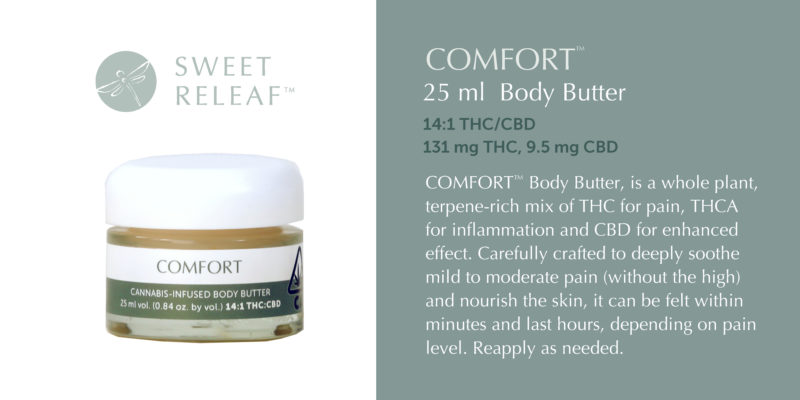
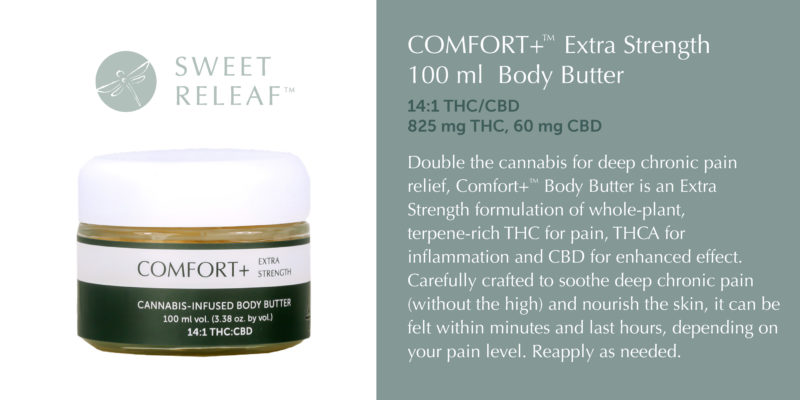
Comfort Extra Strength Body Butter
Stop the Pain, Don’t Sweat the Test
By now the picture should be clear.
THC pain creams work differently than cannabis you smoke or eat. They stay where you apply them, working with receptors in the skin and nearby tissue instead of circulating through the bloodstream. Because of that localized action, traditional topicals rarely produce the metabolites drug tests are built to detect.
A good topical can take the edge off a stubborn knee, a tight shoulder, or a cranky lower back while your mind stays clear and your routine stays intact.
Sweet Releaf built its reputation on exactly this kind of targeted relief. If you are curious what a well made cannabis topical can do, explore our body butters and see where they are available near you.