Standard THC creams act locally in the skin and do not enter the bloodstream. Because they do not reach the brain, they do not cause intoxication or impair driving ability. That means topical THC is safe to use when operating vehicles and won’t put you at risk of failing a sobriety test.
Legal Cannabis Raises a Fair Driving Question
Cannabis laws have loosened across the country, and that has people asking a direct, practical question: if you use a THC product, can you still drive safely and legally?
“THC” is generally treated as a single category, yet the way it is delivered determines how it behaves in the body. Inhaled or ingested THC can alter perception and reaction time, that’s for sure. A properly formulated topical works through the skin and stays there. Those are two very different physiological pathways.
Here’s why a properly formulated topical THC cream does not impair driving:
- They act locally in skin and muscle tissue
- They do not cross the blood-brain barrier
- They are non-psychoactive by design
- Scientific testing shows no detectable THC in blood after topical-only use
That localized action matters for anyone managing arthritis, persistent muscle soreness, or chronic pain who still needs to commute, care for family, and stay mentally sharp.
Sweet Releaf was built around that exact lane: high-THC topicals meant for localized relief, with clear-headed days intact. Up next, we’ll talk about what actually affects driving and where topicals fit into the legal and real-world picture.
The Impact of Cannabis on Driving
Driving demands clear perception, steady coordination, and sound judgment. Cannabis can interfere with those abilities, but only when THC reaches the brain. The way a product is consumed determines whether impairment is even possible.
Psychoactive THC Does Impair Drivers
When THC enters the bloodstream and crosses the blood brain barrier, it interacts with receptors that influence cognition and motor control. Research consistently shows that psychoactive exposure can reduce:
- Reaction time
- Coordination
- Attention
- Judgment
Smoking, vaping, edibles, tinctures, and transdermal patches are designed to deliver cannabinoids systemically. Once THC circulates through the body and reaches the brain, psychoactive effects may occur. In that state, operating a vehicle is unsafe and unlawful.
Every state prohibits driving under the influence of intoxicating cannabis. Law enforcement evaluates observable impairment, and many jurisdictions also establish blood concentration thresholds tied to penalties.
Being “High” vs. Having THC in the System
Confusion often arises around what the law actually measures. Being “high” refers to active cognitive impairment. Having THC in the system refers to measurable cannabinoids in blood, regardless of subjective feeling or mental capacity.
Some legal frameworks focus on blood concentration limits. Others focus on driving behavior such as delayed responses or poor lane control. These standards do not always overlap. A person may have residual THC metabolites present without exhibiting impairment, particularly in cases of prior use.
The biological rule remains consistent: THC must reach the brain to alter perception and reaction time. Products that do not introduce THC into systemic circulation cannot create intoxication. Properly formulated topical creams are designed to remain in the skin and peripheral tissues, so THC never even gets into your system.
How Safe Is It to Drive After Using a THC Topical?
Driving safety comes down to one variable: does the product alter your mind or your motor control? A THC topical is designed for localized tissue response, not cognitive change.
The delivery method determines the outcome, and with a true topical, the outcome stays in the body, not the brain.
Topicals Are Non-Intoxicating
Topical THC creams bind primarily to CB2 receptors in the skin and peripheral tissues. These receptors are involved in inflammatory signaling and localized pain modulation. They are not responsible for mood, perception, or reaction time.
Because of that receptor targeting, a topical does not create intoxication. It does not produce the perceptual shift associated with inhaled or ingested cannabis. It works at the site of application, addressing inflammation and nerve irritation without altering awareness.
This is why medical professionals and industry regulators classify properly formulated creams and salves as non-psychoactive. The pharmacology supports that classification. The route of administration prevents systemic cognitive effect.
How Topicals Affect the Driver
A topical cream affects only the area where it is applied, interacting with the endocannabinoid system in the skin. That shouldn’t be confused with systemic impact, which means driving ability affects essentially the same.
Applying a THC cream won’t do any of the following:
- Change perception
- Slow reaction time
- Create euphoria
- Cause mental fog
Instead, localized relief can improve comfort behind the wheel. Reduced joint stiffness in the hands may support steadier steering. Calmer lower back muscles may allow longer periods of seated focus. Relief from knee inflammation may make pedal control more fluid.
These are physical benefits, not neurological alterations.
Does the Strength of the Cream Matter?
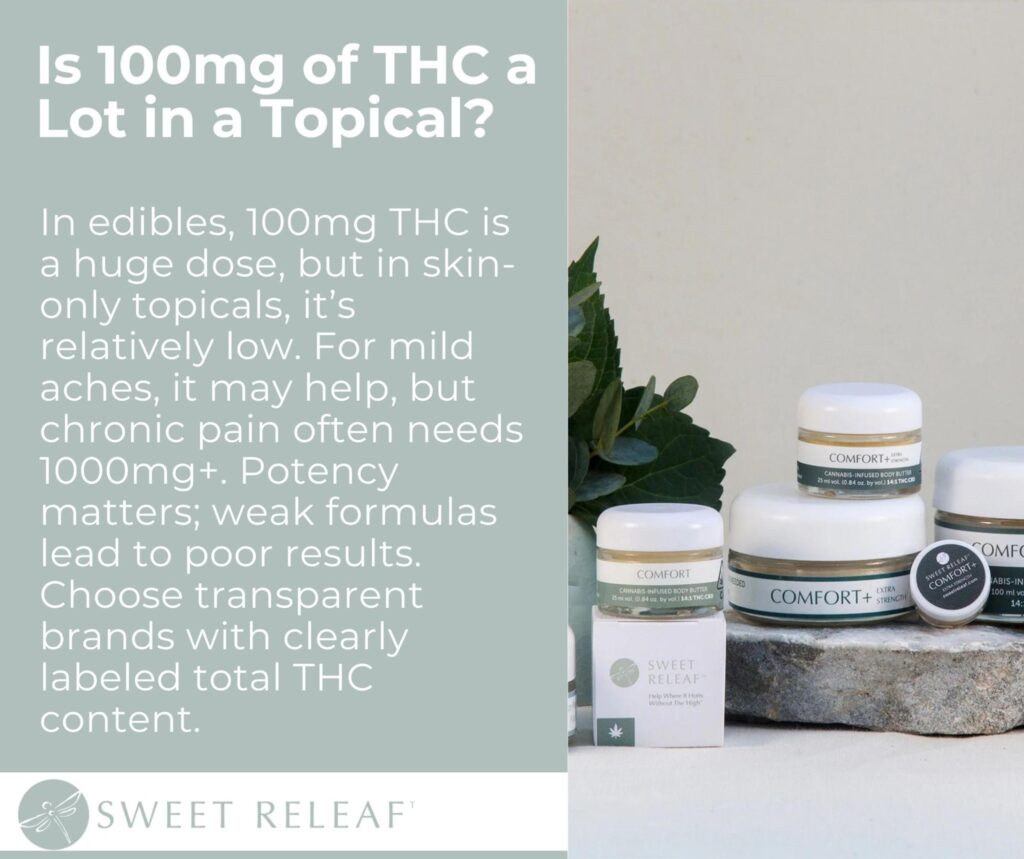
Potency often raises suspicion, especially when a label lists high THC content. Concentration determines how strongly the cream engages local receptors in the skin. It does not determine whether the product becomes intoxicating.
A high-THC topical remains non-intoxicating as long as it is formulated as a true topical rather than a transdermal system. Driving safety is tied to delivery method, not milligram count. The cream can be potent for arthritis or muscle recovery while remaining neutral to cognition and reaction time.
The Legality of Driving After Using THC Cream
Safety and legality are related, but they are not identical.
A product can be physiologically incapable of causing impairment and still raise questions in the context of evolving cannabis laws. When it comes to driving after using a THC topical, the legal framework centers on measurable intoxication, not on the simple presence of a labeled product.
What the Law Typically References
Driving under the influence statutes generally focus on two factors: THC in the bloodstream and observable impairment.
Some states rely heavily on behavioral evidence such as delayed reaction, erratic driving, or failed field sobriety testing. Others include specific blood concentration thresholds that trigger penalties regardless of outward behavior.
Standard topical creams are not formulated to introduce THC into systemic circulation. Because they do not produce measurable blood THC levels, they do not meet the biological condition referenced in DUI statutes. Forensic research supports this distinction.
Controlled testing of topical-only application has shown no detectable THC metabolites in blood or urine, even after repeated use. That finding matters because chemical detection is the backbone of most impairment cases.
Will a THC Cream Show Up on a Roadside Test?
Roadside saliva and blood tests are designed to detect systemic THC. These tests measure cannabinoids circulating in bodily fluids, not cannabinoids resting on the surface of the skin.
A non-transdermal topical that remains localized does not create measurable THC concentrations in saliva or blood.
Without bloodstream THC, roadside detection is not triggered by topical use alone. Concerns about failing a test days later typically relate to inhaled or ingested cannabis, not to creams applied to joints or muscles.
What If Police Find THC Cream During a Traffic Stop?
Possession of a labeled cannabis topical does not establish impairment. A cream in a glove compartment is not treated the same as evidence of recent smoking or ingestion. Officers evaluate behavior, physical signs, and chemical testing when determining impairment.
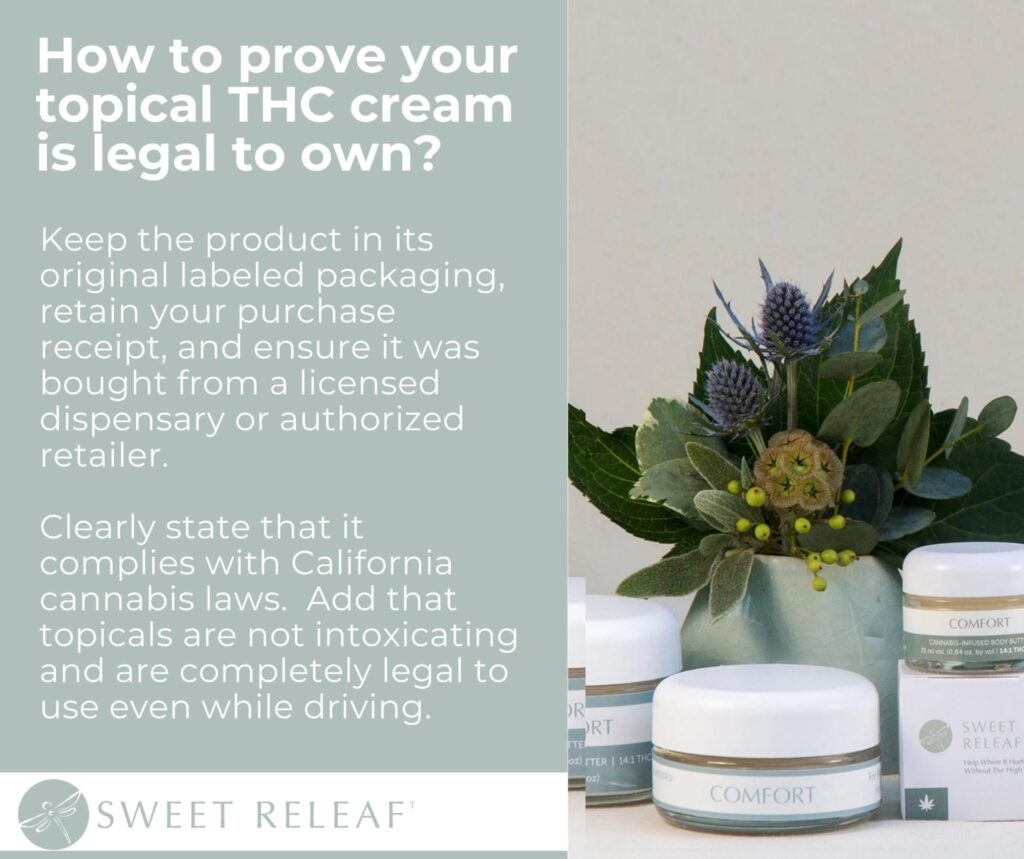
That said, cannabis laws were written before widespread topical use, and misunderstandings can occur. Being prepared to explain that a product is a localized cream and retaining purchase documentation can help clarify the situation if questions arise.
Getting THC Topicals from a Reputable Source
When driving safety is part of the conversation, details make a huge difference. A topical that stays localized must perform exactly as stated on the label.
Clear labeling, proper testing, and transparent manufacturing are what separate a true skin-based product from something engineered for systemic delivery.
Drivers should look for products identified specifically as topicals rather than transdermals. Lab verification should confirm cannabinoid content and compliance. Manufacturing practices should be traceable and consistent.
When those pieces are in place, the delivery method remains predictable, and predictability is what supports both safety and legal clarity.
Why Sweet Releaf Is a Safe Choice for Drivers
Sweet Releaf focuses exclusively on high-THC formulations designed to remain non-intoxicating. The approach relies on whole-plant, full-spectrum cannabis rather than isolated distillates.
That choice preserves the natural cannabinoid profile while keeping the effect localized.
The emulsion-based body butters are formulated to absorb into skin and connective tissue without entering systemic circulation. The Ayurvedic roll-ons are developed for targeted relief with fast absorption and clean application.
Every formulation is built around people who need to function clearly throughout the day, including those who work, drive, and stay physically active.
THC-forward does not mean intoxicating when the delivery system is topical. Potency is directed toward tissue response, not cognitive alteration.
Recommended Options for Localized, Non-Intoxicating Relief
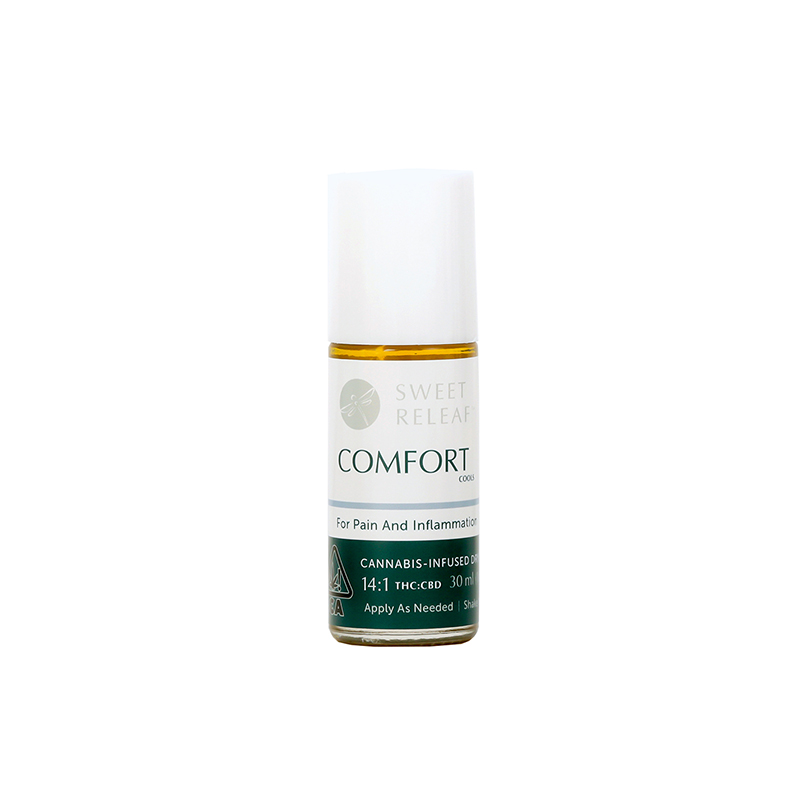
- Comfort Cools Dry Oil
A cooling roll-on formulated for quick absorption and daytime use, ideal for muscle recovery and joint support without affecting mental clarity.
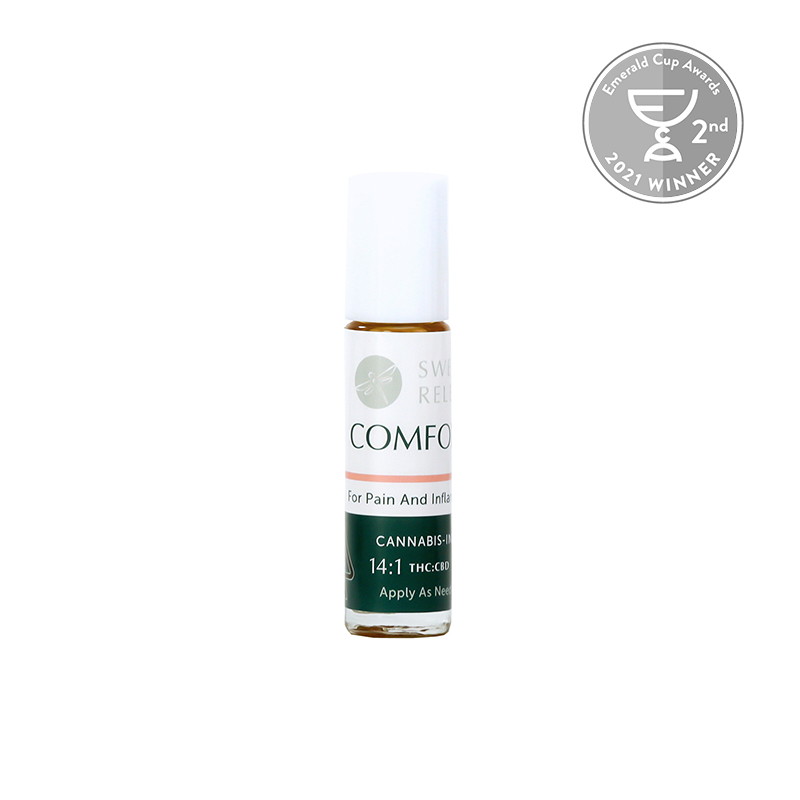
- Comfort Warms Dry Oil
A warming formula designed for stiffness and deep muscle tension, delivering localized relief while preserving full cognitive function behind the wheel.
Drive Responsibly, Choose Localized THC
You know when you’re clear and when you’re not. The driver seat is no place for altered perception or slowed response. That line is codified in law and you must never cross it.
Topical THC sits on the safe side of it.
It’s high time that everyone starts differentiating between localized physical relief and cognitive function impairment. That process can be kickstarted if more drivers learn how to take advantage of THC’s healing properties while staying completely sober and focused.
Sweet Releaf’s product line was developed for localized delivery and full mental clarity. Find our creams and oils in a California dispensary near you today.