Yes, cannabis oil for topical use can be applied to the skin for localized pain relief. Topical THC and CBD interact with cannabinoid receptors in the skin without entering the bloodstream, meaning they reduce inflammation and discomfort without causing psychoactive effects.
Cannabis Can Help Even From the Surface
The medical use of cannabis oil has expanded steadily over the past decade, particularly in the areas of inflammation and pain management. Research into cannabinoids such as THC and CBD shows that they interact with the body’s endocannabinoid system, a regulatory network involved in pain signaling, immune response, and tissue repair.
When cannabis oil is made for topical use, those cannabinoids can act directly at the level of the skin and underlying tissues.
Unlike ingestible cannabis, topical application delivers cannabinoids to localized receptor sites without producing psychoactive effects. The focus stays on the joint, muscle, or nerve pathway that needs support.
Topical cannabis oil may help relieve:
- Arthritis and joint pain
- Muscle soreness and post workout stiffness
- Tendonitis and repetitive strain injuries
- Neuropathy in hands and feet
- Back and neck tension
- Post surgical discomfort
- Inflammatory skin flare ups
Across California, therapeutic cannabis topicals have become part of many patients’ routines, especially among adults over forty seeking alternatives to opioids and long term NSAID use.
Since 2015, Sweet Releaf has been developing high THC, full spectrum formulations designed specifically for surface application. These products deliver meaningful concentrations of cannabinoids through carefully built emulsions that absorb quickly and remain non intoxicating.
The sections ahead explore how cannabis oil is extracted, why cannabinoid content changes results, and why many people try a low potency CBD cream once, feel little relief, and conclude that topical cannabis cannot help their condition.

What to Know About Cannabis Oil
When someone asks whether they can rub cannabis oil on their skin for pain, the first question is rarely about application. It is about what kind of oil they are actually holding.
The label alone does not tell the whole story. The therapeutic effect depends on which part of the plant was used and how it was processed.
Hemp Seed Oil vs. CBD Oil vs. THC Oil
Hemp seed oil comes from pressing the seeds of the cannabis plant. It is rich in fatty acids and can moisturize beautifully, but the seeds contain no cannabinoids. That means no THC and no CBD. Many skincare products list “cannabis sativa seed oil,” which sounds medicinal, yet delivers no interaction with pain receptors.
CBD oil is made by extracting cannabidiol from hemp or cannabis flower and diluting it into a carrier oil. It can calm irritated tissue and reduce inflammation to a degree. For mild discomfort, it may offer support. For deeper or chronic pain, the effect is often subtle.
THC oil is different. It is derived from the resinous trichomes of the cannabis flower, where cannabinoids are concentrated. THC interacts more directly with the body’s pain signaling pathways.
When applied topically in meaningful amounts, it tends to produce stronger localized relief.
Confusion between these categories fuels skepticism. Many people try a product labeled “cannabis oil,” feel very little change, and conclude that cannabis itself is ineffective.
How Cannabis Oil Is Extracted
The method used to extract cannabis oil shapes its potency and character.
CO₂ extraction uses pressurized carbon dioxide to pull cannabinoids from plant material with precision and cleanliness. Solvent extraction relies on ethanol or hydrocarbons to dissolve cannabinoids before the solvent is removed.
Whole-plant infusion steeps flower gently in oil, preserving a broader range of plant compounds. Some formulations incorporate raw trichomes directly, retaining the full complexity of cannabinoids and aromatic terpenes.
When oil is full spectrum, it contains multiple cannabinoids working together. Terpenes remain intact. This layered profile supports what researchers call the entourage effect, where compounds amplify one another’s activity rather than acting alone.
Cannabinoid Content Matters and Why Potency Changes Results
Pain relief is highly dependent on what cannabinoids are present and at what concentration.
- CBD provides mild anti-inflammatory activity and can soothe surface irritation.
- THC delivers stronger analgesic signaling at local receptor sites.
- CBG is gaining attention for its potential role in inflammatory and nerve-related discomfort.
- Full-spectrum formulas retain multiple cannabinoids and terpenes that work in concert.
- Isolate-only products rely on a single compound and may feel limited in scope.
Does Rubbing Cannabis Oil on Skin Relieve Pain?
Yes, when the oil is designed for topical use and contains meaningful levels of active cannabinoids, rubbing cannabis oil on the skin can relieve localized pain. The relief is not imaginary and it can be counted on.
The impact of topical cannabis is local, tissue specific, and dependent on concentration.
How Topical Cannabis Affects Pain
Human skin contains cannabinoid receptors, particularly CB2 receptors, which are involved in regulating inflammation and immune response. When THC or CBD is applied directly to the skin, these compounds bind to receptors in the tissue beneath the surface.
This interaction can:
- Reduce inflammatory signaling in the affected area
- Calm overactive pain pathways
- Support tissue recovery at the site of application
Standard cannabis topicals remain in local tissue layers. They do not enter the bloodstream unless specifically designed as transdermal systems. Because they stay localized, they do not produce psychoactive effects. There is no cognitive impairment and no intoxicating high from properly formulated topical use.
Why Surface Level Pain Responds Best
A practical observation often shared in patient communities is that the closer the pain is to the skin, the better the response. That pattern aligns with how topical delivery works.
Surface accessible areas tend to respond more predictably:
- Small joints in the hands and fingers
- Feet affected by neuropathy
- Knees with arthritic inflammation
- Neck and shoulder tension
- Tendons irritated by repetitive strain
These tissues sit close enough to the surface that cannabinoids can interact directly with receptor dense regions. Deep internal pain, such as organ based discomfort, may require additional systemic support.
Main Advantages of Topical Cannabis Oil
Topical application offers several practical benefits for people managing chronic or activity related pain:
- Targeted, localized relief exactly where applied
- Onset often within minutes
- No psychoactive effects
- Suitable for use before work, driving, or exercise
- No known liver or kidney strain associated with NSAID overuse

How to Apply Cannabis Oil for Pain
Topical cannabis works through direct contact with the skin and underlying tissue. Proper application improves absorption and consistency. Technique matters because cannabinoids need time and friction to interact with receptor-dense areas.
Step by Step Application
- Clean the area with soap and water and dry it completely. Clean skin improves contact and penetration.
- Apply a small amount of cannabis oil directly to the painful area.
- Massage firmly into the tissue for 30 to 60 seconds. Pressure and movement help distribute cannabinoids across the affected area.
- Allow the oil to absorb before dressing.
- Reapply as needed based on activity level and symptom return.
Using more oil does not automatically increase effectiveness. Potency and absorption determine outcome more than volume.
How Fast Does It Work?
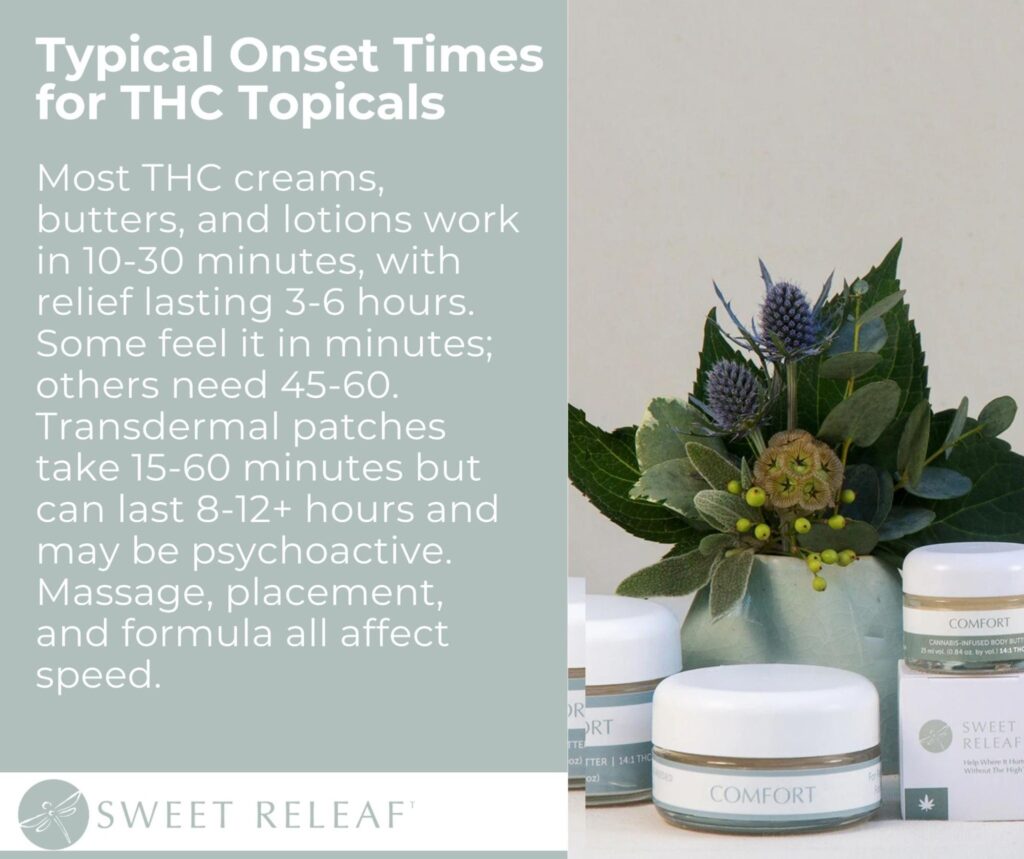
Many people report noticeable relief within 10 to 15 minutes. Peak effect typically develops within 30 to 60 minutes as cannabinoids bind to local receptors and inflammatory signaling decreases.
Duration commonly ranges from 2 to 6 hours, depending on the severity of discomfort and the concentration of THC in the formula.
Effective relief should be clear and measurable. Range of motion may improve. Heat and swelling may decrease. Sharp pain may soften into manageable sensation.
When the result feels uncertain or barely perceptible, the product often contains insufficient cannabinoid concentration to meaningfully influence local pain pathways.
What Is the Best Cannabis Oil for Pain?
Choosing the right cannabis oil for pain comes down to two factors: cannabinoid strength and delivery method. Concentration determines how strongly the oil interacts with pain pathways. Formulation determines how effectively those cannabinoids reach the tissue.
Products that overlook either element often disappoint people who are genuinely seeking relief.
High-THC Topicals Outperform CBD-Only Products
THC interacts more directly with receptors involved in pain signaling. When applied topically in adequate concentration, it produces a stronger localized analgesic response than CBD alone.
THC also demonstrates greater anti-inflammatory activity in many real-world pain applications, particularly in chronic conditions such as arthritis, tendon irritation, and neuropathy.
CBD can calm irritation and provide mild anti-inflammatory support. For light muscle fatigue or surface irritation, that may be sufficient. For entrenched joint pain or long-standing inflammation, CBD on its own often delivers limited impact.
Emulsion Formulas Absorb Better Than Salves
Delivery mechanism matters as much as strength. Traditional oil-and-wax salves tend to remain on the surface of the skin. They can feel thick and greasy, creating a barrier that slows deeper penetration.
An emulsion combines oil and water, often supported by aloe or plant-based humectants. This structure allows cannabinoids to disperse more evenly and move more efficiently into the upper tissue layers.
The result is faster absorption, a cleaner skin feel, and improved interaction with receptor sites. For people applying a product several times a day, texture and absorption become practical considerations.
Two High-THC Options Designed for Targeted Relief
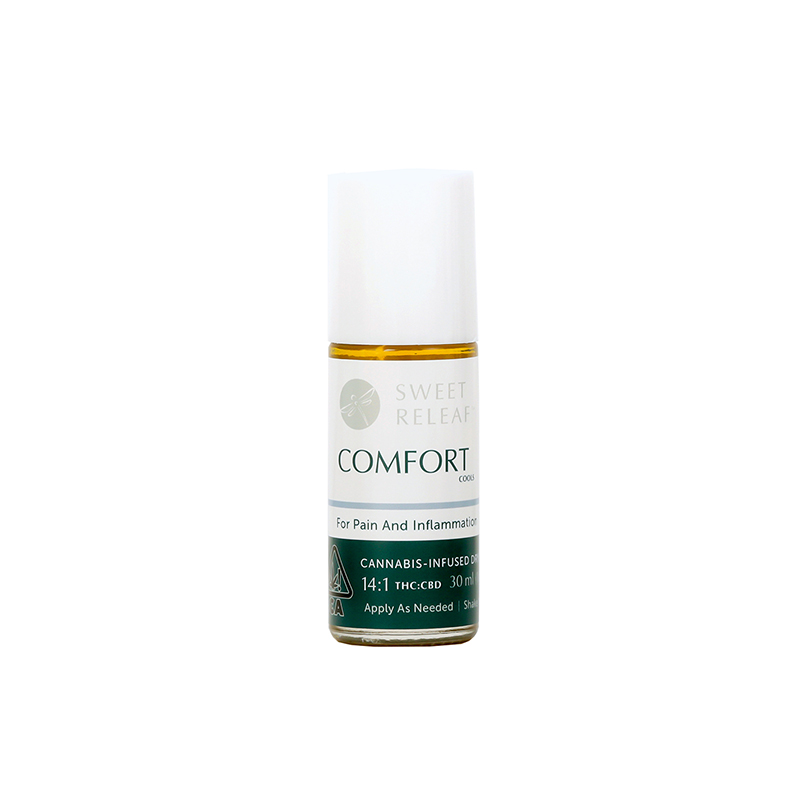
- Comfort Cools™ Dry Oil
A high-THC Ayurvedic roll-on with a cooling profile designed for inflamed joints and areas that feel hot or swollen. It absorbs quickly and leaves the skin conditioned rather than coated.
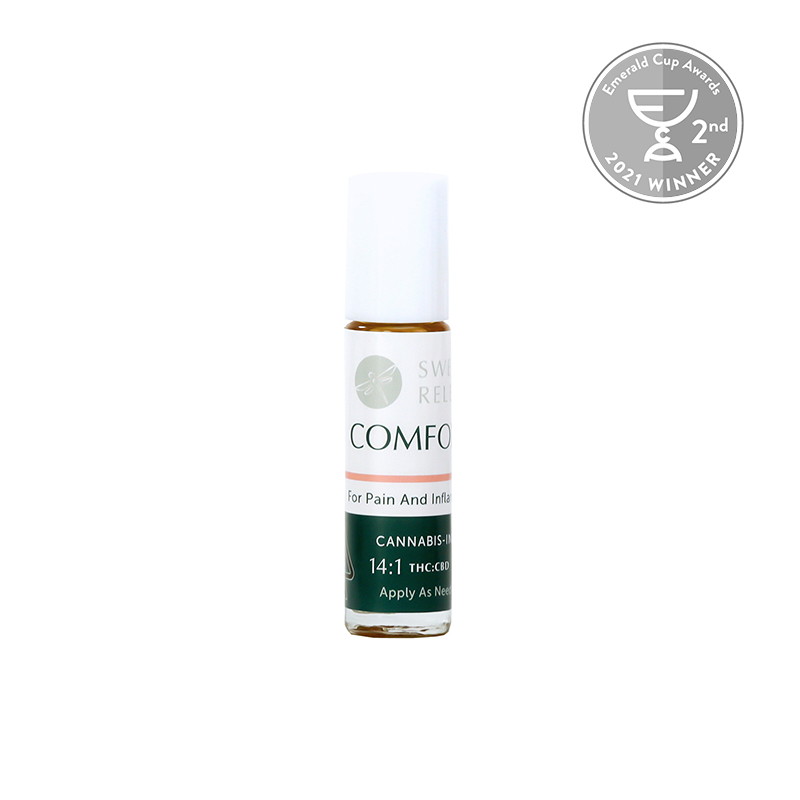
- Comfort Warms™ Dry Oil
A warming high-THC formula suited for stiffness, tight muscles, and restricted movement. The warming botanical profile encourages circulation while delivering concentrated cannabinoid support.
Can You Combine Topicals With Edibles or Pain Medication?
Pain management rarely follows a single track. Many people experiment with different approaches before finding a routine that provides steady, functional relief. Topical cannabis can fit into a broader strategy, particularly when discomfort has both local and systemic components.
Layered Pain Management
Topicals and ingestible cannabis work through the same endocannabinoid system, yet they operate in different zones of the body.
A topical application delivers cannabinoids directly to the area where it is applied. The effect stays localized in the skin, connective tissue, and nearby receptors. This approach works well for joints, tendons, and surface nerve discomfort.
Edibles and tinctures enter the bloodstream and circulate systemically. They influence the central nervous system and broader inflammatory signaling. This route may support deeper or more diffuse pain patterns.
Used together thoughtfully, these approaches can complement one another.
A person managing arthritic knees, for example, might use a high-THC topical on the joint while using a low-dose edible in the evening for broader inflammatory support. The topical addresses the specific site, while the ingestible supports whole-body regulation.
What About Opioids or NSAIDs?
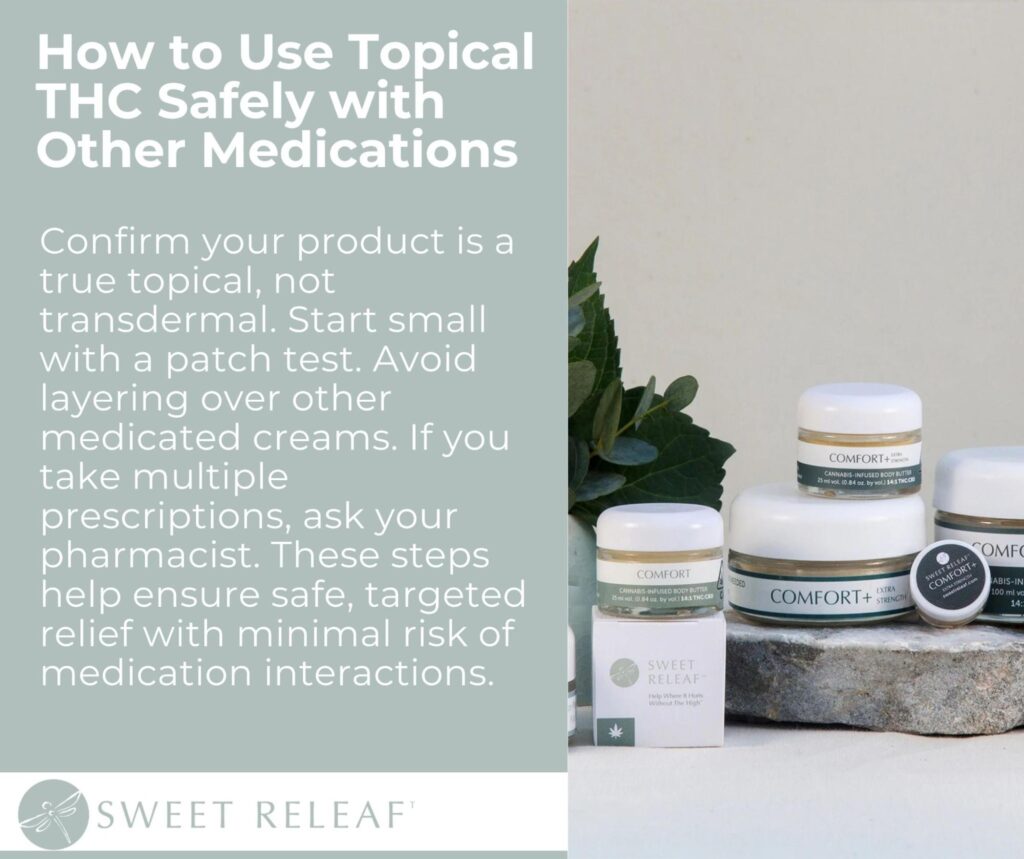
Current evidence indicates no known dangerous interactions between topical cannabis products and opioid medications or NSAIDs, since standard topicals remain localized rather than circulating systemically. That said, medical supervision remains appropriate for anyone taking prescription medication or managing complex health conditions.
Many patients report gradually reducing reliance on narcotics over time as effective topical regimens improve mobility and reduce breakthrough pain. The goal is often to lower pharmaceutical burden rather than abruptly discontinue prescribed therapies.
Topical cannabis is best viewed as a supportive tool within a comprehensive pain management plan guided by a healthcare professional.
Healing Through Your Skin
If you’ve tried a hemp cream and felt nothing, that doesn’t mean cannabis doesn’t work. It may mean you haven’t tried the right product.
Relief should be something you can feel in every move. Something that lets you garden, hike, play music, hold your grandchild, or get through a long shift without bracing against discomfort.
Cannabis oil can absolutely be rubbed on the skin for pain, but doing it makes sense only when it’s made to do exactly that. And that’s why you should stop experimenting with unproven options and go straight to the source of potent plant relief.
If you’re curious whether a high-THC topical could make the difference, explore Sweet Releaf’s product collection, or reach out with questions.