Step into any gym or locker room and you’ll hear it more often now. Cannabis has found its way into athletic routines, from weekend runners to seasoned competitors. Legalization opened the door, and curiosity did the rest.
Athletes are experimenting with THC for a few clear reasons:
- Pain relief after long sessions or lingering injuries
- Faster recovery between workouts
- Sharper focus or that elusive “flow state” where movement feels automatic
That sounds promising on the surface. The real question sits just beneath it.
Does THC actually improve performance, or does it simply change how performance feels?
Here’s where things get grounded. Research shows that THC does not reliably increase strength, endurance, or speed. It does not turn an average training session into a record-breaking one.
What it can do is shift perception. Pain may feel quieter. Effort may feel different. Recovery may feel smoother.
For athletes who want to stay active without sacrificing clarity or coordination, there’s a smarter lane. Sweet Releaf built its approach around that idea. These are high-THC topicals designed to work directly in the body without entering the bloodstream in a way that alters the mind.
So instead of chasing a shortcut, it makes sense to look at what actually supports performance.

The Case Against THC for Athletic Performance
There’s a growing belief that THC can give athletes an edge. The research doesn’t support that idea. When performance is measured in output, speed, or endurance, THC consistently falls short.
No Real Evidence It Makes You Stronger or Faster
Across controlled studies, THC does not improve the core drivers of athletic performance. VO2 max remains unchanged. Strength output does not increase. Endurance capacity stays flat or declines slightly.
In some cases, athletes reach fatigue sooner. Time to exhaustion drops by a small but measurable margin, which suggests the body is not sustaining effort as long under THC.
That pattern holds across both aerobic and strength-based testing. The body does not produce more. It does not last longer. It simply experiences the effort differently.
THC does not function as a performance enhancer in any reliable or repeatable way.
When “Feeling Better” Can Actually Hurt Performance
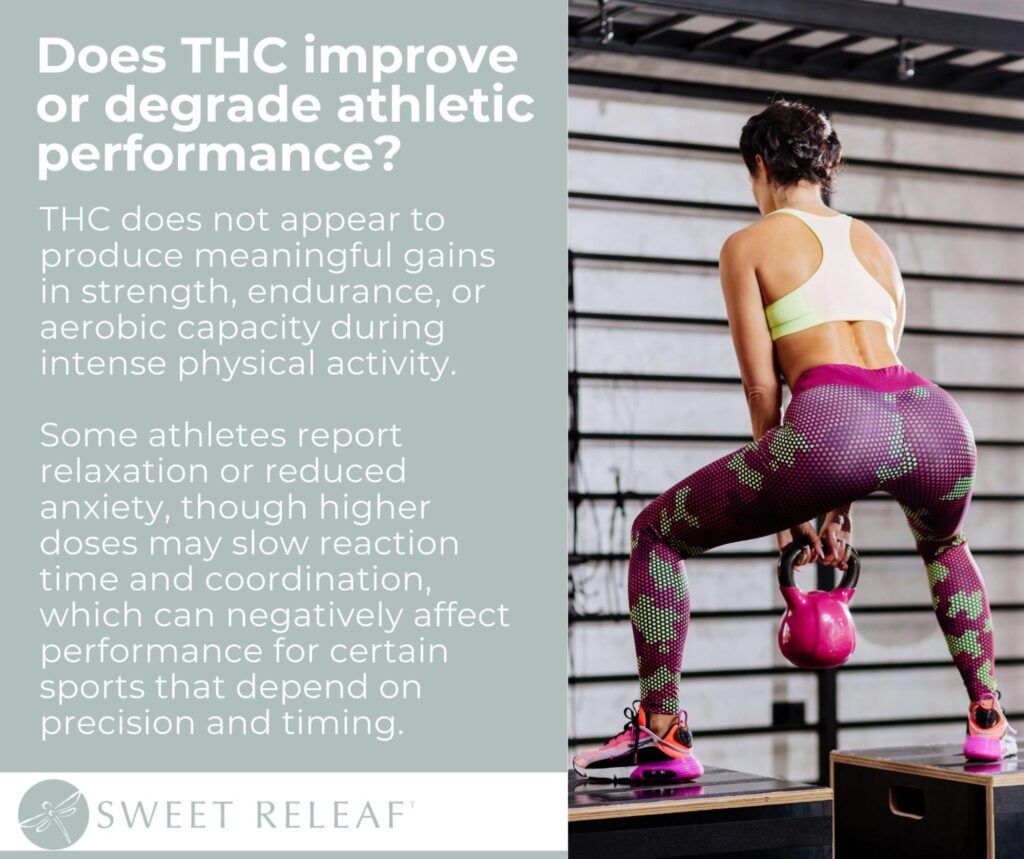
The disconnect between perception and performance is where most confusion comes from. THC can create a sense of ease, focus, or fluid movement, which can feel like improvement in the moment.
At the same time, it alters key functions that athletes depend on:
- Reaction time
- Coordination
- Decision-making
Some athletes describe a heightened sense of awareness, where movements feel smoother and timing feels natural. Others experience delayed reactions, poor coordination, and missed execution.
That variability comes down to how THC interacts with the nervous system. Dose, tolerance, and individual chemistry all shape the outcome. There is no consistent response.
In sports that depend on precision or quick adjustments, even small disruptions in timing or control can reduce performance in ways that aren’t immediately obvious.
Heart Rate, Anxiety, and the Workout That Feels Harder
THC has a direct impact on cardiovascular response. Heart rate rises, sometimes noticeably, even before physical activity begins. During exercise, that elevated baseline adds strain.
It also changes how effort is perceived. Workouts can feel heavier and more taxing, even when the actual output stays the same. Breathing may feel less controlled. Pacing becomes harder to judge.
For some athletes, THC also increases internal tension rather than reducing it. Anxiety can surface mid-workout, especially in higher doses or unfamiliar settings.
The result is a session that feels harder without delivering better results.
The Drug Testing Problem
THC remains prohibited in competition under World Anti-Doping Agency rules. That alone puts competitive athletes in a difficult position.
Even use outside of competition can carry risk. THC metabolites stay in the body and can trigger positive tests depending on timing, frequency, and individual metabolism.
Athletes in tested leagues or regulated environments face real consequences, including suspensions or disqualification.
For anyone competing under formal rules, THC use requires careful consideration well beyond its effects on training performance.
The Case For Using THC when Training
There’s a reason THC keeps being mentioned up in athletic circles, even among people who take their training seriously. It doesn’t come from chasing bigger numbers. It comes from solving a more immediate problem: how the body feels while doing the work, and how quickly it’s ready to do it again.
Pain Relief That Keeps You Training
Training breaks down when pain starts dictating decisions. A tight knee changes your stride. A sore shoulder cuts your range. Enough of that, and consistency slips.
THC shifts how that discomfort is processed. The edge comes off. Movements that usually trigger hesitation start to feel workable again. That creates room to finish a session instead of shutting it down halfway through.
Athletes who use THC in this way often describe a simple outcome: they keep showing up. One more set gets done. One more mile gets logged. Over time, that steady accumulation builds far more progress than any single peak effort.
Used with awareness, this becomes a tool for continuity. The kind that keeps training from turning into a stop-start cycle.
Muscle Relaxation and Post-Workout Recovery
After a hard session, the body holds onto tension like it expects another round. Muscles stay guarded. Joints feel compressed. That lingering tightness carries into the next day and quietly limits what you can do.
THC has a noticeable effect here. It helps the body let go.
That release shows up in how you move later. Hips open up instead of resisting. Shoulders rotate without catching. The difference isn’t dramatic in a single moment, but it compounds across days of training.
Athletes dealing with repetitive strain feel this most clearly. The same motion, repeated over weeks, builds a kind of background stiffness that never fully resets. THC can help interrupt that pattern, giving the body a cleaner starting point for the next session.
Recovery becomes less about waiting and more about restoring movement.
The Mental Flow
There’s a state athletes chase where effort and awareness line up cleanly. Movements happen without second-guessing. Timing feels natural. The body responds without friction.
Some athletes find that THC nudges them closer to that state.
Attention narrows in a useful way. Small adjustments become easier to notice. The connection between what you intend and what you do feels tighter. In controlled environments like strength training or skill work, that can sharpen execution.
It also has a calming effect for some. The mental noise that builds before a session or competition settles down. Instead of overanalyzing, there’s a quieter focus that supports rhythm and timing.
Why THC Topicals Make More Sense for Athletes
There’s a big difference between something that helps you perform and something that gets in the way while pretending to help.
Athletes feel that difference fast. When your body is under load day after day, anything that interferes with coordination, timing, or awareness becomes a problem.
All the Relief That Stays Out of Your Head
Topical THC works locally, and that changes everything about how it fits into training.
- Psychoactivity stays out of the picture
- Coordination remains sharp
- Awareness stays fully intact
You stay connected to your body in a real way. Foot placement feels precise. Grip stays intentional. Movements don’t drift or lag. At the same time, the area you’re working on starts to ease. A tight quad softens. A shoulder stops resisting the motion.
Relief builds underneath the surface while you stay fully in control of what you’re doing.

Targeted Relief Where Athletes Actually Need It
Training doesn’t stress the whole body evenly. It stacks load in very specific places, and those spots tend to speak up the next day.
- Muscles that carry repeated strain
- Joints that take impact and compression
- Inflammation points that build quietly over time
Topicals go straight to those areas. You apply it where the problem lives, and it starts working there. No waiting for something to circulate through your system.
Athletes notice this in how quickly a stubborn spot begins to release. Movement opens up. Range comes back. The body feels more cooperative, which makes the next session smoother instead of stiff and restricted.
Why Sweet Releaf Works When Others Don’t
Most topicals sit on the surface and hope for the best. Sweet Releaf makes sure that our creams penetrate much deeper.
The formulas use high-THC, full-spectrum cannabis, which means the plant shows up as a whole system instead of a stripped-down extract. That creates a broader effect in the tissue, especially when inflammation and chronic soreness are involved.
Then there’s the base. This isn’t a waxy salve that just coats the skin. The emulsion body butter absorbs and carries the cannabinoids into the layers where tension actually lives. You feel it settle in instead of sitting on top.
This is the kind of product that holds up under real use. Long training weeks. Repetitive stress. Old injuries that like to remind you they’re still there. We got all that covered with a single THC topical cream.
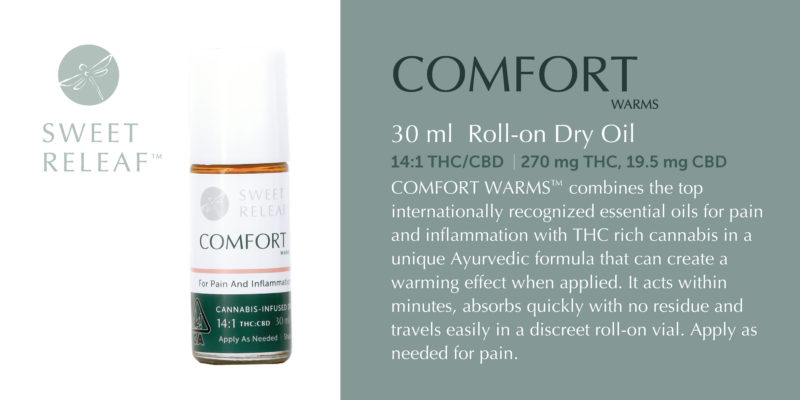
Athlete-Friendly Picks to Start With
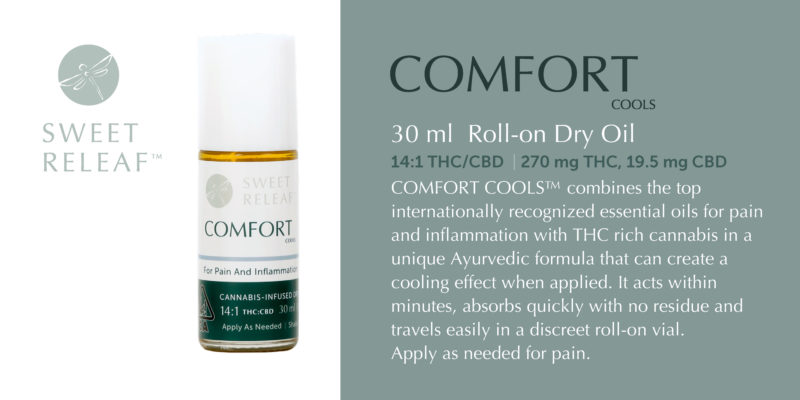
How to Use THC Topicals to Support Performance
You want more power in your lifts, cleaner movement, and a body that responds the moment you push it. That comes down to how your muscles and joints show up when it’s time to work.
Topical THC gives you a direct way to influence that. It works right where strain builds, helping your body move freely, recover faster, and stay consistent under load.
Before Activity: Loosen Up
When using topicals to prepare for a workout, focus on the areas of your body that usually hold you back early in a session.
Work the topical into tight muscles and joints that tend to resist movement. Hips that feel locked at the start. Shoulders that need a few sets before they open. Knees that take time to settle into motion.
As it absorbs, movement begins to feel more fluid. Range of motion comes without forcing it. The first few reps stop feeling like a negotiation with your body and start feeling controlled from the beginning.
That early shift carries forward. Better positioning, smoother transitions, and a body that responds the way you expect it to.
After Activity: Recover Faster
Right after training, the body is already responding to the work you just put in. That’s when applying a topical has the most impact.
Massage it into the areas that took the most load. Muscles that feel worked over. Joints that carried repeated stress. Let it settle in while the body is still warm.
Inflammation begins to ease, and soreness softens instead of building overnight. The next day feels more manageable, which makes it easier to stay on schedule instead of adjusting around discomfort.
The Smart Move: Treat Small Injuries Early
Small issues rarely stay small when they’re ignored. A minor strain or a spot of repetitive stress can build quietly until it starts affecting movement.
Apply the topical as soon as you notice those areas. Work it in regularly instead of waiting for it to become a problem that changes how you train.
Over time, that habit protects your routine. Fewer interruptions, fewer forced breaks, and more control over how your body holds up under consistent work.
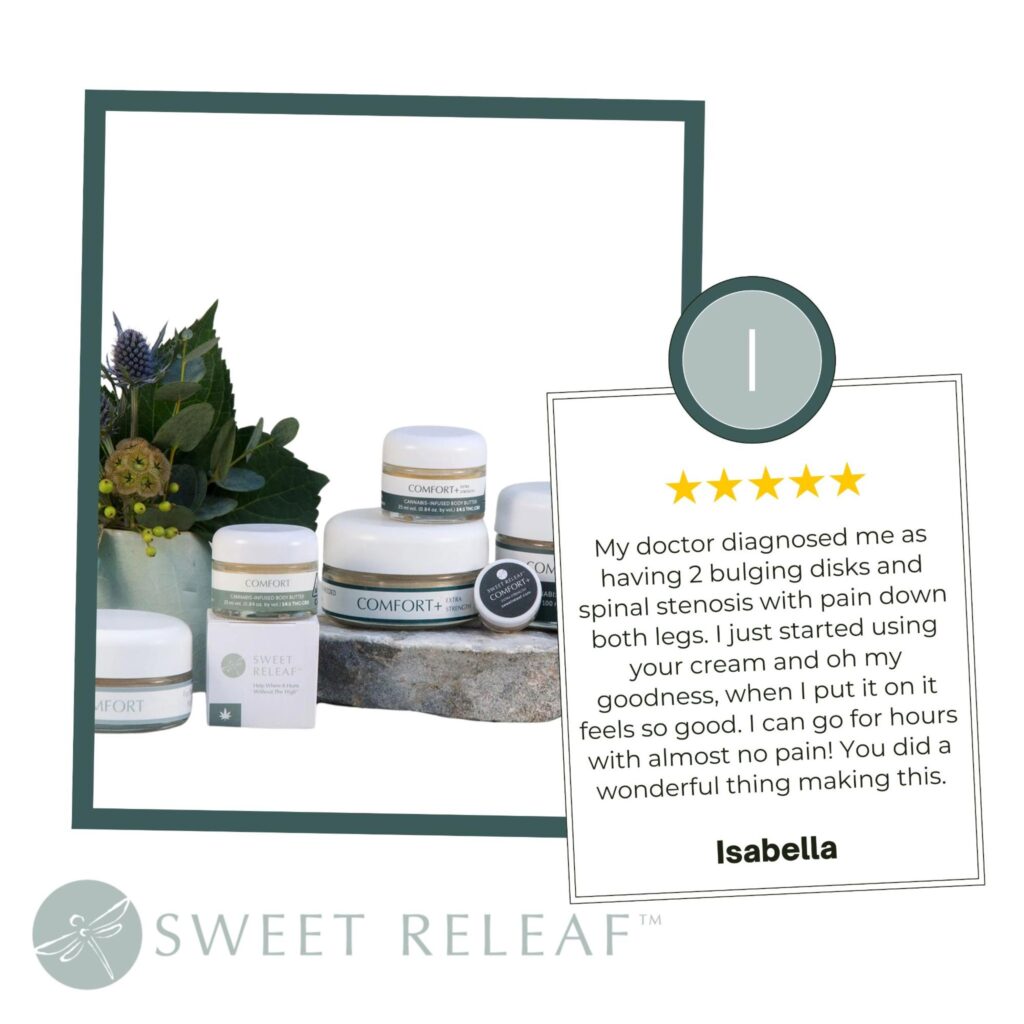
THC Can Be an Athlete’s Tool
You already know what your body needs when something’s off. A tight hip changes your stride. A sore shoulder limits your press. That’s where topical THC earns its place.
Work it into your routine and pay attention to what shifts. Notice how your warm-up feels. Notice how you move the next day. That feedback matters more than any study.
If you find that THC helps you perform better, Sweet Releaf has hand-crafted, high-THC, full-spectrum formulas that actually reach the tissue and do the job.
Look for our products in a California dispensary near you and ask them to order a free sample if they don’t already carry our creams.