
A cannabis cream either changes someone’s day or it sits on the skin and disappears into disappointment. The difference is rarely the label. It lives in the invisible details.
Temperature control. Timing. The way oil and water are brought together so cannabinoids actually travel into tissue instead of hovering on the surface. A topical can smell wonderful and still fail to reach the joint beneath it.
Formulating a THC cream for arthritis requires more than adding cannabis to lotion. The cannabinoids must remain active. The base must carry them through the skin barrier. The texture must encourage consistent use. When those pieces align, the result feels less like cosmetics and more like applied plant medicine.
When properly formulated, a THC cream for arthritis can:
- Reduce localized joint pain, from steady aching to sharp flare discomfort
- Ease stiffness so hands and knees move with greater freedom
- Calm swelling that makes joints feel tight and pressured
- Support longer activity, whether walking, gardening, working, or exercising
- Promote deeper rest when discomfort interferes with sleep, without intoxication
- Provide a topical option when long term NSAID use feels less sustainable
Sweet Releaf is one of California’s standout small batch medical cannabis manufacturers, with products made to feel like skincare and designed to work without getting you high. We have years of experience working with arthritis patients and we are happy to share some of the insights we gathered through practice.
Let’s unpack what makes THC cream effective for arthritis and how to choose one that earns its place on your nightstand.

A Pharmacological Profile of THC Cream
A well-formulated THC cream is a delivery system. Its job is to carry active cannabinoids through the outer barrier of the skin and into the tissues beneath, while keeping those compounds stable and evenly distributed.
The effectiveness of the product depends on how well it moves through that barrier and how predictably it interacts with local receptor sites.
It Works Where You Put It
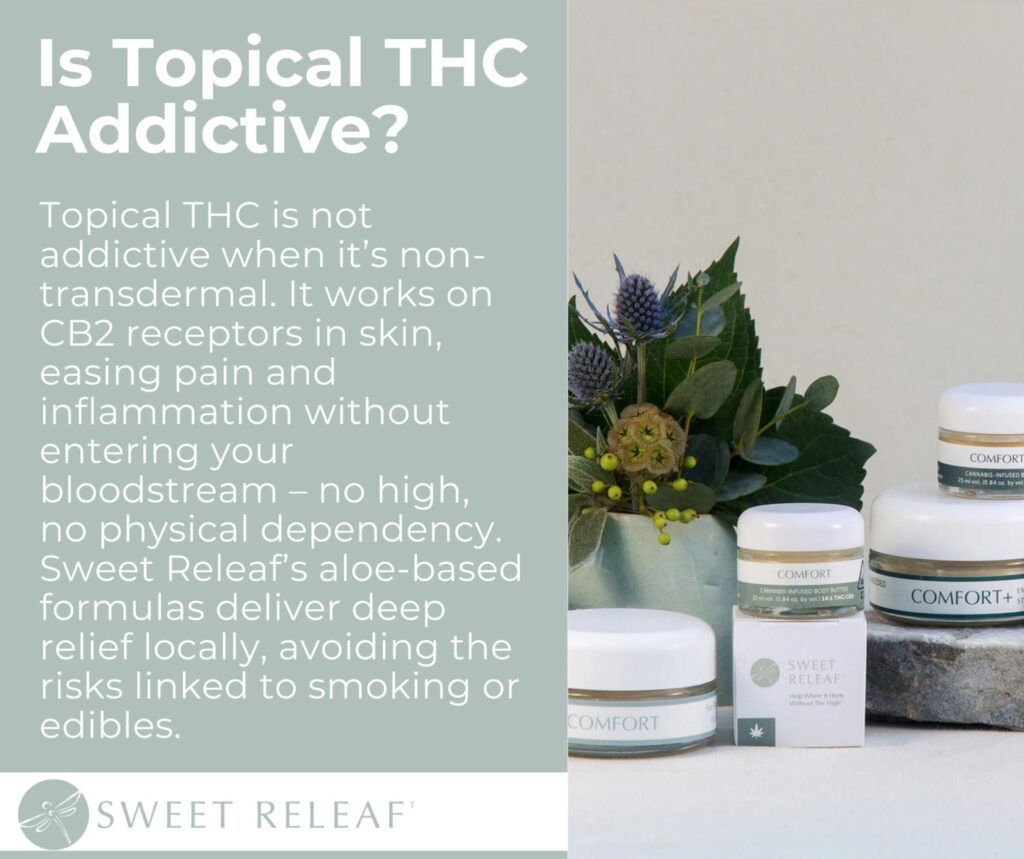
Human skin is biologically active. It contains cannabinoid receptors, primarily CB1 and CB2, located in nerve endings, immune cells, sebaceous glands, and surrounding connective tissue. These receptors respond to both the body’s own endocannabinoids and plant-derived cannabinoids such as delta 9 THC.
When THC is applied in a properly emulsified cream, it binds to receptors in the tissue directly beneath the application site. The signaling remains localized. It does not need to circulate throughout the body to produce an effect in that area. That is the defining characteristic of a topical preparation. It acts at the site of use rather than systemically.
The quality of the base matters here. An oil that sits on the surface limits interaction. An emulsion that supports penetration allows cannabinoids to reach receptor-rich tissue where they can participate in local signaling pathways.
Non-Intoxicating by Design
Topical THC is structured to remain in peripheral tissue. Unlike inhaled or ingested cannabis, it is not delivered to the bloodstream in significant concentrations. Without meaningful systemic absorption, there is no central nervous system activation and therefore no intoxication.
For those concerned about feeling high during the day, a properly formulated cream is intended for localized tissue interaction only. It supports function without altering mood, perception, or cognition.
Generally Well-Tolerated, Even for Daily Use
Topical cannabinoids are typically well tolerated. Adverse reactions, when they occur, are usually related to fragrance components or botanical additives rather than THC itself. A small patch test on intact skin can help identify sensitivity before broader use.
Because the action is localized and non intoxicating, THC cream can be incorporated into daily routines. It can be applied before activity, after activity, or as part of a consistent skin care.
How THC Topicals Do Away with Arthritis Pain
Topical THC works at the surface and just beneath it, interacting with nerve endings, immune cells, and connective tissue in the area where it is applied. The experience is usually described as a softening of intensity rather than total numbness.
The goal is functional relief. Enough comfort to move, rest, and use the joint without bracing against every sensation.
How Much It Helps Depends on Severity
The degree of relief often reflects the baseline level of irritation in the joint and the strength of the formulation.
With mild discomfort, such as a steady ache or early morning stiffness, a well-formulated THC cream may noticeably loosen movement and quiet low grade pain signals. Many people describe easier hand use, smoother steps, or less resistance when bending.
With moderate flare activity, including swelling and sharper discomfort, topicals are often used as part of a management routine. Relief may not be dramatic, yet enough reduction in intensity can improve grip strength, walking tolerance, or daily task completion.
With severe joint damage, expectations need calibration. A cream may not eliminate pain entirely. It can reduce the sharp edge of it. That reduction may be enough to fall asleep more comfortably or to complete necessary movement without guarding every step.
The question that comes up regularly is whether the relief originates from the placebo effect. Localized relief patterns suggest otherwise. When the cream is applied to one joint and not another, and only the treated area improves, that pattern points toward local receptor interaction.
The Joints That Tend to Respond Best
Certain areas respond especially well to topical application because they are close to the surface and rich in receptor density:
- Hands, fingers, and the thumb base
- Knees
- Hips, particularly outer soft tissue support
- Ankles and feet
- Shoulders
- The spine, especially areas of surface muscle guarding around irritated joints
These sites allow cannabinoids to interact with tissue that sits just beneath the skin.
How Fast It Kicks In and How Long It Works
Onset is usually felt within minutes, often reaching a noticeable peak within the first hour. The sensation may build gradually rather than appearing all at once. Duration varies by formulation and individual metabolism, though several hours of relief is typical.
There is also a cumulative pattern. Consistent daily use over one to two weeks can support reduced stiffness and calmer inflammatory signaling. The effect becomes part of a rhythm rather than a single application event.
How THC Creams Help to Reduce Swelling
Swelling in and around a joint results from increased inflammatory signaling and fluid accumulation within confined tissue spaces. As immune mediators activate, blood flow increases and tissue permeability changes, creating pressure that restricts motion and amplifies discomfort.
A properly formulated THC cream targets localized inflammatory activity directly beneath the skin, where cannabinoid receptors participate in regulating immune response.
THC’s Anti-Inflammatory Angle
Delta 9 THC interacts with CB2 receptors that play a role in immune modulation. These receptors are present in skin and in the connective tissue surrounding joints. When THC binds locally, it influences signaling pathways involved in inflammatory response.
The result can be a reduction in swelling of the joints and the pressure that accompanies it.
This effect is localized. The cream concentrates its activity in the area where it is applied, which makes it well suited for joints that feel hot or visibly puffy. As inflammatory signaling quiets, tissue tension may decrease. That shift often translates into smoother motion and less discomfort during weight bearing or gripping tasks.
Formulation again plays a role. An emulsion that supports penetration allows cannabinoids to move into receptor-rich tissue rather than remaining on the surface. Swelling relief depends on that contact.
Reducing Redness and Skin Irritation Around Joints
Joint inflammation and skin irritation are distinct processes. Arthritis-related swelling originates in deeper structures such as synovial tissue and surrounding connective layers.
Skin irritation, by contrast, involves surface level reactions that may include dryness, sensitivity, or contact dermatitis.
A well balanced THC cream can support local inflammatory signaling without aggravating the skin. Those with sensitive skin may benefit from formulas with restrained fragrance and thoughtfully selected botanical components.
Be warned that application should be limited to intact skin. Areas with open cuts or compromised barriers require separate care before any topical cannabinoid is introduced.
How Can THC Cream Give You Back Your Mobility
Mobility is rarely limited by joint structure alone. The body responds to irritation with protective patterns. Muscles tighten, movement shortens, and range narrows in an effort to stabilize what feels unstable.
Over time, that protection becomes part of the problem. A topical that reduces localized discomfort can interrupt that cycle and allow movement to return in a more natural rhythm.
Stiff Joints vs Tight Muscles Around the Joint
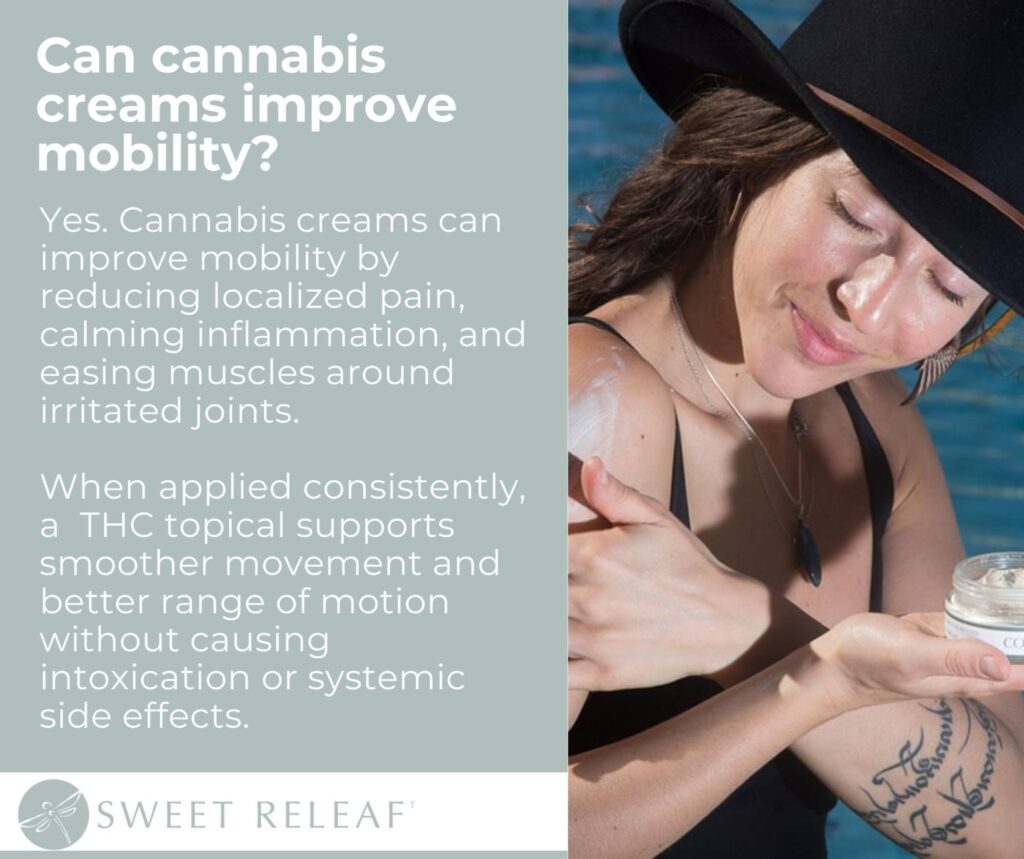
Joint stiffness and muscle tension often travel together. When a joint sends repeated pain signals, surrounding muscles increase tone to guard the area. Guarding reduces motion. Reduced motion increases stiffness. Stiffness then reinforces discomfort during use.
A well formulated THC cream can influence this loop at the level of local nerve signaling and inflammatory response. As the intensity of local discomfort decreases, the surrounding soft tissue often releases some of its protective contraction.
That shift does not force mobility. It creates space for it. Movement begins to feel less mechanical and more fluid.
Topicals are especially useful for this pattern because they can be applied directly over the joint and into adjacent muscle groups. Supporting the tissue around the joint can be as valuable as supporting the joint itself.
How Well Suited Are THC Creams for Long Term Use?
Topical THC lends itself to routine use. Many people apply it in the morning to ease stiffness before activity, again before exercise or extended walking, and later in the evening to support recovery and rest. Consistency tends to produce more stable results than occasional use.
Because the action remains localized, systemic exposure is minimal. Tolerance in the traditional sense seen with inhaled cannabis is less of a concern with topical application.
Individuals taking other medications should remain aware of their overall treatment plan, yet topical cannabinoids are often incorporated without meaningful interaction due to limited bloodstream absorption.
Why Seniors Love Topicals
Topicals fit easily into daily life. They are targeted, non intoxicating, and simple to apply. They pair well with gentle stretching, walking, and strength work that support joint health over time.
There is one practical caution. Sometimes relief makes you forget your limits. A joint that feels better may still have structural constraints. Testing your range before you push allows mobility to expand gradually rather than abruptly.
Your Search for The Best THC Cream for Arthritis Is Over
Finding the right THC cream often comes down to potency, formulation, and how consistently it performs over time. Labels can look similar while the experience feels very different. Strength and delivery determine whether a topical becomes part of a daily routine or gets pushed to the back of the cabinet.
Higher THC Ratios Are a Must for Arthritis
Arthritic discomfort tends to respond more reliably when THC is present in meaningful concentration. While CBD has properties that support balance within the endocannabinoid system, many people report that CBD alone does not provide sufficient depth of relief for persistent joint pain. THC interacts directly with CB1 and CB2 receptors involved in pain signaling and inflammatory modulation. In topical form, that interaction stays local.
The ratio matters. A formulation with substantial THC and a modest amount of CBD often produces a more rounded effect than CBD-dominant blends. CBD can act as a supporting compound, contributing to overall balance, while THC carries most of the workload in addressing joint discomfort.
For mild stiffness or early stage irritation, a regular strength formula is often appropriate. If discomfort is chronic, pronounced, or resistant to lower potency products, stepping up to a higher THC concentration is a reasonable next move.
Strength should match need rather than ego.
Sweet Releaf’s Approach to Harnessing the Plant’s Power
Sweet Releaf formulates with whole plant, full spectrum cannabis rather than isolated distillates. That choice preserves minor cannabinoids and plant compounds that contribute to the overall therapeutic profile.
The body butter format is an emulsion, combining oil and water phases in a stable structure that supports penetration without leaving a greasy residue.
Texture is not just decorative here. A cream that absorbs smoothly and feels good on skin is more likely to be used consistently. Scent also plays a role. Subtle, plant-forward aromatics support regular application without overwhelming the senses.
Sweet Releaf Creams Perfect for Arthritis Relief
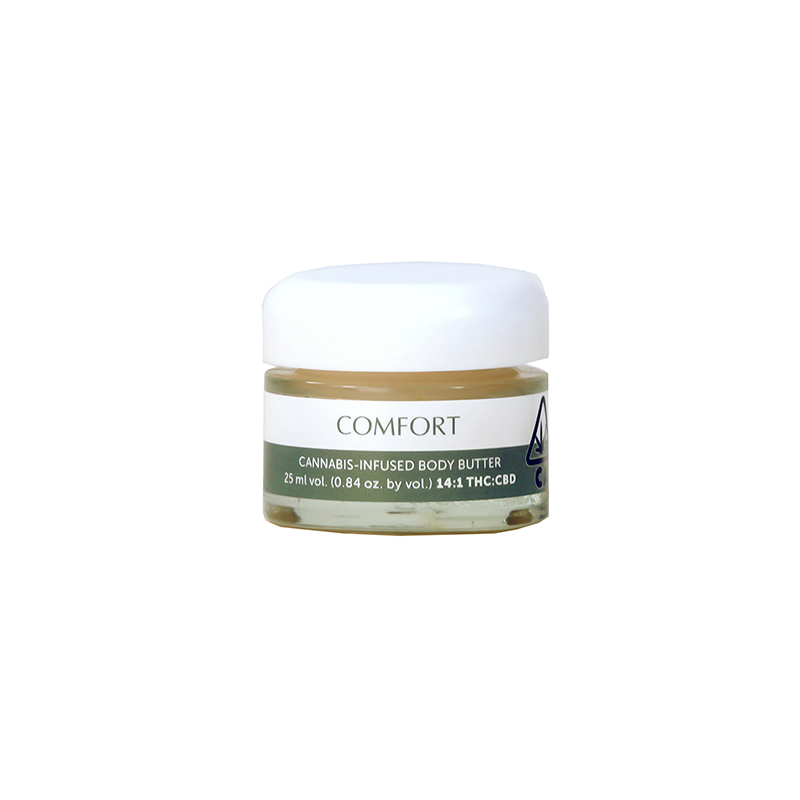
- Comfort Body Butter
Designed for daily use across broader areas, this formula supports ongoing stiffness and mild to moderate discomfort while maintaining a smooth, fast absorbing feel.
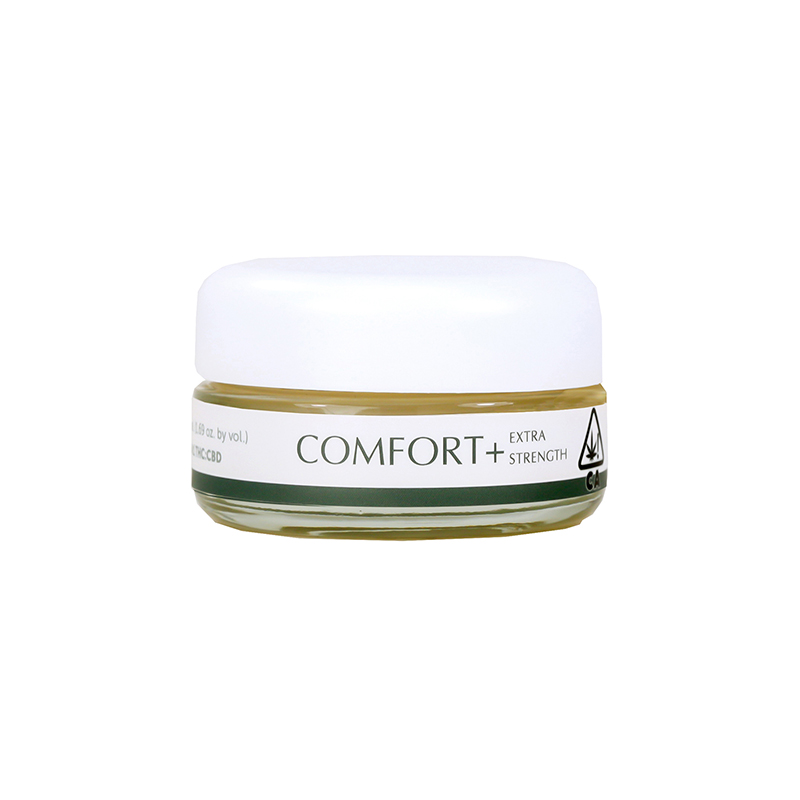
- Comfort+ Extra Strength Body Butter
Formulated with higher THC concentration for persistent or severe joint pain, this option is well suited for flare management and stubborn areas that require deeper support.
Speak Softly and Carry a Big Jar of THC Cream
There is a particular satisfaction in closing your hand fully around a coffee mug, or taking the stairs without bracing for impact. Mobility changes the tone of a day. It changes how long you stay, how far you walk, how steady you feel.
A well-formulated THC cream supports that rhythm. Applied in the morning, before activity, or in the evening, it becomes part of how the body prepares and recovers. Strength matched to your level of discomfort makes the difference between surface relief and real functional support.
Explore the Sweet Releaf collection, choose the formulation that fits your needs, and find a retailer near you. The right cream belongs within reach, ready when the day asks you to move.