
Ayurvedic pain relief oils use a blend of base oils, herbs, and warming or cooling agents like sesame, ginger, and camphor to ease inflammation and stiffness.
The real effectiveness comes from how these ingredients work together, not individually.
Modern formulations like Sweet Releaf build on this synergy with deeper-absorbing, targeted relief.
Why Ayurveda Starts With Oil For Pain
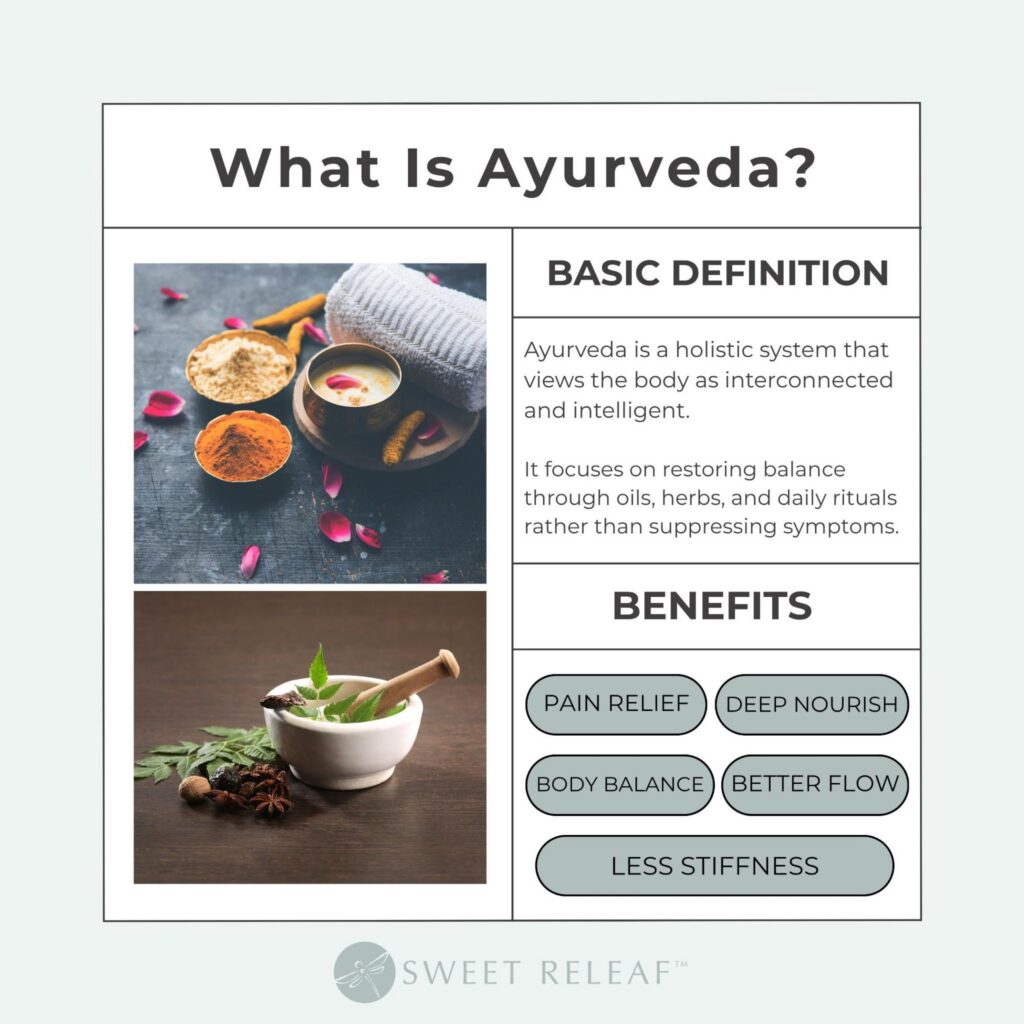
We’ve always been drawn to systems that treat the body as intelligent, not something broken that needs silencing. Ayurveda works from that lens, starting with imbalance instead of symptoms.
Much of pain is tied to Vata imbalance, dryness, cold, and instability showing up as stiff joints and that hesitant first movement in the morning.
Instead of masking it, Ayurveda uses Abhyanga, a therapeutic oil massage that’s more maintenance than luxury.
You’re doing a few things at once:
- Driving herbal compounds into the tissue where discomfort lives
- Increasing circulation to ease stiffness and move inflammation
- Feeding dry, depleted tissue so it can recover
Most people think pain oils are just about hot or cold sensations. But what actually matters is how the ingredients work together, how they’re combined, what carries them, and how deeply they go.
That’s the difference between something you feel… and something that truly helps.
More Than Oil: What Makes These Formulas Work
At its core, an Ayurvedic pain relief oil is pretty simple: a base oil infused with medicinal herbs, often finished with ingredients that create a warming or cooling effect.
But the simplicity is deceptive.
A well-made oil isn’t just a mixture, it’s a delivery system.
You’ve got three layers working together:
- Carrier oils (like sesame or coconut) that determine how deep everything goes
- Herbal extracts that target inflammation, nerve sensitivity, and muscle tension
- Sensory agents like camphor, mint, or wintergreen that change how the pain is perceived and how blood moves through the area
Most modern creams skip that complexity. They’re often built to sit on the surface, give you a quick sensation, and move on.
Ayurvedic oils, when they’re done right, are designed to interact with the body over time.
Do These Oils Actually Work, Or Do They Just Feel Good?
It depends on the formulation.
If it’s just a thin oil with a little menthol, you’ll get a sensation. Cooling, warming, maybe a little distraction from the pain.
But when you’ve got:
- the right base oil that actually penetrates,
- a meaningful concentration of active herbs, and
- a formulation that supports absorption rather than blocking it…
then you’re not just changing how the pain feels, you’re changing what’s happening in the tissue.
Massage plays a role. Chemistry plays a role. Formulation plays a big role.
When all three line up, that’s when people stop saying, “that feels nice,” and start saying, “I can move again.”
What Really Drives Relief In Ayurvedic Oils
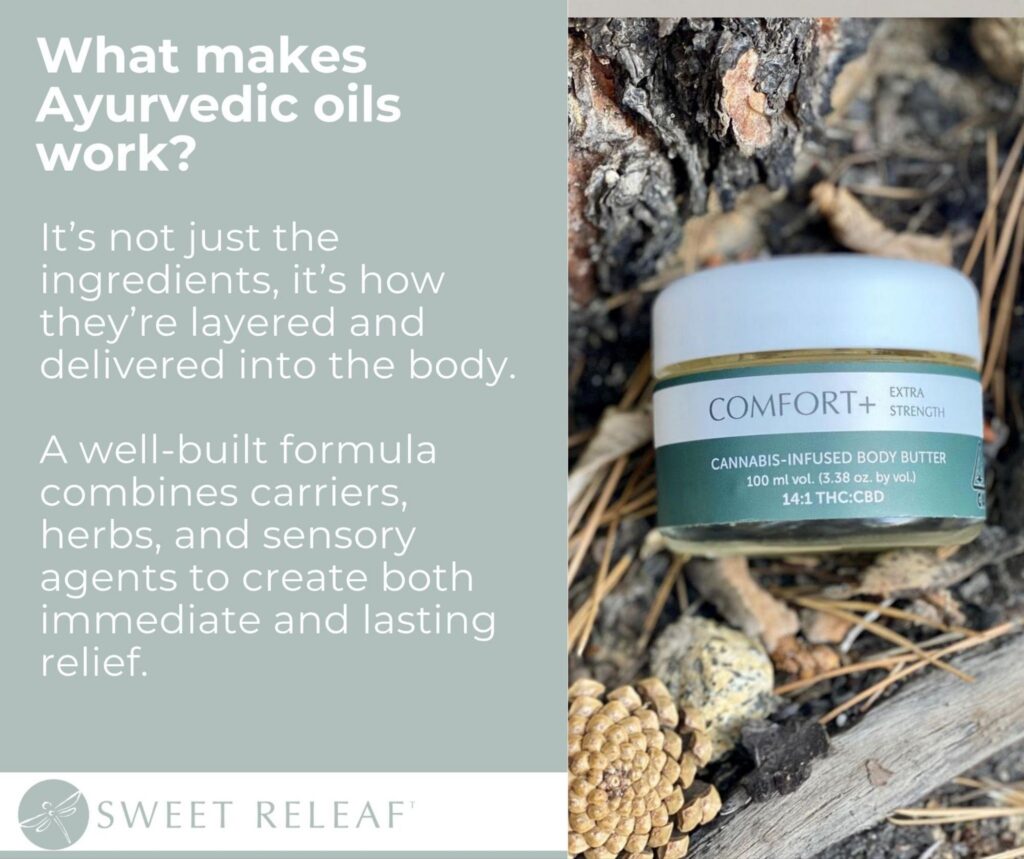
A lot of people focus on what’s inside a pain relief oil, ginger, turmeric, camphor, eucalyptus. But the real question isn’t just what’s included, it’s how those ingredients are working together.
When I’m building a formula, I’m thinking in layers.
What carries the ingredients? What targets the inflammation? What helps it actually reach the tissue?
Because in a well-made pain relief oil, nothing is accidental. Every ingredient has a purpose, and how they interact is what determines whether you feel a difference or not.
Base Oils (The Delivery System)
The base oil is what determines whether those herbs sit on top of your skin… or actually reach the tissue where the pain lives.
- Sesame oil is the traditional backbone. It’s warming, deeply penetrating, and especially useful when pain is tied to dryness and stiffness.
- Coconut oil is lighter and cooling. Better for sensitive skin or situations where heat isn’t your friend.
- Mustard oil is aggressive in a good way, strongly warming, stimulating circulation, often used when joints feel locked up or cold.
You’ll see more advanced formulations using multi-oil systems, blends of sunflower, olive, MCT, sometimes even aloe-based emulsions.
It’s about controlling how fast and how deep ingredients move.
The base oil determines whether an ingredient stays on the surface or actually does something meaningful.
That’s why two oils with the same “active ingredients” can feel completely different.
Potent Herbal Ingredients (The Active Core)
These are the compounds that actually interact with inflammation, nerves, and muscle tension. You’ll see the same names come up again and again:
- Ginger → warming, helps loosen stiff, cold joints
- Turmeric → supports inflammation balance at the tissue level
- Nirgundi → used traditionally for joint swelling and chronic pain
- Ashwagandha → supports muscles and the nervous system
- Dashmool → a blend of roots used for deeper, systemic discomfort
- Guggulu & Manjistha → associated with circulation and tissue cleansing
But there is no single “magic ingredient.” Real relief comes from synergy.
You can take ginger on its own, or turmeric on its own, but when you layer them properly, in the right base, with the right supporting ingredients, you start to get something more than the sum of its parts.
So when someone asks: “Which ingredient is actually doing the work?”
The honest answer is: It’s rarely one. It’s the combination, and how it’s built.
Cooling And Soothing Agents (Fast Sensory Relief)
These are the ingredients people feel first.
- Menthol / peppermint → that immediate cooling sensation
- Eucalyptus → opens things up, supports circulation, reduces inflammation
- Lavender → calms both the skin and the nervous system
They’re important. They create that first moment where you go, “Okay, something’s happening.”
But these ingredients often deliver immediate feedback, not necessarily deep resolution.
They can reduce discomfort, shift perception, and make movement easier, but if the formulation stops there, the effect doesn’t last.
Warming And Circulation Boosters (Deep Relief)
This is where things start getting more serious.
- Camphor → increases blood flow, interrupts pain signals
- Wintergreen → strong analgesic effect (there’s a reason it shows up in sports balms)
- Capsicum / black pepper → bring heat, stimulate nerves, wake up stagnant tissue
These ingredients are often what make an oil feel “powerful.”
Why Good Ingredients Still Miss the Mark
We’ve talked to plenty of people who’ve tried Ayurvedic oils and walked away unimpressed. Not because the tradition doesn’t work, but because what they used never had a fair shot.
There are a few common breakdowns I see over and over:
- Low-potency formulations
Some oils barely contain enough active herbs to make a difference. You’ll see the right names on the label, but not in meaningful amounts. - Weak or rushed infusions
Traditionally, these oils take time, slow infusion, careful balance. Shortcut that process, and you’re left with something that smells right but doesn’t perform. - Greasy salves that just sit on the skin
If it’s not absorbing, it’s not doing much. You’re essentially moisturizing the surface while the deeper tissue stays untouched. - Over-reliance on cooling or heating sensations
That icy or burning feeling? It can be helpful, but it’s often mistaken for actual relief. It’s a signal, not the solution. - Mismatch between oil and condition
A heavy, warming oil might help a stiff knee, but feel overwhelming on inflamed or sensitive areas. Not every formula fits every kind of pain.
Do These Oils Actually Do Anything Beyond Hot And Cold?
They can. Absolutely.
But only when two things are true:
- The formula contains active compounds in meaningful amounts
- Those compounds can actually penetrate to where the pain lives
If either one is missing, you’re left with a sensation, not a solution.
From Tradition To Results: The Sweet Releaf Difference
One thing Ayurveda understood long before modern science caught up is this: ingredients don’t work alone; they work together, and they need a way in.
That idea, synergy plus delivery, is something we’ve always respected.
But respecting it doesn’t mean leaving it untouched. At Sweet Releaf, we’ve taken that foundation and pushed it further, asking how to improve absorption, speed, and depth.
Because if those ingredients don’t reach the tissue, it doesn’t matter how good they are.
Emulsion Body Butters (Deeper Than Traditional Oils)
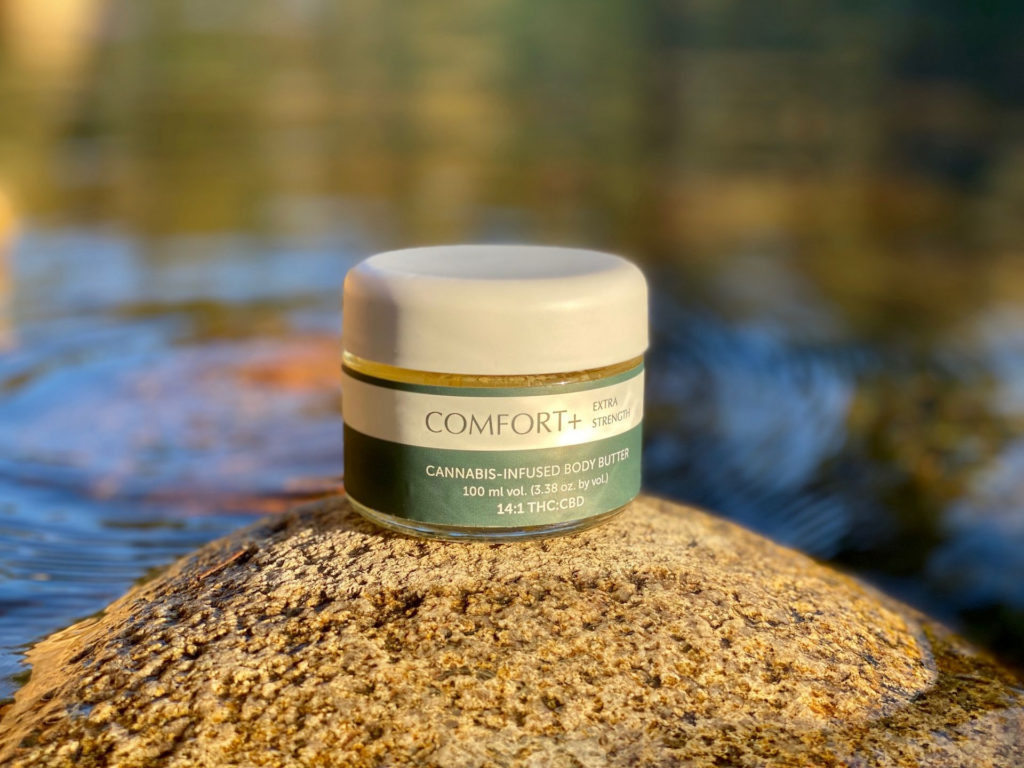
Traditional oils are just that, oil. And oil can only go so far.
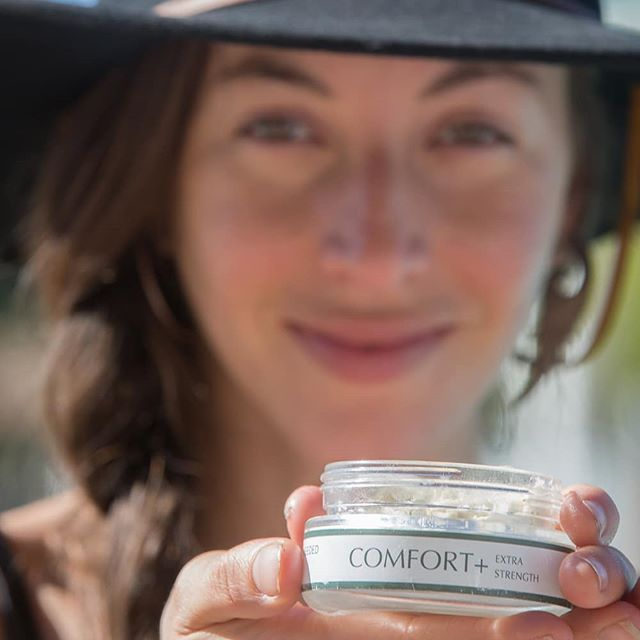
Our Comfort Body Butter is built as an emulsion, a blend of oil and water (in our case, aloe-based). That changes everything.
- It absorbs faster than oil alone
- It pulls active ingredients deeper into the tissue
- It avoids that heavy, greasy layer that just sits on the surface
Now layer in what we’re actually delivering:
- Full-spectrum cannabis, not isolates, not stripped-down extracts
- Essential oils chosen for circulation, inflammation, and nerve response
And importantly, it’s non-psychoactive, but highly active where you need it
You’re not getting high. You’re getting targeted relief that your body can actually use.
Ayurvedic-Inspired Roll-Ons (Targeted Effects)
Ayurveda separates warming and cooling for a reason. Different pain responds to different inputs.
We leaned into that, but made it more precise.
Comfort Cools Dry Oil

- Built around eucalyptus, citrus, and lavender
- Designed for inflammation, overworked muscles, post-activity soreness
- Gives that immediate easing effect, while continuing to work underneath
Comfort Warms Dry Oil
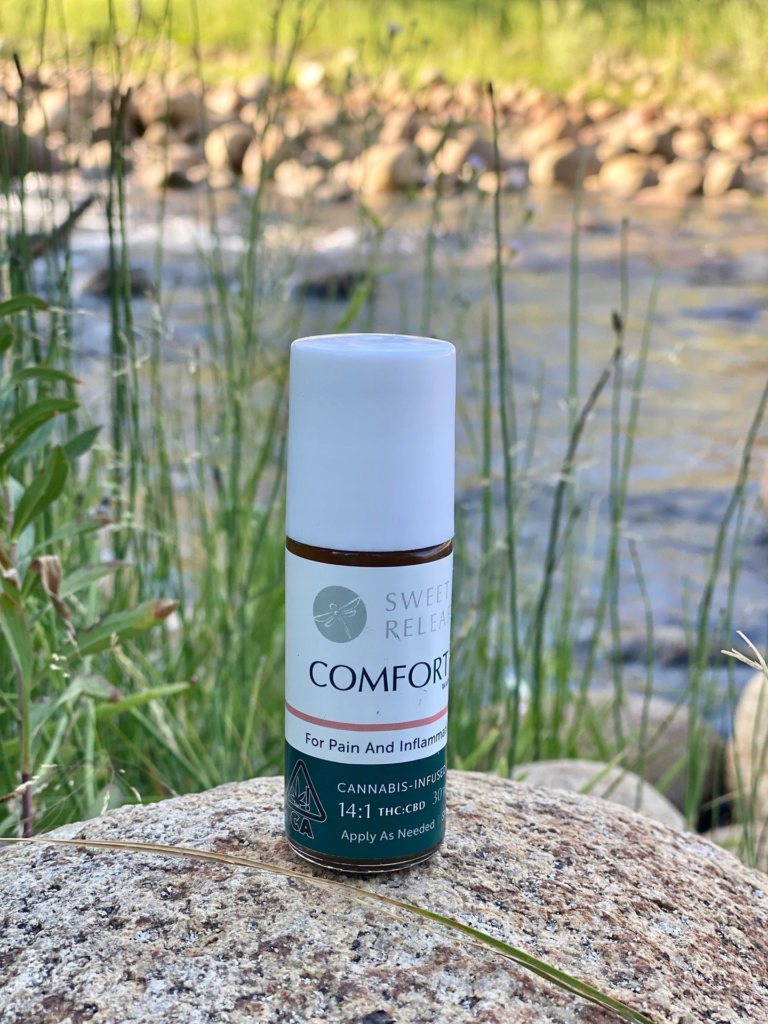
- Built around wintergreen, ginger, and deeper earthy oils
- Designed for stiffness, tight joints, long-term chronic discomfort
- Brings circulation into areas that feel stuck or cold
What matters here is control.
Instead of a one-size-fits-all oil, you’re choosing based on what your body is actually telling you.
Finding Relief That Actually Works
Pain has a way of humbling you.
What works for one person might do very little for someone else. And that’s not a failure, it’s just a reminder that the body is specific. It responds to the details.
Ayurvedic ingredients give us a strong foundation. They’ve been used for generations for a reason. But over time, we’ve learned that the ingredients alone aren’t the whole story.
It comes down to a few things:
- How the formula is built
- How potent the actives really are
- Whether those ingredients can actually reach the tissue that needs them
If you’ve ever used an oil that just sat on your skin, or gave you a quick hot or cold sensation that faded fast, the issue likely wasn’t the ingredients.
It was the delivery.
That’s the piece we’ve focused on at Sweet Releaf: making sure what goes into the formula actually gets where it needs to go. If something’s been missing, it might be worth experiencing the difference a better delivery system makes.