THC is generally more effective for pain relief than CBD, especially for deeper or chronic pain, while CBD mainly supports inflammation and tension. The most effective approach often combines both. Sweet Releaf’s high-THC, full-spectrum topicals use this synergy to deliver fast, targeted relief without the high.
CBD Is Everywhere, So Why Isn’t It Working For You? I
CBD is everywhere now, oils, gummies, creams, even gas stations promising relief. And yes, it has a place. It can calm inflammation, take the edge off tension, and help some people sleep better.
But we hear the same thing all the time: “I tried CBD… and nothing happened.” Or worse, “I spent the money and I still hurt.”
So the real question becomes, if CBD works, why are you still in pain?
The truth is, CBD is supportive, not powerful. For deeper pain, nerve pain, chronic issues, post-surgical recovery, you need something that actually interrupts the pain signal.
CBD helps you cope. THC helps change the pain itself.
Why THC Feels Different When It Comes To Pain Relief
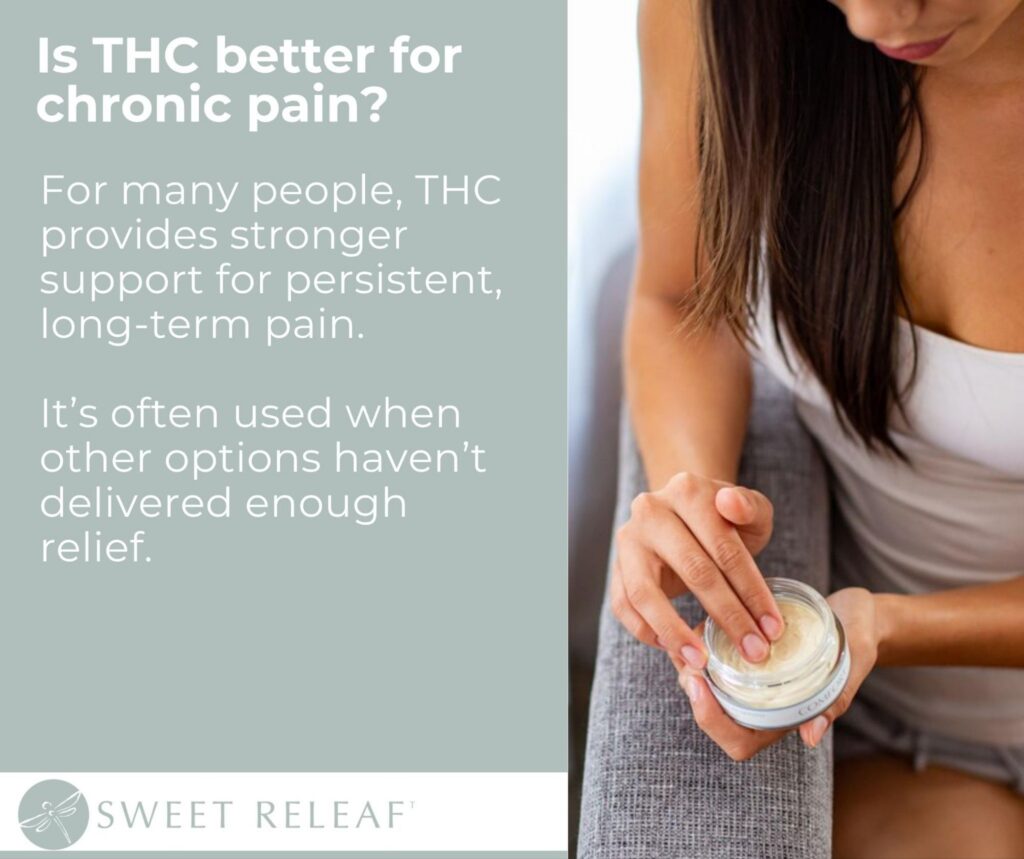
THC doesn’t tiptoe around pain, it engages with it directly. It binds to CB1 and CB2 receptors in your endocannabinoid system, helping regulate how pain signals move between your body and brain.
In simple terms, THC turns down the volume at the source.
That’s why it works best for:
- Nerve pain (sharp, burning, electric)
- Deep muscle tension
- Long-term, chronic pain
THC doesn’t just reduce pain, it changes how you experience it. It can lower the signal and soften your brain’s reaction to it, which is why many people feel relief even if the pain isn’t completely gone.
When CBD Helps Pain And When It Doesn’t Go Far Enough
CBD works more indirectly. It doesn’t strongly bind to pain receptors, instead, it helps regulate inflammation and calm the nervous system, bringing the body back toward balance.
It’s most useful for:
- Inflammation and swelling
- Stress-related tension
- Mild, surface-level discomfort
But CBD isn’t a strong painkiller on its own. For deeper or long-standing pain, it often doesn’t have enough force to create noticeable relief, which is why many people feel like it “did nothing.”
Why THC + CBD Together Works Better (The Entourage Effect)
This isn’t really a competition, it’s a partnership. When THC and CBD are used together, they create a more balanced and effective form of relief.
- THC does the heavy lifting (reduces pain signals)
- CBD supports and stabilizes (controls inflammation, softens intensity)
Together, they produce relief that feels more complete, less pain, less tension, and fewer side effects.
When balanced properly, this combination works with your body instead of overwhelming it, which is where real, lasting relief begins.
Why Ratios Matter More Than Labels
Most people focus on whether a product is labeled THC or CBD, but that’s not what determines how it actually feels.
The ratio between them changes everything. It shapes the intensity, the balance, and how your body responds.
Get the ratio right, and relief starts to make a lot more sense.
Not All THC:CBD Ratios Feel The Same
One of the biggest mistakes I see is people focusing on labels, “CBD” or “THC”, instead of the ratio. Because that ratio is what actually determines how it feels in your body.
High-CBD ratios (like 4:1 or 10:1) tend to feel lighter and calming, while balanced ratios (1:1) offer more noticeable relief without feeling overwhelming.
THC-dominant formulas are where people with deeper pain finally feel a shift, but not everyone responds to THC the same way.
That’s why ratios matter. It’s not always about more THC, it’s about finding the balance your body can actually use without pushing back.
Matching Ratios To Pain Types
Pain isn’t one-size-fits-all, and neither is the right ratio.
Inflammatory pain often responds well to more CBD, while nerve pain, deep muscle tension, and post-surgical discomfort tend to need more THC to make a real impact.
Most people, though, are dealing with a mix, so a combination approach often works best. That’s where THC and CBD together start to make more sense than trying to rely on just one.
If THC makes you feel anxious or off, don’t write it off entirely.
Adjust the ratio, lower the dose, or change the format, because you can use high-THC topicals locally without getting high at all.
Sweet Releaf’s Secret To Better Pain Relief With THC + CBD
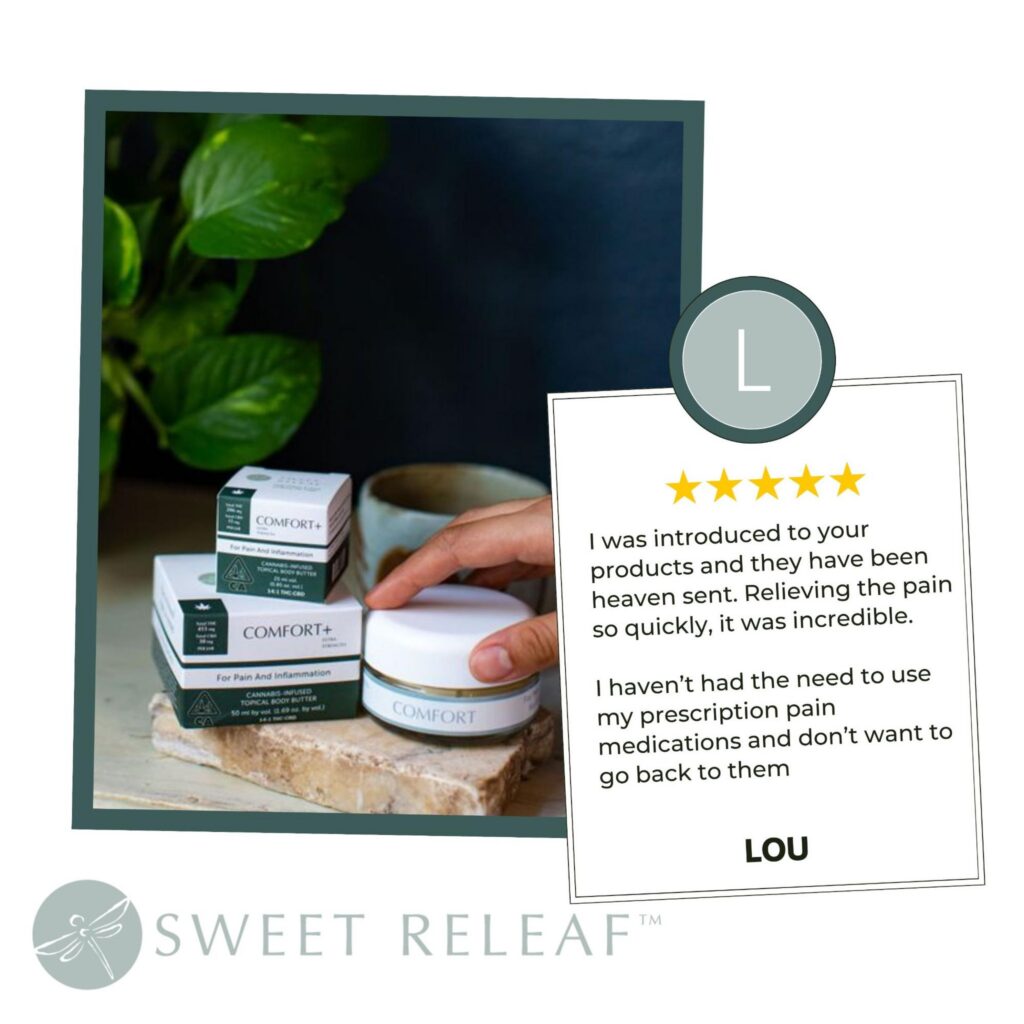
Most people start with CBD and end up disappointed. Sweet Releaf takes a different approach, pairing high-potency THC with supportive CBD to create real, noticeable relief.
It’s not about choosing one or the other. It’s about using both the right way, in a formula that actually reaches where your pain lives.
High-THC Topicals Without The High
By now, the question isn’t really THC or CBD, it’s how to use them in a way that actually delivers relief.
What we’ve found is that THC does the heavy lifting for pain, but most people don’t want the trade-off that comes with it.
That’s exactly where topicals change the conversation.
With a properly formulated THC topical, the cannabinoids stay local.
They work directly with receptors in the skin and underlying tissue, so you get the strength of THC right where the pain lives, without feeling high or disconnected from your day.
Full-Spectrum THC + CBD: Where The Real Relief Happens
A lot of products force you to choose, THC or CBD. But as we’ve already seen, that’s not how the body works.
THC is what actually shifts the pain.
CBD supports the system, helping with inflammation and keeping the experience balanced.
When you combine them properly, you get a more complete kind of relief:
- THC reduces the intensity of the pain signal
- CBD helps regulate inflammation and soften the edges
- The rest of the plant compounds support how everything works together
This is where the entourage effect becomes practical.
Instead of asking which one is better, you’re using both, each doing its job, so the result feels stronger, smoother, and more reliable.
The Honest Concerns About THC And CBD (Answered)
Most people don’t hesitate because they don’t care, they hesitate because they have real concerns. Getting high, wasting money, or making pain worse are valid fears.
The goal isn’t to ignore them, it’s to understand how THC and CBD actually work so you can use them in a way that feels safe and effective.
Is THC Better Than Opioids?
This question comes up more often than people admit, especially after surgery or long-term pain. THC isn’t the same as opioids, and it doesn’t shut pain down in the same way.
But it also doesn’t carry the same long-term risks or dependency concerns.
What THC, especially topicals, offers is a different approach. You’re not numbing your whole system; you’re applying relief where it hurts and staying functional.
For many people, that shift from internal to local relief is what makes it sustainable.
What If It Doesn’t Work For Me?
That’s a valid concern. Pain is personal, and results can vary, but when something doesn’t work, it’s usually about fit, not failure.
Most of the time, it comes down to:
- The wrong ratio
- The wrong format
- The wrong dose
Topicals make this easier to figure out. You can start small, adjust as needed, and find what works without affecting your head or your day.
Is It Worth The Cost?
If you’ve tried products that didn’t work, hesitation makes sense. But ineffective products are the most expensive ones you’ll buy.
When something actually helps, when you can move better, sleep better, and think less about pain, that’s where the value shows up. You’re not just buying relief, you’re getting pieces of your life back.
And when it’s targeted, like a topical, you use less and get more out of it.
So… Is THC or CBD Better For Pain?
THC is generally more effective for pain relief. It directly impacts pain signaling and has the strength to shift deeper, more persistent discomfort.
CBD still plays a role, it supports inflammation and balance, but it rarely replaces THC on its own. The real sweet spot is using both together, in the right ratio and format for your body.
Because in the end, it’s not about THC vs CBD, it’s about what actually works for your pain.
Where to Start If You Want Real Relief
If you’re standing at the beginning of this, wondering where to go next, keep it simple.
If your pain is localized, a knee, a shoulder, your lower back, start with a topical that combines THC and CBD. Apply it where it hurts. See how your body responds.
If you’re dealing with chronic, persistent pain, lean toward something with a higher THC ratio. That’s where most people finally feel a meaningful shift.
If you’re more sensitive, or unsure how THC will feel, start with a balanced formula and adjust from there.
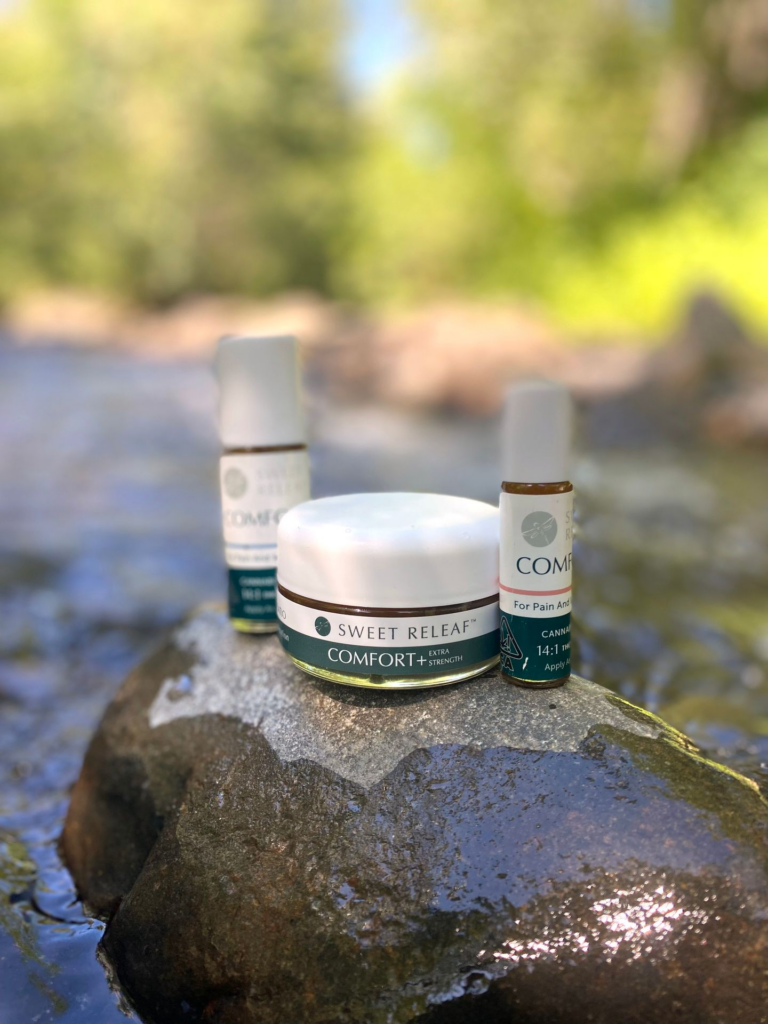
At Sweet Releaf, we built our line around those real-world needs:
- Comfort Body Butter for everyday aches, stiffness, and general wear-and-tear
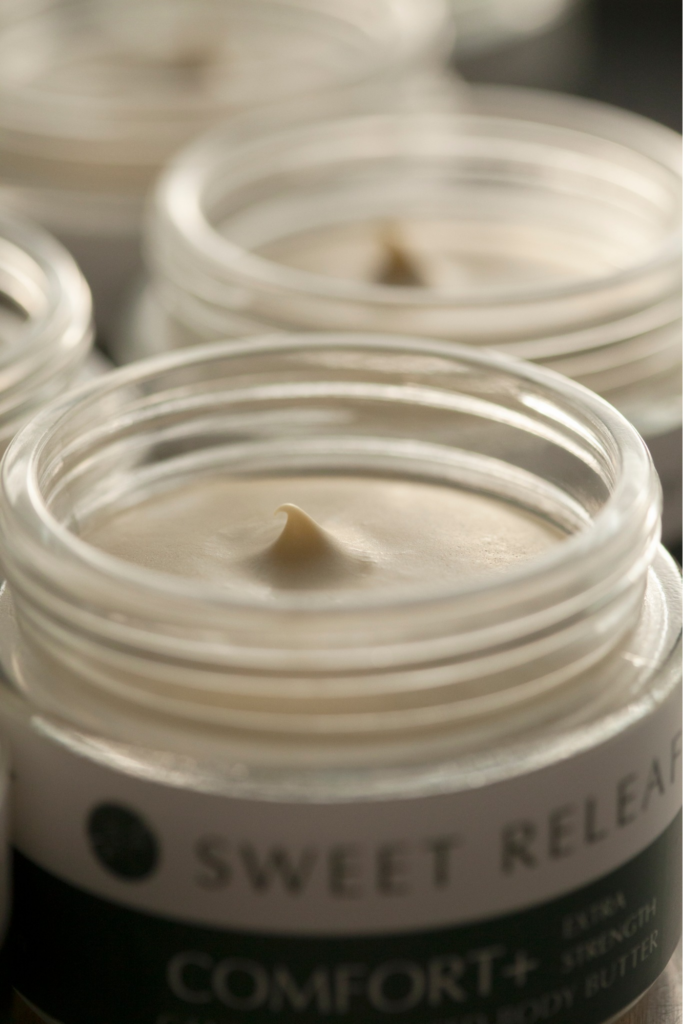
- Comfort+ Extra Strength for deeper, more persistent pain that needs more support
- Roll-ons for targeted relief when you’re on the move, easy, precise, and effective
There’s no perfect starting point for everyone.
But there is a path forward.
And once you find the combination that works with your body, not against it, you’ll feel the difference pretty quickly.