Topical cannabis products containing THC and CBD may reduce eczema-related itching, inflammation, and redness by interacting with cannabinoid receptors in the skin. Early clinical studies show reduced itch and improved skin symptoms, though large-scale human trials are still limited.
Medical Cannabis Is Changing How We Treat Skin
Medical cannabis has earned its place in conversations about chronic pain, sleep, recovery, and daily quality of life. Lately, that conversation has widened into skin health, especially inflammatory conditions like eczema.
Dermatology researchers keep circling back to the same idea: the skin has cannabinoid receptors, and cannabinoids applied on the surface can influence local inflammation and itch pathways.
Topical THC and CBD formulations may:
- Reduce inflammation
- Calm histamine-driven itch
- Support skin barrier repair
- Improve sleep disrupted by nighttime scratching
- Offer an alternative to long-term steroid dependence
If you’ve tried hemp CBD lotions that felt like fancy moisturizer, or you’ve leaned on steroid creams long enough to worry about what they’re doing to your skin, cannabis topicals offer a different lane.
The goal is local relief that fits into real life, including workdays, driving, and bedtime routines.
Sweet Releaf topicals are made by a small, but very experienced and skilled team. We use whole-plant, full-spectrum cannabis with high Delta-9 THC, plus supportive botanicals, then turn it into a true emulsion body butter that absorbs fast and feels clean on sensitive skin.
Every batch is tested and tracked, and we stay away from distillate shortcuts and harsh preservatives.
In the sections ahead, we’ll walk through what eczema is doing in the skin, what the science says about cannabinoids and itch, why formulation changes results, and how to apply a topical in a way that respects reactive skin.
The Brutal Reality of Living With Eczema
Eczema has a way of shrinking your world. It dictates what fabrics you wear, which soaps sit by the sink, how long you linger in a hot shower, and whether you dread bedtime.
What looks like irritated skin on the surface is actually a layered inflammatory process involving immune signaling and a weakened skin barrier that struggles to hold moisture and keep irritants out.
How Eczema Manifests
When eczema flares, the skin shifts into defense mode. You may notice:
- Red, inflamed patches that feel warm to the touch
- Intense itching that ramps up at night when distractions fade
- Cracked or fissured skin that stings with water or sweat
- Thickened areas from repeated scratching over time
- Raw, sensitive flare zones that react to products that once felt fine
Some people experience brief, seasonal episodes. Others live with persistent, unpredictable cycles that migrate across hands, elbows, knees, neck, or face. The discomfort interferes with sleep, concentration, and even simple routines like washing dishes or typing.
What Causes and Contributes to Eczema
Eczema develops from a combination of internal vulnerability and external triggers. Key drivers include:
- Overactive immune responses that amplify inflammation
- Impaired skin barrier function that allows moisture loss and irritant entry
- Genetic predisposition affecting how skin cells mature and seal
- Environmental triggers such as soaps, detergents, fabrics, allergens, and weather shifts
- Chronic stress that heightens inflammatory signaling
Stress alone can intensify itching, reinforcing a loop: itch, scratch, inflammation, repeat. Over time, that loop becomes both physical and emotional. Skin discomfort fuels anxiety, anxiety fuels flare activity, and the cycle deepens.
Any meaningful approach to eczema has to respect both sides of that equation.
Cannabis Topicals as a Natural Solution for Skin Conditions
When cannabis is formulated for topical use, the goal is local activity in the skin itself. These products are designed to work at the site of irritation rather than circulating through the bloodstream.
For people dealing with skin conditions, that distinction matters. The target is inflamed, reactive skin tissue, not the brain.
Can Cannabinoids Be Absorbed Through the Skin?
Yes. Human skin contains CB1 and CB2 receptors as part of the endocannabinoid system. This system plays a regulatory role in inflammation, immune signaling, and barrier balance. When cannabinoids such as THC and CBD are applied topically, they can interact directly with receptors located in keratinocytes, immune cells, and nerve fibers in the skin.
Through this local interaction, cannabinoids may influence inflammatory pathways, calm immune overactivity, and reduce signaling that drives itch. Histamine-induced itching, which is a major contributor to eczema discomfort, appears particularly responsive to cannabinoid modulation.

Properly formulated topicals remain localized in the upper layers of skin. They do not enter the bloodstream in psychoactive amounts and do not produce intoxication. That allows for daytime use without cognitive impairment while still addressing inflammation at its source.
What Scientific Findings Show
Research remains in development, yet early findings are encouraging. A 2020 observational study reported that 67 percent of participants experienced reduced itch after topical CBD use, and roughly half noted improvement in eczema symptoms. A 2022 review found that the cutaneous endocannabinoid system is involved in skin homeostasis and inflammation and suggests a role for cannabinoids as potential therapies across inflammatory skin diseases, including atopic dermatitis.
Both THC and CBD demonstrate measurable anti-inflammatory activity. CBD has shown anti proliferative effects, which may help in conditions where skin cell turnover becomes dysregulated. Based on the most contemporary findings, it’s highly likely that combined cannabinoid formulations can enhance itch reduction compared to isolated molecules alone.
Larger randomized human trials are still needed. Cannabis topicals are best viewed as a supportive therapy that may reduce symptom burden and improve comfort rather than serve as a standalone cure.
Sensitive Skin Requires Better Formulation
This is the point where many people with eczema lose trust in cannabis topicals. They try a trendy CBD cream, apply it faithfully, and feel little more than temporary moisturization.
When skin is irritated, inflamed, and structurally compromised, a lightly infused lotion simply does not carry enough weight.
Over the counter CBD creams often contain cannabinoid concentrations so low they function more as marketing than medicine.
Many rely on synthetic fragrance blends that can provoke already sensitized skin. Others are built on heavy wax bases that sit on the surface, sealing in moisture yet failing to deliver active compounds into deeper epidermal layers. Ingredient transparency is frequently vague, leaving users guessing about what they are applying to compromised skin.
For eczema-prone skin, absorption and purity determine outcomes. A formulation has to penetrate, calm inflammation, and respect a damaged barrier at the same time.
High-THC Creams Offer Stronger Support
Most mainstream messaging centers on CBD alone. THC receives less attention in skin care discussions, even though it demonstrates measurable anti inflammatory activity and interacts robustly with CB2 receptors located in immune-active skin cells.
When inflammation is persistent or severe, potency becomes relevant.
In topical form, THC works locally in the skin without producing psychoactive effects. It engages peripheral receptors rather than circulating systemically. For individuals whose flare cycles continue despite low-potency CBD products, a THC-forward formulation can provide stronger modulation of inflammatory signaling.
Many users also report that evening application supports more restful sleep by reducing itch intensity during the night.
Sweet Releaf’s Emulsion-Based Creams Absorb Better
Many cannabis salves rely on oil and wax alone. They coat the skin effectively yet remain largely superficial. Sweet Releaf formulates differently. Our body butters are full-spectrum rather than isolate-based, THC-rich rather than diluted, and built as true emulsions rather than simple oil blends. They are produced without synthetic preservatives or artificial fragrance compounds.
An emulsion combines water and lipid phases in a structure that enhances delivery across the outer skin barrier. This allows cannabinoids to move more efficiently into epidermal layers where inflammation is active.
For inflamed, cracked, frequently washed hands and joints, that difference in penetration can translate into a noticeable change in comfort.

Recommended Products for Eczema-Prone Skin
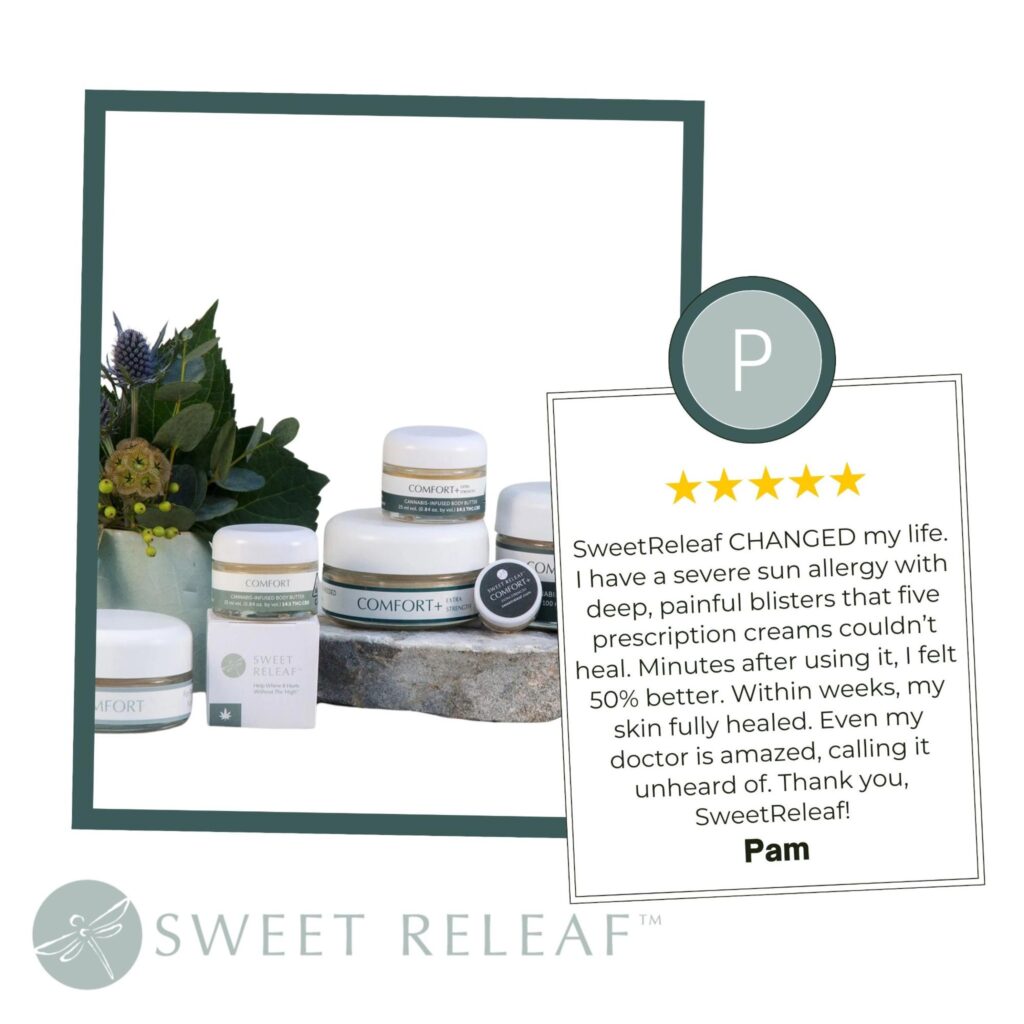
- Sweet Releaf comfort Body Butter
Designed for mild to moderate flare patterns, this balanced formula works well for daily maintenance and routine barrier support. It absorbs cleanly without leaving a greasy residue, making it suitable for hands and areas exposed throughout the day. - Sweet Releaf omfort+ Extra Strength Body Butter
Formulated with a higher concentration of THC, this option targets persistent or recurring inflammation. It is often selected when lower-potency creams have provided partial relief yet inflammation remains active.

Practical Aspects of Using Cannabis Topicals for Eczema
Even the best formulation needs to be used thoughtfully. Eczema-prone skin reacts to friction, over-application, and harsh handling, so technique matters. The goal is steady, consistent support that calms inflammation without overwhelming the skin barrier.
How Much to Use
Start conservatively. A pea- to dime-sized amount per affected area is usually sufficient. Spread it between your fingers first, then massage gently into clean, dry skin using slow, circular motions.
The movement encourages absorption and increases local circulation without irritating the surface.
Watch how your skin responds over several days. If inflammation remains active, increase the amount gradually rather than doubling your application all at once. More product is not always better. What matters is consistent delivery and full absorption.
How Often to Apply Topical THC
Frequency depends on the stage of your eczema cycle. During maintenance periods, one to two applications per day often provide steady support. When a flare becomes active, increasing to three or four applications spaced throughout the day may help calm escalating inflammation.
Evening application deserves special attention. Nighttime itching can intensify as cortisol levels shift and distractions fade. Applying a THC-forward topical before bed may reduce that urge to scratch and improve sleep quality.
If you are also using prescription steroid creams, speak with a medical professional before layering treatments. Alternating timing rather than stacking products at once is often a more balanced approach.
Application Tips for Sensitive Skin
Technique can influence results as much as formulation. Keep these practices in mind:
- Apply after bathing when skin is slightly damp to help seal in hydration
- Reapply after frequent hand washing or sanitizer use, especially on the hands
- Patch test before applying to highly sensitive or facial areas
- Avoid applying to open, actively weeping wounds without medical guidance
Cannabis topicals are not associated with skin thinning in the way corticosteroids are. Long-term data continues to evolve, so monitor your skin closely and adjust use based on response.
Save Your Skin with Smooth THC Cream
Eczema can feel relentless.
There is no universal cure. But there are smarter ways to support inflamed skin without compounding irritation.
Well-formulated, high-THC cannabis topicals may provide meaningful relief — especially for those who haven’t found success with low-potency CBD creams or who want to reduce steroid reliance.
If you’re exploring alternatives, we know the perfect place to start.
Sweet Releaf products were created specifically to deliver full-spectrum relief without the high and they contain zero unnecessary additives. Find them in your local California dispensary and see for yourself if they help reduce the symptoms of eczema.