Yes, the NFL still tests for THC, but only during a limited preseason window, with a much higher threshold (350 ng/ml) and fines instead of suspensions.
Policies have shifted toward leniency as players seek safer pain relief options, including non-psychoactive THC topicals like Sweet Releaf that don’t enter the bloodstream.
How THC Testing Actually Works In Today’s NFL
Yes, the NFL still tests for THC, but the approach has changed.
Testing now happens during a limited preseason window, typically from training camp through the first preseason game.
Outside of that, THC isn’t part of standard offseason testing, showing a clear shift toward a more relaxed stance.
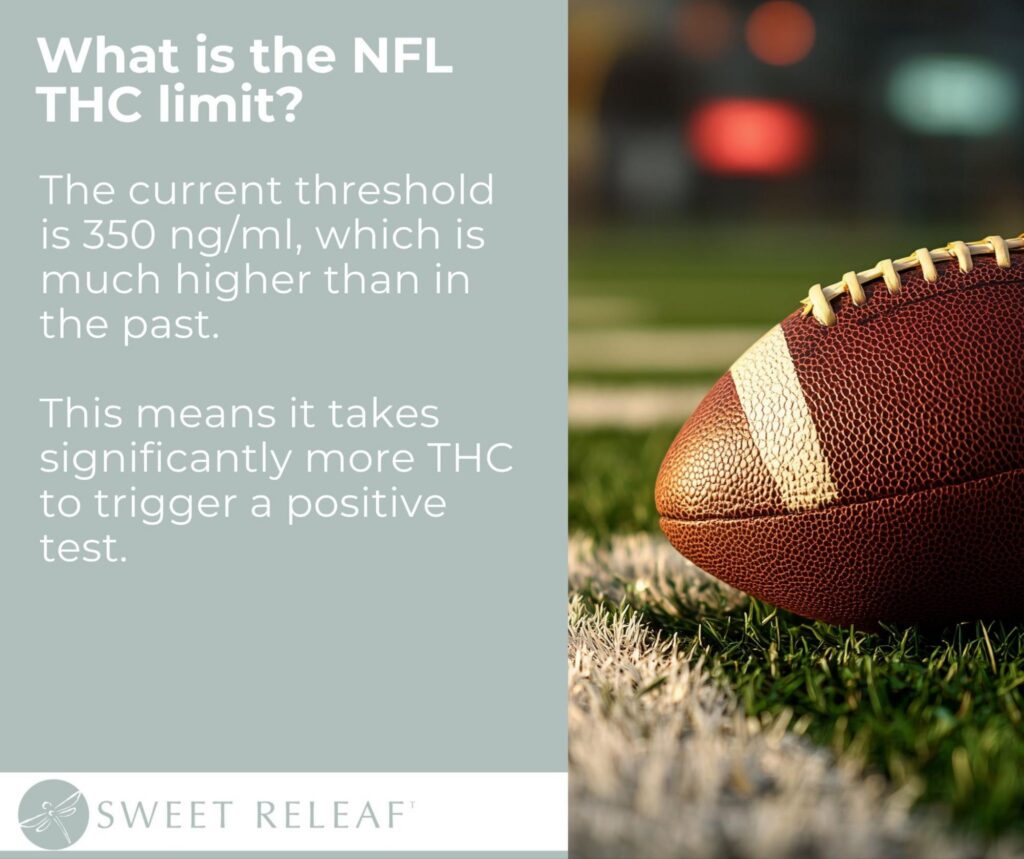
The threshold for a positive test is now 350 ng/ml, far higher than before, so it takes significantly more THC to trigger a violation. And instead of suspensions, the league now relies mostly on fines, starting around $15,000 and increasing for repeat offenses.
It still matters, especially for younger players, but it’s no longer as career-threatening.
Overall, testing is less aggressive and more focused on compliance than punishment. Teams may be notified of a violation, but not always the specific substance.
THC is still prohibited, the NFL just manages it differently now than it did in the past.
How Strict The NFL Used To Be About THC
Not long ago, THC rules in the NFL were rigid and unforgiving. Even small amounts could trigger a positive test, and the consequences went far beyond fines.
Players faced suspensions, lost income, and long-term career impact, making cannabis one of the most heavily policed substances in the league.
Low Thresholds And Zero Tolerance
If you rewind a few years, the rules feel almost unrecognizable.
The original THC threshold sat at 35 ng/ml, a level so low that even occasional or off-season use could trigger a positive.
That later increased to 150 ng/ml, but it was still strict enough that players had to be extremely cautious year-round.
In that environment, it didn’t take much. A small amount, used days or even weeks earlier, could still show up and put a player at risk.
Suspensions Were Typical
Back then, a positive test wasn’t just a fine, it was a real threat to your career.
Players could face:
- Multi-game suspensions
- Loss of game checks (which adds up quickly)
- Long-term damage to reputation and contract value
And once you were in the league’s substance-abuse program, the scrutiny only increased. More testing.
Less margin for error. More pressure.
Why the Policy Was So Harsh
From the league’s perspective, the strict rules were about control.
There were concerns about:
- On-field performance
- Player safety and injury risk
- Public perception of the league
Cannabis was treated less like a recovery tool and more like a liability. Even as medical use gained traction elsewhere, the NFL held its line longer than most.
But that tension, between policy and reality, started to show.
That strict, punishment-heavy system didn’t last, because players pushed back.
Why The NFL Changed Its THC Policy
The NFL didn’t ease its THC rules overnight, it was a response to real pressure from inside the game. Players needed better ways to manage pain, recover, and stay functional without relying on harsh pharmaceuticals.
As attitudes toward cannabis shifted, the league began adjusting its policy to reflect how players actually take care of their bodies.
The Physical Toll Of Football
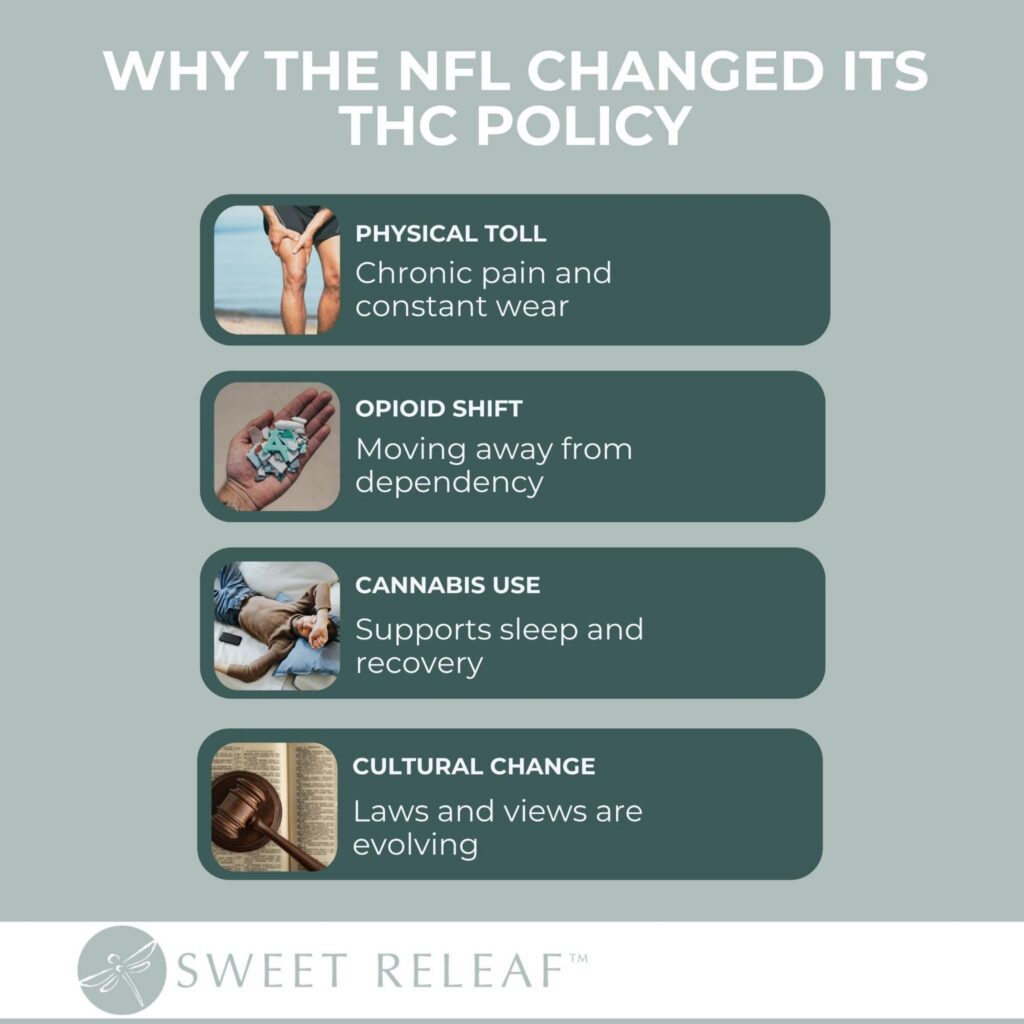
Pain in football isn’t occasional, it’s constant, especially at the professional level where every play adds wear and tear.
Players deal with chronic inflammation, joint breakdown, and muscle damage that rarely fully heals between games.
The old system didn’t offer safe, sustainable ways to manage that level of physical stress.
Moving Away From Opioids
Prescription painkillers were once the default, but concerns around dependency, long-term health, and mental fog pushed players to reconsider.
Many began searching for alternatives that could relieve pain without sacrificing clarity or control.
Cannabis For Sleep, Recovery, And Anxiety
Cannabis became part of that shift, not as a shortcut, but as a recovery tool. Players use it to improve sleep, manage stress, and support faster physical recovery.
Most don’t view it as performance-enhancing, but as something that helps them stay in the game longer.
Cultural And Legal Shifts
As cannabis became legal in more states, public perception changed and other leagues began relaxing their rules.
The NFL eventually followed, acknowledging both the cultural shift and growing medical interest.
Today, with ongoing cannabinoid research and player advocacy, the question inside the league has shifted from control to practicality.
The Current NFL THC Testing Rules Explained
THC testing in the NFL isn’t year-round the way many people assume.
It’s tied to a very specific window, typically from the start of training camp through the first preseason game.
Outside of that period, THC isn’t part of the standard offseason testing panel. That means players aren’t being monitored for cannabis use during most of the year, which is a major shift from the old system where timing mattered much less.
This is why you’ll sometimes hear players talk about “timing it right.”
It’s not about gaming the system, it’s about understanding when the league is actually looking.
What Happens If A Player Tests Positive
If a player does test above the threshold, the consequences are now financial, not disciplinary in the traditional sense.
- 1st violation: Around $15,000
- 2nd violation: Around $20,000
- 3rd and beyond: Escalates into fines equal to game checks
There’s still real money on the line, especially for younger players or those not on massive contracts. So while the stakes are lower than before, they’re not insignificant.
One important change here: violations don’t stack forever. After a certain period, a player’s record can reset, which reduces long-term risk.
No More Suspension-Based System
This is the biggest philosophical shift.
The NFL moved away from suspending players for THC and toward a fine-based system. That means players are no longer routinely pulled off the field for cannabis-related violations.
Instead of punishment that disrupts careers, the league now leans toward accountability that keeps players active while still enforcing rules.
It’s a quieter system, but a much more practical one for a league built on performance and availability.
Do Teams Know What Substance Triggered The Test?
Not always.
Teams are typically informed that a player had a positive or missed test, but they aren’t necessarily told exactly which substance caused it.
That change adds a layer of privacy for players and reflects a broader shift toward treating substance use as a health issue rather than a public disciplinary matter.
What Fans And Players Still Want To Know
Even with updated rules, THC testing in the NFL still raises plenty of questions.
Players and fans alike want clarity on when testing happens, what actually triggers a violation, and what’s allowed. The headlines only tell part of the story, so let’s break down what people are still trying to figure out.
Do They Still Test For Weed At All?
Yes, but only during that narrow preseason window.
This is where a lot of confusion comes in. Headlines often make it sound like the NFL “stopped testing,” which isn’t true. They just made testing less frequent and more specific.
Is Testing Random Or Performance-Based?
Officially, it’s random.
But if you’ve watched the league long enough, you’ve probably noticed a pattern, players having huge games and then mentioning they were tested the next day.
That perception sticks, even if the policy says otherwise. Whether coincidence or not, it feeds the idea that standout performances draw attention.
Is It Just A Urine Test?
Yes. Standard NFL drug testing is urine-based.
That matters, because urine tests are designed to detect substances that have circulated through the bloodstream, not compounds that stay localized in the body.
What Happens If You’re In The Substance Program?
That’s where things tighten up.
Players in the substance-abuse program face:
- More frequent testing
- Closer monitoring
- Less flexibility around timing
So while the general policy has softened, players in that program still operate under stricter rules.
Can Players Post About Drug Tests?
They can talk about it, but they have to be careful.
Mentioning that you were selected for a test is generally fine. But recording or sharing the actual collection process, even something as simple as showing the notice, can result in a fine (around $15,000).
That’s created some confusion. To a lot of people, posting about being tested and showing proof feels like the same thing. But under league rules, they’re treated very differently.
The Real Concern: Can THC Use Affect Drug Tests?
What Actually Triggers a Positive Test
At the end of the day, NFL drug testing comes down to one simple thing: what’s in your bloodstream.
A positive test happens when THC metabolites, what your body produces after processing cannabis, are present in your urine.
That’s what the lab is measuring. Not whether you used cannabis… but whether it circulated through your system.
This is where a lot of people get tripped up. They assume all THC use is treated the same. It’s not.
Why This Matters for Different Cannabis Products
If you smoke or use edibles, THC enters your bloodstream.
From there, it’s metabolized, stored, and eventually shows up in urine tests.
That’s why those forms are detectable, even days or weeks later, depending on frequency and body chemistry.
But not every cannabis product behaves that way. Some are designed to work locally, not systemically. And that difference is everything when it comes to testing.
This is where most people get confused, and where topicals change the conversation.
Can You Use THC Products Without Failing A Drug Test?
Most cannabis products are systemic. They move through your body, enter your bloodstream, and leave a trace.
Topicals are different.
- Smoking / edibles: Enter bloodstream → detectable
- Topicals: Stay localized in the skin → not circulating systemically
That means a properly formulated topical doesn’t behave like something you ingest or inhale. It doesn’t travel through the body the same way, and that’s what makes it relevant for athletes navigating testing rules.
Why Topicals Are Different
Your skin has its own network of cannabinoid receptors, primarily CB2 receptors, that respond to cannabinoids like THC without needing to send them through your bloodstream.
A well-made topical interacts with those receptors right where you apply it:
- In the muscles
- Around the joints
- At the site of inflammation
Unless it’s specifically designed as a transdermal product (which is meant to enter the bloodstream), a topical stays local.
That’s the distinction that matters.
Why Sweet Releaf Topicals Stand Out For Athletes
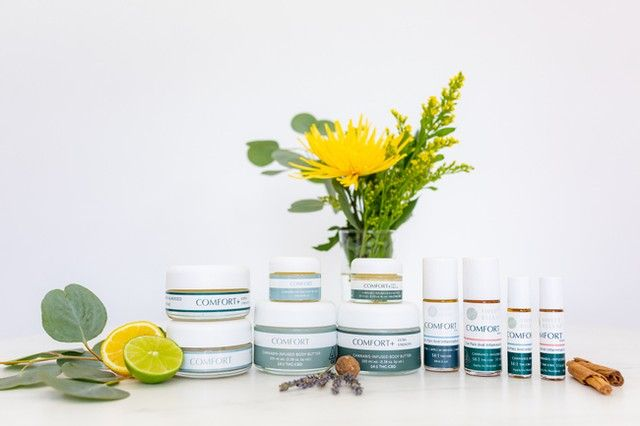
When we started making these formulations, it wasn’t about trends, it was about solving persistent pain with something that actually works.
Too many options either fall short or come with trade-offs that affect how you feel day to day.
Sweet Releaf uses high-THC, full-spectrum cannabis in a way that stays local to the body. No head change, no fog, just targeted relief where it’s needed, which is why athletes and active people rely on it.
Emulsion Body Butter = Deeper Penetration
Most cannabis salves sit on the surface, thick, oily, and slow to absorb. That never made sense to me if the goal is real relief.
Our body butter is an emulsion, blending water and oil so cannabinoids absorb faster and reach deeper into tissue.
The result is a clean, non-greasy feel that works quickly and consistently.
Why They’re Considered Safe For Testing Contexts
Properly formulated topicals don’t send THC into the bloodstream.
If it’s not circulating in your system, it won’t show up on a standard urine test. It’s not about avoiding the rules, it’s about understanding how your body processes different forms of cannabis and choosing accordingly.
Choosing The Right Thc Topical For Recovery
Comfort Body Butter (Deep, Lasting Relief)
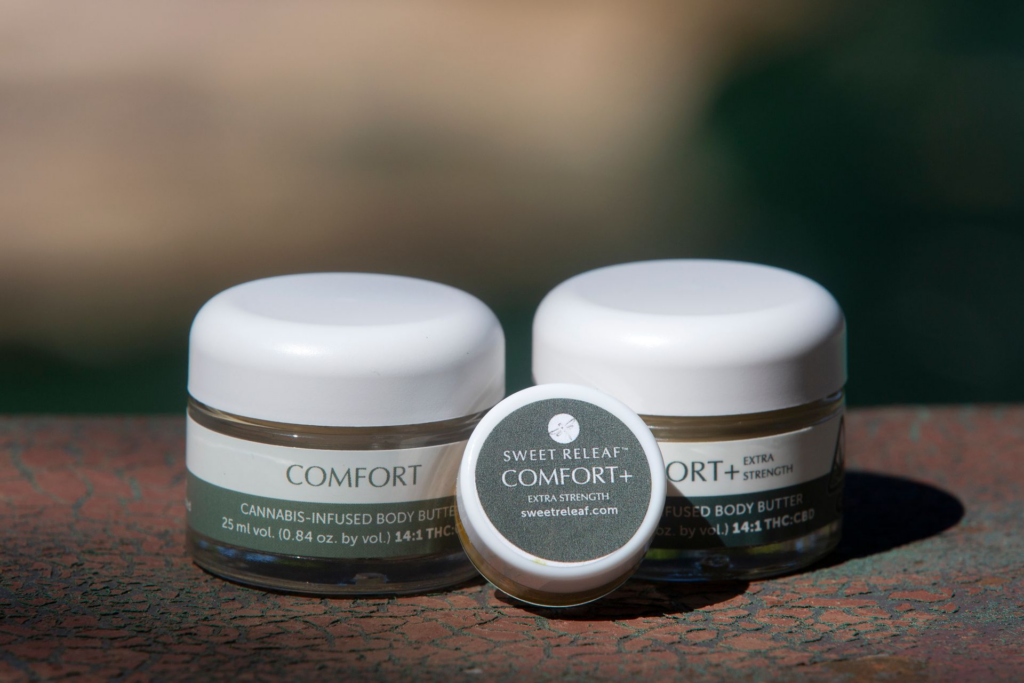
When pain settles in and doesn’t let go, tight hips, worn knees, that deep shoulder fatigue, you need something that works below the surface, not just on it.
Sweet Releaf’s Comfort Body Butter is built for daily relief, while Comfort+ Extra Strength is designed for more intense, stubborn pain.
Both use a high-THC, full-spectrum emulsion that absorbs deeply, making them ideal for chronic pain, large muscle groups, and post-game recovery when inflammation is at its peak.
Comfort Roll-Ons (Targeted + Fast Relief)
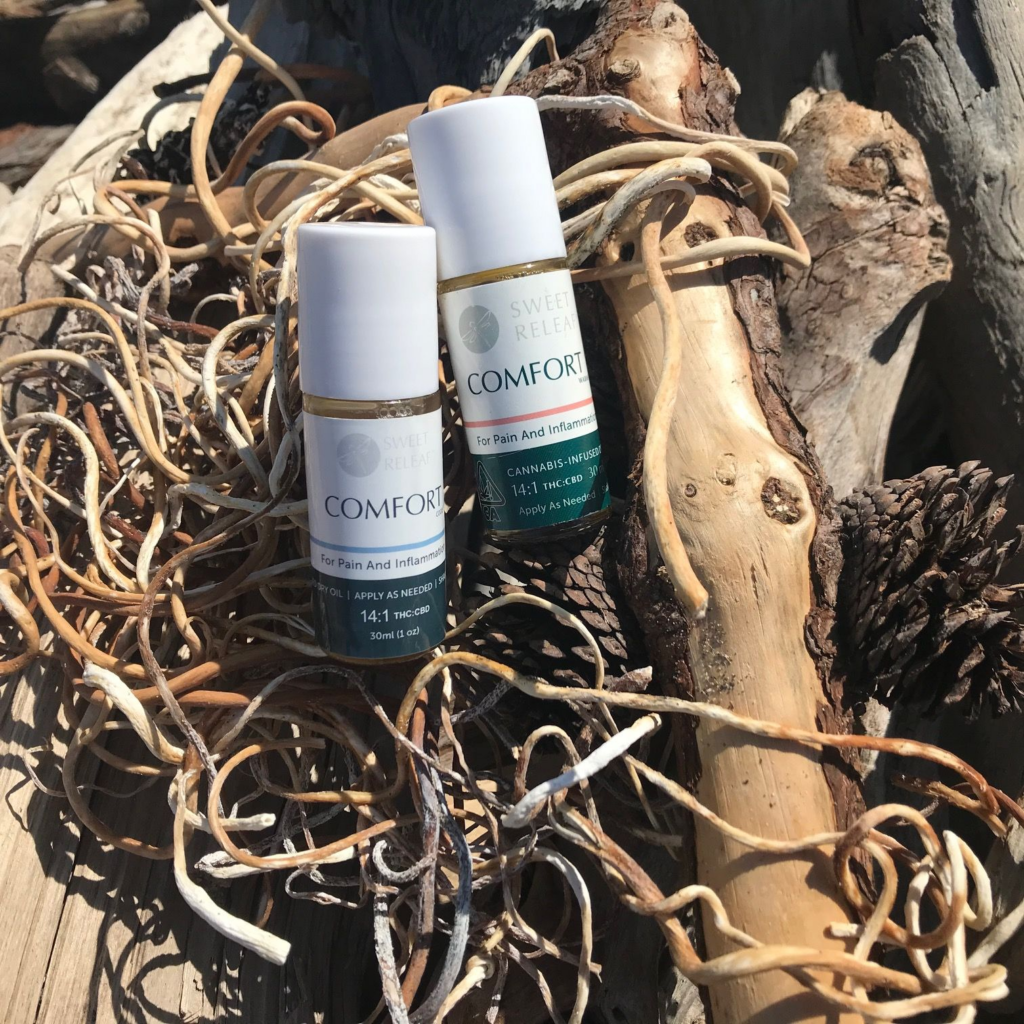
Sometimes you don’t need full coverage, you need precision you can apply in seconds.
The Comfort Cool Roll-On delivers a refreshing, cooling effect to calm inflammation and settle irritated areas, while the Comfort Warm Roll-On helps loosen stiff joints and tight muscles with gentle heat. They’re perfect for on-the-go use, pre-workout prep, or quick post-training recovery when something needs immediate attention.
Different tools, same goal, help your body recover without slowing you down.
A Smarter Approach To Pain Relief In The NFL Era
The NFL hasn’t eliminated THC testing, but it has changed the conversation.
What used to be about punishment is now more about performance, recovery, and longevity.
Cannabis isn’t viewed the same way it once was. It’s no longer automatically dismissed, but it’s still regulated, still watched, and still misunderstood in a lot of ways.
So the smarter approach isn’t avoidance, it’s understanding.
Understanding:
- When testing actually happens
- What triggers a positive result
- And how different forms of cannabis interact with your body
Because once you see that clearly, the path forward gets simpler.
It’s not about guessing. It’s about using what works, without putting anything else at risk.
Find Sweet Releaf at a dispensary near you and explore a more controlled approach to recovery.
Disclaimer:
This article is for informational purposes only and isn’t medical advice. Sweet Releaf products are designed to support comfort, not to diagnose or treat medical conditions.
Everyone’s body is different, so results can vary. If you have a medical condition or are taking medications, it’s always a good idea to check with your healthcare provider.