MLB no longer tests major league players for natural THC under its drug policy, focusing instead on opioids and synthetic substances.
Cannabis is treated more like alcohol, with evaluation over punishment.
For those using THC topicals like Sweet Releaf, effects stay local, offering pain relief without psychoactive impact or bloodstream detection concerns.
The Turning Point: MLB Removes THC From Drug List
If you’ve been around cannabis long enough, like we have, you learn quickly that not all uses of the plant are treated equally.
For a long time, baseball didn’t make that distinction. But in 2020, Major League Baseball made a quiet shift that changed the conversation.
They removed natural cannabinoids like THC and CBD from their official “drugs of abuse” list, and that move carried real weight.
Before that, marijuana sat in the same category as cocaine and opioids. Now it’s treated more like alcohol, something that can be monitored, but not automatically punished.
Does MLB Still Test At All?
Yes, but the focus is different. Testing still exists, just not in the same way for natural THC. Today, the program is aimed at substances with higher risk, like opioids, fentanyl, cocaine, and synthetic cannabinoids.
From where we stand, this wasn’t about loosening standards. It was about getting honest about what actually harms the body, and what doesn’t.
That kind of clarity matters, especially in a sport where pain is part of the daily rhythm.
Why MLB Stopped Testing For Natural THC

Pain has a language, and athletes hear it constantly. Whether it’s a full season grind or years of wear catching up, the question becomes how you respond.
MLB’s policy shift came after a hard moment, the death of pitcher Tyler Skaggs, which forced the league to take a deeper look at what players were really dealing with, especially when it came to opioids.
That’s where priorities changed.
Instead of focusing on cannabis, which many players were already using to manage pain, MLB turned its attention to substances that were causing real harm.
At the same time, the world outside baseball was evolving:
- Cannabis laws were changing across states
- Public perception was shifting
- THC was no longer viewed in the same category as harder drugs
The result is a system that leans more toward treatment and support rather than automatic punishment.
If a player struggles, the goal is to help, not just penalize.
And underneath it all is a simple realization: THC, when used responsibly, doesn’t carry the same level of risk as the substances MLB is now focused on.
Why Synthetic THC Is Still Banned
Not all “THC” is the same. The THC that comes from the cannabis plant is part of a natural system the body can recognize.
Synthetic cannabinoids, like K2 or Spice, are entirely different. They’re lab-made, unpredictable, and often far more intense than natural cannabis.
That’s why MLB still tests for them. These compounds have been linked to serious health risks, including heart issues and severe psychological effects.
From a formulation standpoint, they don’t behave in a stable or reliable way. They don’t communicate with the body the same way plant-based cannabinoids do.
So MLB drew a clear line:
- Plant-based THC → lower priority, treated more like alcohol
- Synthetic cannabinoids → still restricted and tested
THC Relief Without The Risk: What To Know
THC topicals offer targeted relief without the risks tied to traditional cannabis use. Because they work locally and don’t enter the bloodstream in meaningful amounts, they won’t get you high or interfere with drug testing.
The key is choosing the right formulation, one that delivers real results without unwanted side effects.
Do THC Topicals Show Up On Drug Tests?
You see “THC” and immediately think, “Am I at risk?” In most cases, no. A properly made topical doesn’t act like something you smoke or ingest.
When applied to the skin, cannabinoids stay local, working in muscles, joints, and fascia.
For THC to show up on a test, it needs to enter the bloodstream, and standard topicals aren’t built to do that. The exception is transdermal products, which are designed to cross into the bloodstream.
So the real distinction isn’t just THC, it’s how it’s delivered.
Why Topicals Don’t Cause a “High”
When pain eases, even slightly, the body can feel lighter, and that shift can be misunderstood.
Topicals don’t create a high because they don’t meaningfully enter the bloodstream or reach the brain. There’s no systemic effect like with smoking or edibles.
What you get is a localized response, right where you applied it.
What Separates Effective THC Topicals From The Rest
Let’s be honest, when people say topicals don’t work, it’s usually the product, not the plant. We’ve seen it too many times.
Someone tries a weak formula and assumes the whole category falls short.
Most issues come down to:
- CBD-only creams with low potency
- Underdosed formulas that don’t reach tissue
- Oil-based salves that sit on the surface
Without enough THC, and without proper absorption, you won’t feel much. THC plays a real role in how the body handles inflammation and pain.
When it’s missing or diluted, the results usually are too.
How Sweet Releaf Solves This Differently
When we started making these, it wasn’t about launching a product. It was about solving a problem that nothing else seemed to touch.
That meant going back to basics, using the whole plant, and respecting how the body responds to it.
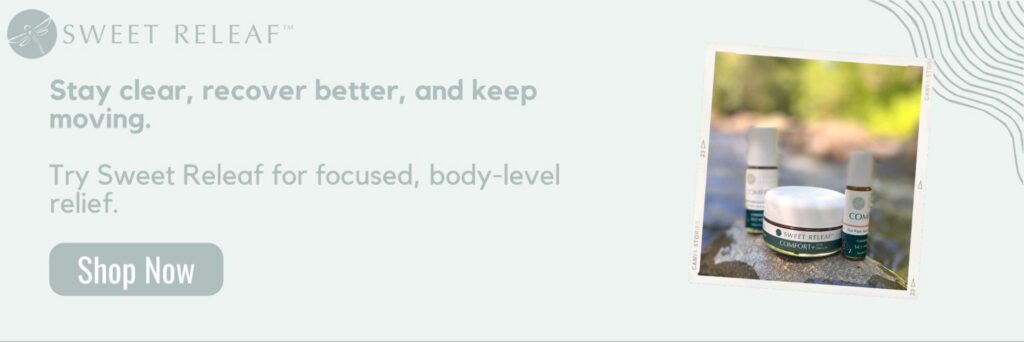
Sweet Releaf uses high-THC, full-spectrum cannabis, not isolates or watered-down blends. And instead of a simple oil base, we use an emulsion body butter, which helps cannabinoids move deeper into the tissue instead of sitting on the surface.
That difference is everything.
We also balance THC with CBD and other plant compounds to create a more complete effect. The result is something that:
- Absorbs quickly
- Feels clean, not greasy
- Delivers noticeable relief
- Stays non-psychoactive
You feel it where it matters. Not in your head.
And if you’re thinking about drug tests, performance, or just staying clear, this is the kind of relief that doesn’t come with extra questions attached.
From Warm-Up to Recovery: THC Topicals In Play
From the first stretch to the final inning, a player’s body takes a steady load. THC topicals fit into that rhythm, supporting warm-up, easing movement, and helping the body recover after.
Used correctly, they don’t interfere with performance. They simply help the body stay responsive, so it can keep showing up day after day.
Pre-Game Use: Warming Up Without Slowing Down

Before a game, the goal is simple: get the body loose, responsive, and ready to move.
You don’t want stiffness dictating how you swing, throw, or react. That’s where a Sweet Releaf’s Comfort roll-ons comes in, something quick, targeted, and easy to apply.
Used on shoulders, knees, or lower back, the roll-on delivers a warming or cooling sensation that helps wake up the tissue before play. It’s not about numbing anything, it’s about getting circulation going and easing that underlying tension. The kind of prep that helps your body feel like it’s on your side.
And because it’s non-psychoactive, there’s no tradeoff. No fog, no hesitation. Just a body that moves the way it should when the game starts.
Post-Game Recovery: Managing Pain Without Pills

After the game, the conversation changes. Now it’s about recovery, what your body needs to come back tomorrow and do it again.
Soreness builds, inflammation settles in, and this is where smarter choices matter.
That’s where Sweet Releaf’s Comfort Body Butter (Extra Strength) earns its place. It’s designed to be worked into larger areas, hips, back, legs, where deeper, longer-lasting relief is needed.
What About MLB Employees Or Non-Players?
Most information out there focuses on players, where policies are public and clearly defined.
But once you step into an employee or staff role, you’re dealing with a completely different set of rules.
MLB policy does not equal employer policy.
If you’re not a player, everything depends on the organization, the role, and even the state you’re in. Some jobs may require testing, others may not, especially if safety or liability is involved.
Cutting Through The Confusion
When it comes to MLB and THC, you’re really looking at two separate worlds.
- Players operate under a clear, evolving system focused more on health than punishment.
- Employees, on the other hand, fall under policies that vary by role, employer, and location.
That’s why answers feel inconsistent, they’re coming from different contexts.
The most reliable way forward is simple: player rules are public, but employee rules are case-by-case. If you need certainty, it usually comes directly from the employer, not the league.
The Bigger Picture: Why This Policy Shift Matters
Step back from the details for a moment, and something bigger starts to come into focus.
Baseball didn’t just tweak a rule. It reframed the conversation.
Instead of asking, “How do we punish this?” the league started asking, “What actually puts players at risk?”
And the answer wasn’t cannabis.
It was opioids. It was dependency. It was the quiet ways pain gets managed when the only tools available come with a cost.
So the priority shifted.
- Health over punishment
- Support over suspension
- Real risk over outdated assumptions
At the same time, cannabis, especially in forms that don’t impair, has been finding its place in recovery. Not as a shortcut. Not as an escape. But as a tool.
Finding Relief Without The Worry

Pain doesn’t wait for policies to catch up. It shows up when your body’s been pushed, asking for something that actually helps.
More people are shifting toward relief that works with the body, not against it. When a topical is made right (potent, well-formulated), you don’t question it. You feel it.
That’s what we’ve focused on at Sweet Releaf. No shortcuts, just honest formulations designed to bring real relief without the high or the worry.