
Ayurvedic treatments are personalized healing methods that restore balance in the body using herbs, diet, massage, and lifestyle changes.
Instead of masking symptoms, they focus on root causes.
Modern approaches, like Sweet Releaf’s cannabis-infused, Ayurvedic-inspired topicals, build on this by delivering targeted pain relief without the high.
Ayurveda Explained: A Different Way To Think About Treatment

If you walk into Ayurveda expecting a prescription, you’ll be confused pretty quickly. It’s not a single treatment, it’s a way of understanding how your body works, how it falls out of balance, and how it finds its way back.
Instead of asking what fixes a symptom, Ayurveda asks: what caused the imbalance in the first place?
When something drifts too far, too much heat, dryness, or stagnation, you feel it. That often shows up as:
- Chronic pain that lingers
- Inflammation that flares up
- Digestive issues without clear answers
- Fatigue that rest doesn’t fix
- Stress stored in the body
- Skin that reacts instead of heals
Ayurveda isn’t standardized, two people with the same issue might get completely different approaches.
That can feel loose, but it’s intentional: Ayurveda isn’t chasing quick fixes, it’s trying to understand your body and respond to what it actually needs.
The Real Goal Of Ayurveda: Balance Over Suppression
Most modern approaches are built around control: reduce the pain, suppress the inflammation, override the signal.
Ayurveda takes a different approach. It listens first.
The 3 Doshas: How Ayurveda Breaks Down Your Body’s Patterns
You’ll hear a lot about “doshas.” Strip away the jargon, and they’re just patterns, ways your body tends to behave.
- Vata → movement, nerves, circulation
When it’s off, things feel scattered: anxiety, dryness, joint pain that comes and goes - Pitta → digestion, metabolism, heat
When it’s high, you see inflammation, irritation, burning sensations, internally or on the skin - Kapha → structure, stability, lubrication
When it builds up, things slow down: stiffness, swelling, heaviness
Everyone has all three. But the mix is different for each person, and that’s what shapes how your body reacts to stress, injury, or overuse.
That’s why Ayurveda doesn’t hand out one-size-fits-all solutions. Because there’s no such thing as a one-size body.
What You’re Really Getting With Ayurvedic Treatments
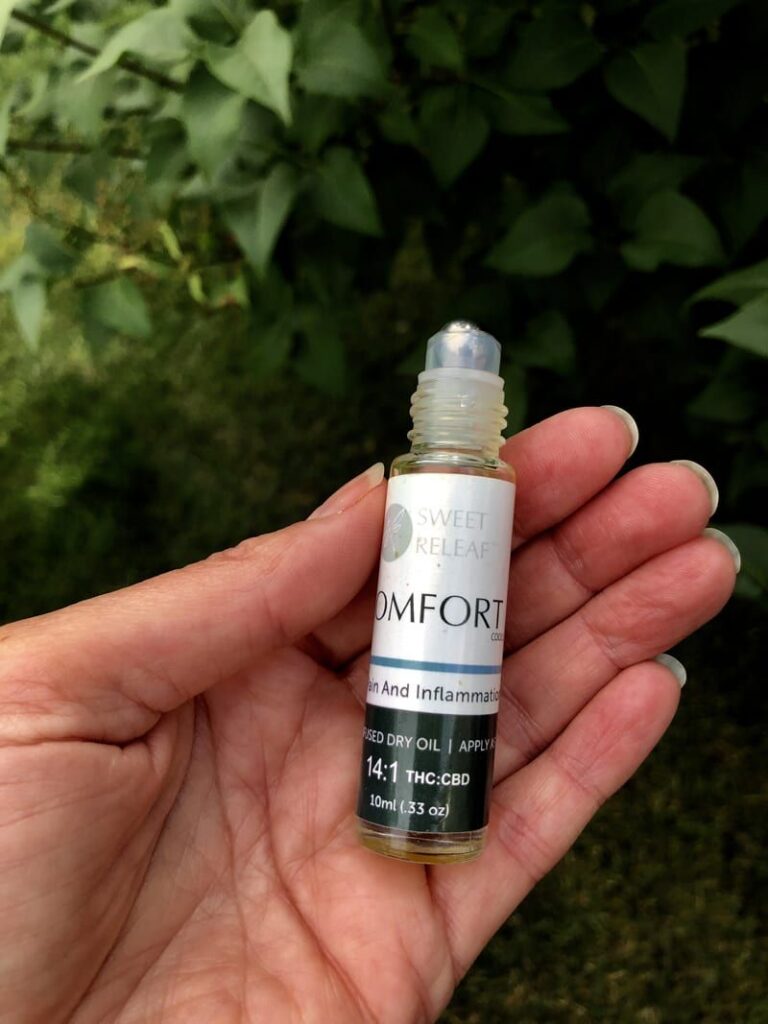
When people hear “Ayurvedic treatments,” they often picture herbs or maybe a spa-style oil massage. That’s part of it, but it barely scratches the surface.
In reality, Ayurveda is layered. It’s not one tool, it’s a toolkit.
And how those tools are used depends entirely on what your body is asking for.
How Ayurvedic Care Is Actually Delivered
At a practical level, most Ayurvedic treatments fall into a few core categories:
Herbal medicine
This is usually the entry point, things like turmeric for inflammation, ginger for digestion, or ashwagandha for stress. But these aren’t random supplements. They’re chosen based on your specific imbalance, not just your symptoms.
Diet and digestion-focused protocols
In Ayurveda, digestion is everything. If your body can’t process what you’re taking in, food, stress, environment, it starts to show up elsewhere. So treatments often begin with how and when you eat, not just what you eat.
Body therapies (massage, oils, heat/cooling)
This is where things get tactile. Oil massage (abhyanga), warming treatments, cooling applications, these aren’t just about relaxation. They’re meant to shift circulation, calm the nervous system, or reduce internal heat.
Detox systems like Panchakarma
This is the deep end. Panchakarma is a structured cleansing process designed to reset the body. It’s also the most misunderstood, some people swear by it, others question it completely.
Mind-body practices (breathing, meditation, yoga)
Not optional in Ayurveda. These are considered part of treatment, not extras. Because if your nervous system stays in overdrive, nothing else really sticks.
The Modern Shift: Where Ayurveda Meets Real-World Pain Relief
Traditional Ayurveda is built around balance. It takes its time. It asks you to change how you live, not just what you take.
And when you commit to it fully, it can do a lot of good.
But most people we talk to aren’t living in a monastery. They’ve got work, families, injuries that don’t wait, and pain that shows up now, not six weeks from now.
That’s the gap.
People want the wisdom of something like Ayurveda… but they also want relief they can actually feel in their body, today.
Not everyone has the time, or frankly the energy, for a full lifestyle overhaul just to get their knee to stop throbbing or their back to loosen up.
That’s where a more modern approach comes in.
Enter Cannabis + Ayurveda
At first glance, these two systems seem worlds apart, one ancient, one newly re-emerging.
But look closer, and they’re speaking the same language: plant-based healing, whole-body awareness, and a deep focus on inflammation and the nervous system.
Where they differ is speed. Ayurveda works gradually, building balance over time, while cannabis, especially in topical form, can deliver relief quickly and right where you need it.
When you’re in pain, that immediacy matters. Cannabis brings what traditional herbs often can’t:
- Fast-acting relief you can feel within minutes
- Targeted application at the source of pain
- Higher potency, especially with THC
It doesn’t replace Ayurveda, it fills the gap.
Why This Synergy Works
Think of it simply: Ayurveda asks the right question, what does your body need right now? Cannabis answers it, here’s relief, right where it hurts.
Ayurveda guides the response, cooling, warming, calming, or stimulating, while cannabis delivers that response into the body in a way you can actually feel.
One provides direction, the other provides immediacy. Together, they give you both:
- Short-term comfort as pain and tension ease
- Long-term support so the same issues don’t keep returning
That combination, understanding paired with real-time relief, is where things start to click.
Sweet Releaf: Making Ayurveda Work For Modern Bodies

When we started building Sweet Releaf, we weren’t trying to recreate Ayurveda in a jar.
We were trying to solve something simpler: people were hurting, and what they had either didn’t work, or came with trade-offs they didn’t want.
What we found is that Ayurvedic thinking, when you strip it down, is practical. Not philosophical, functional. So instead of asking people to learn a whole system, we built something that applies that logic directly to the body.
Turning Ayurvedic Ideas Into Something You Can Feel
At its core, Ayurveda asks a simple question: is your body running too hot, or is it stuck and not moving enough? Too much dryness, or too much stagnation?
That’s where warming and cooling come in, and it’s something you can feel, not just think about.
We built that directly into how our products behave. Cooling formulas calm inflammation and overuse, while warming formulas loosen stiffness and get things moving again.
Underneath that, it’s layered with full-spectrum cannabis, functional essential oils, and carriers that actually deliver into the skin.
If You’re Not Sure About Ayurveda, Start Here
You don’t need to figure out your dosha or buy into a system to use this.
Your body gives you feedback quickly, cooling feels like relief when something’s inflamed, and warmth starts to open things up when it’s tight and stuck.
That’s the bridge. Ayurveda can feel abstract, but when you turn it into something physical, something you can apply and feel, it becomes clear.
Where Real Relief Starts: Cooling And Warming Roll-Ons
This is where everything we’ve been talking about, balance, response, real relief, comes together in a way you can actually use.
We built our roll-ons to reflect a simple Ayurvedic truth: not all pain is the same. Some pain runs hot. Some runs cold and stuck. If you treat them the same way, you miss the mark.
Comfort Cools (Cooling Relief)
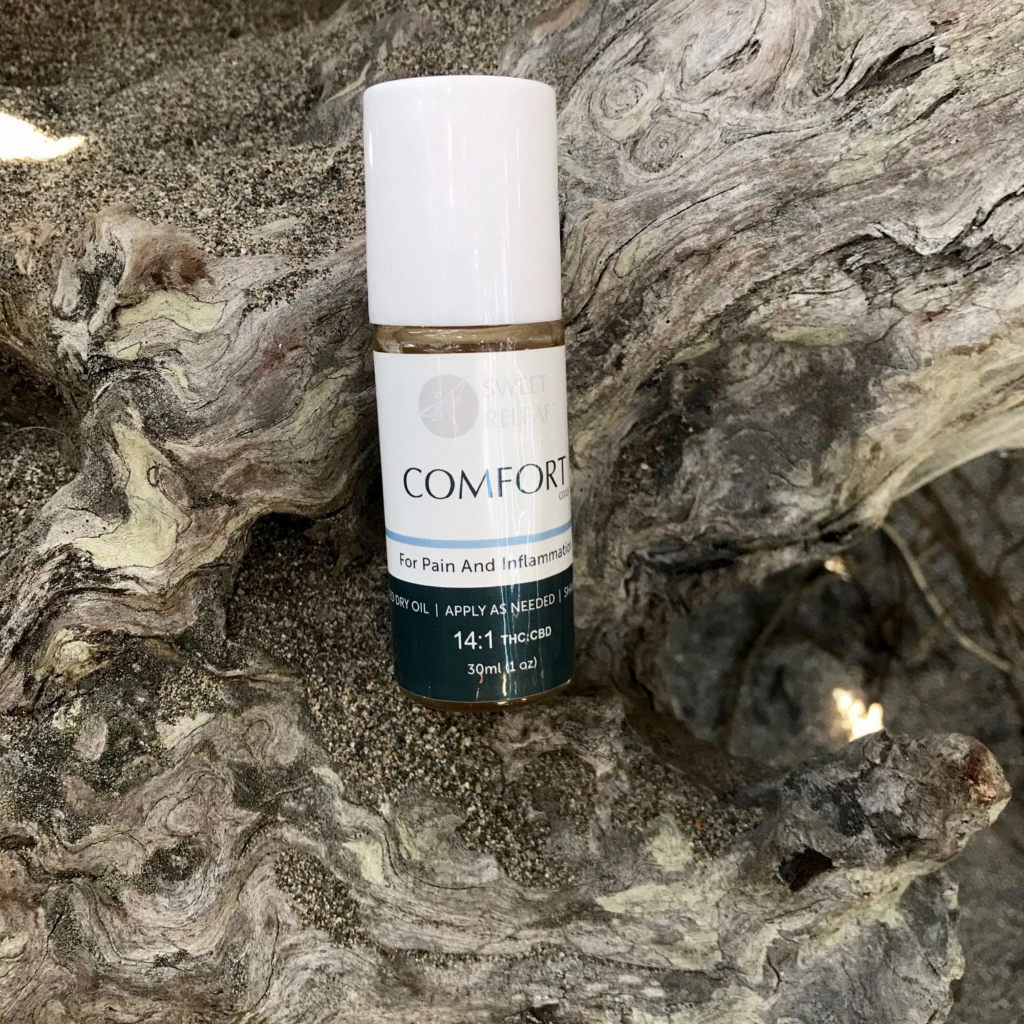
Some pain feels like heat.
It’s inflamed, irritated, maybe even a little swollen. You’ve overused something, pushed a little too hard, or your joints are just flaring up for no clear reason.
That’s where cooling matters.
Comfort Cools is designed for that kind of pattern:
- Inflammation that won’t settle down
- Heat in the joints or muscles
- Post-activity swelling or irritation
When you apply it, the sensation is immediate, soothing, calming, almost like the tissue exhales.
This is what we reach for when something feels “angry.”
Because you don’t fight heat with more force, you calm it down.
Comfort Warms (Warming Relief)

Then there’s the other kind of pain.
The kind that feels stiff. Tight. Sluggish. Like your body just isn’t moving the way it should.
That’s not heat, that’s stagnation.
Comfort Warms is built for that:
- Chronic stiffness that takes forever to loosen
- Tight muscles that don’t want to let go
- Poor circulation, especially in the morning or after sitting too long
The warmth isn’t aggressive, it’s deep and steady, the kind that slowly opens things up and gets movement back where it’s been missing.
This is what we use when something feels “stuck.”
Because sometimes the body doesn’t need calming, it needs a nudge to wake back up.
Why This Goes Beyond Basic Pain Creams
There are a lot of topicals out there. Most of them sit on the surface and hope for the best. That’s not what we do.
First, THC matters.
We formulate with high levels of THC because it actually interacts with the body’s endocannabinoid receptors in the skin. That’s where real pain modulation happens. Not just distraction, actual relief.
Second, delivery matters.
We don’t make basic salves. We use an emulsion-style body butter that absorbs and penetrates deeper. If it doesn’t get into the tissue, it doesn’t do much.
Third, Ayurvedic formulation matters.
This isn’t just cannabis in a jar. The warming and cooling profiles are intentional. They’re built to match how your body is presenting, not just what it’s feeling.
That combination is what makes the difference. You’re not just covering up pain, you’re responding to it.
When Ayurvedic Treatments Make the Most Sense
If you strip everything down, Ayurveda, and approaches inspired by it, tend to work best when your body is dealing with patterns that have built up over time.
Not emergencies. Not one-off injuries. Patterns.
That includes:
- Chronic pain and inflammation that keeps circling back
- Post-workout or repetitive strain that never fully resolves
- Aging joints and stiffness that slowly limit how you move
- Recovery after physical stress or surgery, when the body needs support, not just suppression
These are the situations where listening to the body, and responding thoughtfully, actually makes a difference.
Where something like a warming or cooling topical isn’t just temporary relief… it’s part of helping your body reset its baseline.
When You Might Need More Than Ayurveda Alone
That said, there are times when you don’t want to overthink it.
- Acute injuries that need immediate medical attention
- Serious conditions that require diagnosis and intervention
- Situations where something is clearly wrong and needs to be addressed directly
Ayurveda, and anything inspired by it, works best as support. As a way to help the body recover, regulate, and function better over time.
Not as a replacement when something more urgent is going on.
The goal isn’t to choose one system over another. It’s to give your body what it actually needs, when it needs it.
And sometimes that starts with something as simple as applying the right kind of relief, in the right place, at the right time.
Where This Leaves You

If you’ve made it this far, you’re probably somewhere in the middle, curious, but still a little cautious.
Maybe some of this clicks, and some of it feels unfamiliar. That’s a normal place to be.
Ayurveda isn’t something you have to believe in, it’s something you can test through your own body. If your pain eases, your stiffness softens, or you move a little more freely, that’s real. That’s worth paying attention to.
You don’t need to commit to a full system to start there.
That’s why we built Sweet Releaf the way we did, no complicated routines, no lifestyle overhaul, just something you can apply and feel within minutes.
It’s grounded in the same principles Ayurveda has worked with for thousands of years, just shaped for real life. If you’re curious what that kind of relief feels like, starting with a simple cooling or warming roll-on is a low-pressure way in.
Your body will tell you the rest.