Most hemp lotions don’t contain THC, especially those made from hemp seed oil. =
Some CBD lotions may include trace THC, while full-spectrum cannabis topicals do contain it but won’t get you high. =
Products like the ones from Sweet Releaf use THC differently, targeting pain locally without psychoactive effects.
Hemp Lotion Explained: What You’re Really Putting On Your Skin

When someone hands you a bottle labeled hemp lotion, what you’re really holding isn’t always obvious. At its simplest, it’s a moisturizer made from cannabis-derived oils, used to soften skin, calm irritation, or sometimes ease sore muscles.
We’ve used plant oils forever, but this one comes with a bit more curiosity attached.
Cannabis has moved into the mainstream, showing up everywhere from drugstore shelves to recovery routines. That’s where the confusion starts.
“Hemp” can mean a simple seed oil with no active compounds, or an extract that contains CBD or even THC. Same plant family, completely different effects.
So, will hemp lotion make you high?
No, but the reason depends on what’s inside. And for most people, this question isn’t casual, it’s about avoiding risk, whether that’s a drug test or just an unexpected reaction.
To understand that, you need to know the three very different types hiding behind the word “hemp.”
Before You Buy Hemp Lotion, Know These 3 Types
Not all hemp lotions are created equal, and that’s where most confusion begins. The word “hemp” can refer to very different ingredients, each with its own effects and risks.
Before you trust the label, it helps to understand the three distinct types you’ll find on shelves.
1. Hemp Seed Oil Lotion (No THC at All)
Hemp seed oil comes strictly from the seeds of the plant.
No flowers, no leaves, just the seed. And that matters because cannabinoids like THC and CBD aren’t found in the seeds in any meaningful way.
So what you’re getting here is essentially a plant-based skincare oil. It’s rich in fatty acids, great for dry skin, and helpful for maintaining the skin barrier. That’s its lane.
You’ll often see it listed as “cannabis sativa seed oil” on the label. From a risk standpoint, this is as clean as it gets:
- No THC
- No CBD
- No concern for drug testing
It’s skincare. Plain and simple.
2. CBD Lotion (Usually THC-Free, But Not Always)
CBD lotions are made from extracts taken from the flowers and leaves of the plant, where cannabinoids actually live.
That means you’re no longer dealing with just a moisturizer. You’re dealing with an active compound interacting with your body.
But not all CBD is the same. You’ll usually see three types:
- CBD isolate → purified CBD, no THC
- Broad-spectrum → multiple cannabinoids, typically no THC (or extremely low)
- Full-spectrum → includes trace amounts of THC within legal limits
3. Full-Spectrum Cannabis Topicals (Contain THC)
This is the category most people don’t realize exists, or misunderstand completely.
Yes, some topicals are intentionally made with THC. Not by accident. Not as contamination. On purpose.
Because THC, when used correctly, is one of the most effective compounds we have for localized pain relief.
Here’s the part that surprises people:
Even when a topical contains THC, it won’t get you high.
Why? Because it stays local.
Topicals work by interacting with cannabinoid receptors in the skin and underlying tissue, primarily CB2 receptors. They don’t meaningfully enter the bloodstream, and they don’t reach the brain in a way that produces psychoactive effects.
So you get the benefit where you apply it, without the mental shift people associate with cannabis.
That distinction is everything: THC in a topical is about relief, not intoxication.
Can A Hemp Lotion Change Your State of Mind?
No, you’re not getting high. It can feel confusing, but what’s happening isn’t intoxication.
Topicals interact with CB2 receptors in your skin and muscles, the ones tied to inflammation and pain, not the CB1 receptors in your brain that cause a high.
That pathway simply isn’t activated with lotions, so there’s no psychoactive effect.
What you might be feeling is your body shifting, tension easing, inflammation calming, a sense of release. If you’re not used to that, it can feel unfamiliar.
Relief isn’t the same as being high, but sometimes it’s the first time your body’s had a break.
Why Some Lotions Intentionally Include THC
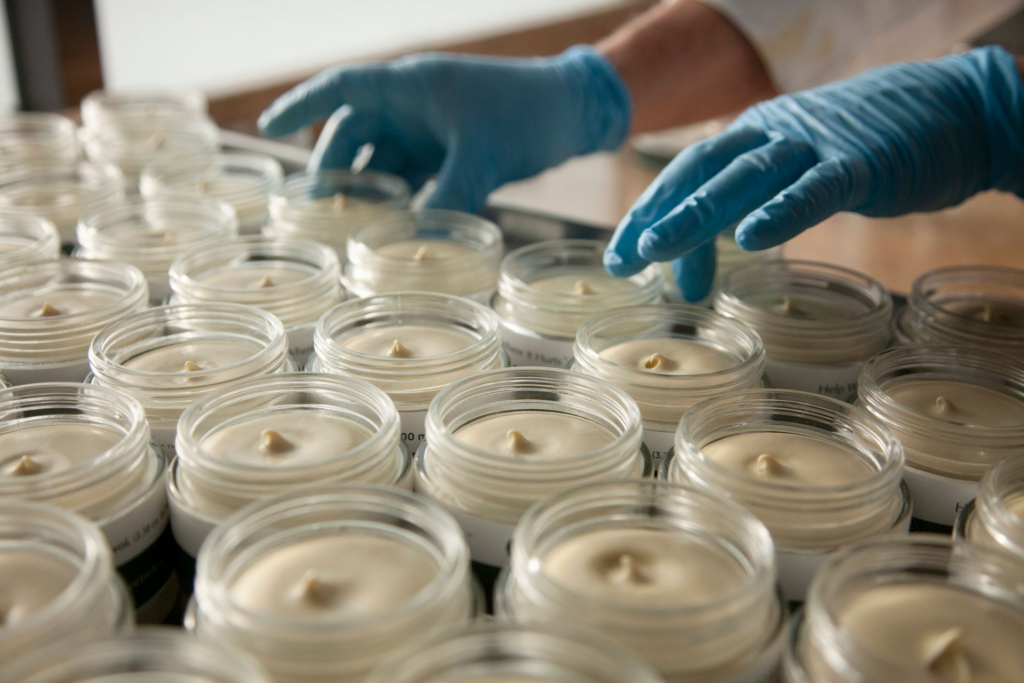
Some of the most effective topicals out there include THC on purpose. Not as a gimmick. Not as a marketing hook. But because it works.
THC’s Role In Pain Relief
When we first started working with cannabis topicals, we weren’t interested in trends. We were trying to solve a problem, real pain, in real bodies, that wasn’t responding to what was out there.
And what became clear, quickly, is that THC plays a central role in deep, localized relief.
CBD has its place. It’s supportive.
But when you’re dealing with stubborn inflammation, arthritic joints, post-surgical tissue, chronic wear-and-tear, THC tends to do more of the heavy lifting.
Applied topically, it works right where you need it:
- Calming inflammation
- Easing muscle tension
- Softening that constant background ache
It doesn’t travel through your whole system. It doesn’t change your head. It stays local and gets to work.
That’s why people dealing with things like arthritis, recovery after surgery, or long-term joint pain often notice a real difference when THC is part of the formula.
The Entourage Effect (Why THC + CBD Works Better Together)
Cannabis isn’t a single compound, it’s a symphony of them.
When THC and CBD are used together, along with the plant’s other natural compounds, they don’t just coexist, they amplify each other. This is what’s known as the entourage effect.
In practical terms, it means:
- Better absorption
- Broader relief
- More noticeable results
Isolated compounds can only go so far. Full-spectrum formulations tend to feel more complete, more like the plant working as it was intended.
And when you’re dealing with pain, that difference matters.
How Sweet Releaf’s Comfort Body Butter Changes the Conversation

When we first started making our body butter, it wasn’t about joining the “hemp lotion” trend.
It was about fixing something that wasn’t working. People were in real pain, trying product after product, and coming away thinking topicals just didn’t do much.
So we took a different approach.
A High-THC Formula, Without The High
We chose to use the whole plant, including THC, not for the label, but because it consistently delivers deeper relief. Our formulas are full-spectrum, meaning THC, CBD, and other cannabinoids work together, right where you apply them.
And because it’s a topical, it stays local. No fog, just targeted relief where your body needs it.
Why Comfort Body Butter Feels Different
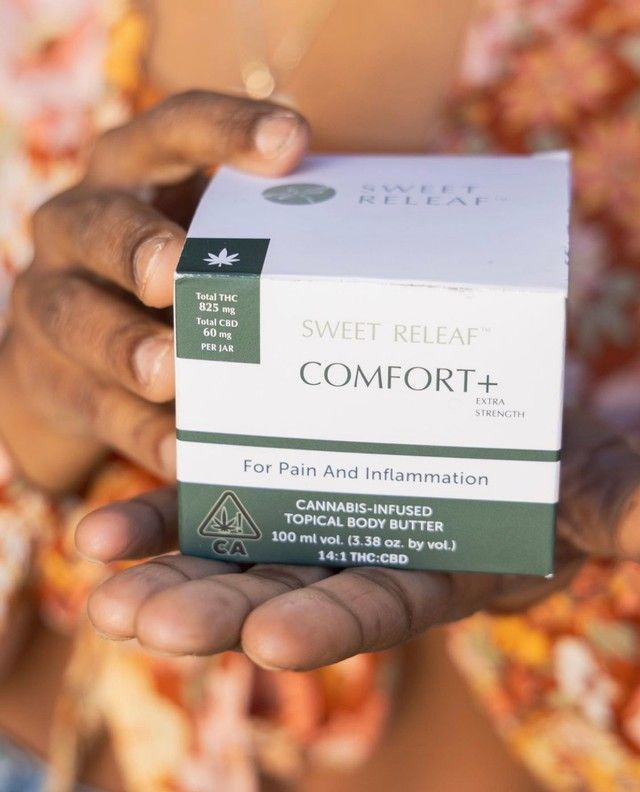
Most lotions sit on the surface. They moisturize, maybe soothe a little, but they don’t always reach the source of discomfort.
Comfort Body Butter is built as an emulsion, which allows it to absorb more effectively into the skin and reach deeper tissue. That’s where pain actually lives.
People often notice:
- Relief starting within minutes
- Muscles and joints letting go in a more noticeable way
- Effects that last long enough to matter
It’s not about packing in more ingredients. It’s about delivering them where they can actually do something.
Will Hemp Lotion Show Up On A Drug Test?
Let’s talk about the question people sometimes hesitate to ask out loud. Because for some, this isn’t about curiosity. It’s about risk.
A job. A military position. A custody situation. Something where “probably fine” doesn’t feel good enough.
So here’s the straightforward answer:
- Hemp seed oil lotion: No. There’s no THC present, so there’s nothing to detect.
- CBD lotion: Extremely unlikely to show up, especially with typical use, but not impossible if it’s full-spectrum and used heavily.
- THC topicals: Still unlikely, because topical cannabinoids don’t meaningfully enter the bloodstream.
That last point is important. Standard drug tests look for THC metabolites in the bloodstream, not what’s sitting on your skin.
What To Look For Before You Use It
Don’t rely on the front of the bottle. That’s where most of the confusion starts.
Go to the ingredient list:
- “Cannabis sativa seed oil” → this is hemp seed oil, no THC
- “CBD,” “cannabidiol,” or “hemp extract” → now you’re in cannabinoid territory
If your situation is sensitive, legal, professional, or personal, it’s worth removing ambiguity altogether.
Not because these products are inherently risky, but because uncertainty carries real weight when the consequences matter.
A “probably fine” answer doesn’t always feel good enough when something important is on the line.
There’s also a lot of mixed information floating around. Some people hear that tests look for CBD, others worry about delta-8 or trace THC, and policies aren’t always clearly explained.
That confusion makes it harder to feel confident in your choices.
So when it matters, the safest approach is clarity, not guesswork. Because in the end, this question isn’t just about what’s in the lotion.
It’s about what you can afford to risk, and what you can’t.
How To Read A Hemp Lotion Label (And Spot THC)
The front of the label is marketing. The ingredient list is truth.
“Hemp” sounds simple, but it’s one of the most loosely used words in this space. We’ve seen products labeled as hemp that contain no cannabinoids at all, and others that quietly include full-spectrum extracts with trace THC.
So if you want to know what you’re actually putting on your body, here’s where to look.
Start With The Ingredient List
This is your first filter.
- “Cannabis sativa seed oil” → this is hemp seed oil. No THC. No CBD.
- “Cannabidiol (CBD)” or “hemp extract” → now you’re dealing with cannabinoids
- “Full-spectrum extract” → this likely includes trace THC
Those few words tell you more than any headline claim on the jar.
Understand The Spectrum Type
If cannabinoids are present, the next question is: what kind?
- Isolate → just CBD, no THC
- Broad-spectrum → multiple cannabinoids, usually no THC
- Full-spectrum → includes THC within legal limits
This matters not just for risk, but for results. Full-spectrum products tend to work more effectively, but they also require you to understand what you’re using.
Hemp Lotion Mistakes That Lead To Disappointment
After years of conversations with customers, we see the same patterns over and over.
And they all come back to one thing: assumptions.
Expecting Pain Relief From Seed Oil Products
Hemp seed oil is excellent for skin, it hydrates, softens, and protects. But it doesn’t interact with the body’s pain pathways.
So when someone expects relief from soreness or inflammation, they’re often disappointed, not because topicals don’t work, but because this one isn’t designed to.
Avoiding THC Entirely Due To Misunderstanding
A lot of people hear “THC” and immediately say no. They don’t want to feel high or take any risks.
But in a properly formulated topical, THC stays local and doesn’t affect your mind. Avoiding it completely can mean missing out on one of the most effective tools for real, targeted relief.
Hemp Lotion And THC: What It Means For You

If you’ve made it this far, you’ve probably realized, you weren’t wrong to ask. This space is confusing, and when it involves your health, your job, or your peace of mind, clarity matters.
Most hemp lotions don’t contain THC, and even when they do, they won’t get you high.
But there’s a deeper question underneath all of this. Not just “Does it have THC?” but “Will it actually help me feel better?” And for a lot of people, that’s where things have fallen short after trying products that didn’t deliver.
From where we stand, that usually comes down to formulation.
If you’re still looking for real relief, it may be worth exploring full-spectrum options like Sweet Releaf’s body butter designed to work where it hurts, without affecting your head.