THC is generally more effective than CBD for arthritis pain because it directly reduces pain signals, while CBD mainly targets inflammation.
Most people get better results using both together.
Sweet Releaf’s high-THC topical blends combine fast-acting relief with non-psychoactive application, helping ease joint pain without the high.
Arthritis Pain Isn’t Just “Sore Joints”

If you’ve lived with arthritis for any length of time, you know how misleading “sore joints” really is.
It’s the moment your hands won’t close in the morning or the pause before standing because you already feel it coming.
It’s the quiet trade-offs, skipping walks, avoiding the garden, turning down plans, not by choice, but because your body pushes back. As one person put it, “I didn’t realize how much I depended on my joints until they stopped cooperating.”
Morning stiffness lingers, sleep gets interrupted, and movement starts to feel like effort instead of freedom.
And the hardest part?
The less you move, the worse it gets, until your world slowly shrinks without you noticing.
What’s Really Causing the Pain?
Inflammation
In autoimmune conditions like rheumatoid arthritis, inflammation is driven by the body attacking its own joints.
This creates swelling, heat, and a constant underlying discomfort that can flare unpredictably and make even small movements feel difficult.
Joint Degeneration
With osteoarthritis, cartilage gradually wears down, removing the cushion between bones.
As a result, joints experience more friction during movement, leading to stiffness, grinding sensations, and pain that worsens with use.
Compensation & Muscle Tightness
When one joint hurts, the body naturally shifts pressure to other areas to protect it.
Over time, this causes muscles to tighten and movement patterns to change, creating new areas of stiffness and pain that weren’t part of the original issue.
Nerve Sensitivity (Chronic Pain)
In long-term cases, the nervous system becomes more reactive. Pain signals grow louder and more persistent, so even mild triggers can feel intense.
The body essentially “learns” pain, making it harder to calm the cycle once it starts.
Topical Creams: A Smart Idea That Often Falls Short
Topicals make sense on paper, and we understand why people try them first.
You apply it right where it hurts, avoid putting anything into your system, and skip the foggy feeling that comes with pills.
When they work, you feel it quickly, things loosen up, and movement gets easier. But more often than not, people tell me, “I tried a CBD cream… and nothing happened.”
That experience is far more common than it should be, and it’s not your fault.
Why That First Cream Didn’t Work
Most of the products people try are working against them from the start. They’re low potency, so there’s simply not enough cannabinoid to affect deeper joint pain.
Many rely on hemp-derived CBD, which sounds good but often falls short for chronic conditions like arthritis.
And then there’s the formulation, waxy, greasy salves that sit on the skin instead of absorbing where they’re needed.
After one or two failed attempts, it’s easy to assume none of it works, but that’s not the full story.
CBD Vs THC: Why One Works Better For Arthritis

What CBD Actually Does
CBD has earned its reputation as the “safe” starting point, and to be fair, there’s a reason for that.
It can help take the edge off inflammation, which matters in arthritis where swelling is part of the problem. It may also support better sleep, less anxiety, and a calmer nervous system, all of which influence how pain is experienced.
But here’s where things get honest.
For many people dealing with real, day-in and day-out arthritis pain, CBD tends to feel… subtle. Sometimes too subtle.
That’s why you hear two very different experiences:
- One person says, “It helped a bit, I sleep better.”
- Another says, “I felt absolutely nothing.”
Both are true.
CBD works more like a background regulator than a front-line responder. It nudges inflammation. It softens the environment around pain.
But it doesn’t consistently interrupt the pain signal itself, and that’s what many people are actually looking for.
That’s the gap.
What THC Does Differently (And Why It Matters More)
THC plays a different role entirely. Instead of just calming inflammation, it interacts directly with the body’s pain signaling system, changing how pain is processed and felt.
In real terms, that means:
- Reduce the intensity of pain signals
- Help your brain stop amplifying discomfort
- Make it easier to move without bracing against pain
We’ve always thought of it this way: CBD adjusts the environment… THC changes the conversation. That’s why THC-based products tend to feel more immediate and noticeable, like something is actually happening.
The concern we hear most is, “I don’t want to get high.” That’s fair, but with properly formulated topicals, THC stays local in the skin and tissue.
It doesn’t enter the bloodstream, so you get pain relief without any mental effects.
Quick Answer: Which Is Better?
If we strip it down to what actually helps arthritis pain:
- THC → stronger for pain relief
- CBD → supportive (inflammation, calming effects)
- Best results → using both together
It’s not about picking sides. It’s about understanding roles.
Why CBD Alone Often Fails For Arthritis Pain
People try a CBD cream, follow the directions, give it time… and nothing really changes. That experience is more common than most brands want to admit.
One reason is that CBD doesn’t strongly affect pain signaling on its own.
Another is that many products are simply underdosed, with not enough active ingredient to reach deeper joint pain. So even when everything is done “right,” the result can still feel like nothing.
The bigger issue is that CBD is often used alone.
When you remove THC and the rest of the plant’s compounds, you lose the synergy that makes cannabis effective.
That’s why even a small amount of THC can turn something from “maybe helping” into something you can actually feel, it’s not the plant failing, it’s the formulation.
Why THC Topicals Are A Game-Changer (Without the High)
We’ve seen this moment over and over: someone tries a well-made THC topical, skeptical at first, and within 10–15 minutes they’re moving differently, hands, knees, shoulders.
Not a high, not euphoria, just relief, and a little surprise.
That’s the difference. When it works, it doesn’t feel dramatic, it feels like your body finally lets go a bit.
How Topical THC Works
When THC is applied through a properly formulated topical, it stays local.
It binds to CB2 receptors in the skin and underlying tissue, targeting pain and inflammation right where it’s happening, without entering the bloodstream or affecting your mind.
In practice, that means:
- It targets the exact area that hurts
- It helps reduce localized discomfort
- It stays non-psychoactive
You can apply it and go about your day, work, drive, think clearly, without compromise.
What They’re Best For
Topical THC works especially well for joint pain, muscle stiffness, and arthritis flare-ups, particularly in hands, knees, and shoulders.
It’s where people start getting small pieces of their routine back, like opening jars or walking without hesitation.
- For localized arthritis pain, topicals often work better than edibles because they go straight to the source.
- For deeper or more widespread pain, some people combine approaches, but it really comes down to using the right tool for the job.
The Missing Piece: Why Combination Works Better (Entourage Effect)
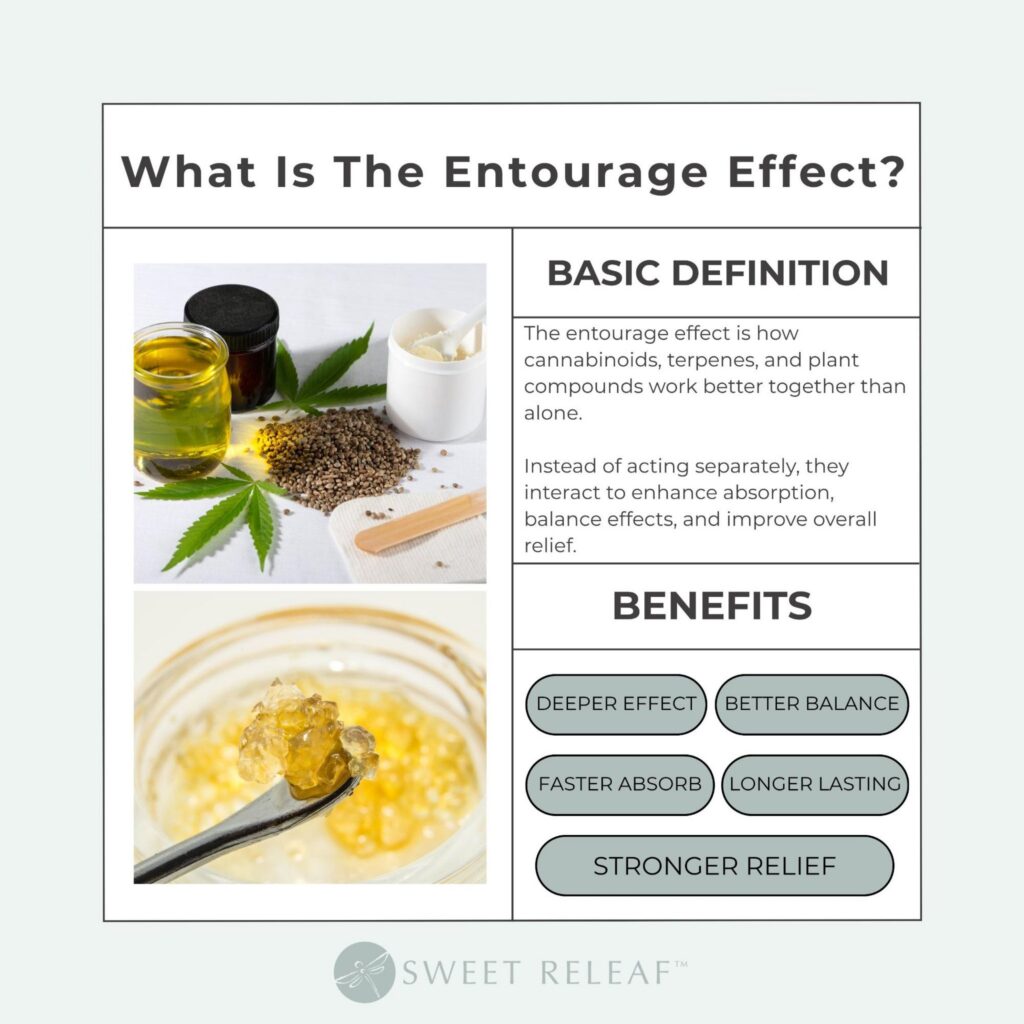
One of the biggest misconceptions is that cannabinoids work best on their own. They don’t, cannabis works more like a system than a single ingredient.
Each part plays a role, and when they’re combined, the effect becomes more complete.
What Is The Entourage Effect?
The entourage effect simply means cannabinoids work better together than alone. THC handles the heavier pain relief, CBD supports inflammation and balance, and other plant compounds help round things out.
When combined properly, the result isn’t just additive, it’s amplified, creating a more functional response you can actually feel.
What Changes When You Get The Formula Right
It’s not just about what’s in a product, but how much of each is included, ratios matter. Combinations like 4:1 CBD to THC or balanced 1:1 formulas often outperform single-ingredient products.
Even a small amount of THC can completely change how CBD performs.
On its own, CBD can feel subtle, but introduce THC, and suddenly the effect becomes noticeable and useful. That’s why whole-plant formulations tend to deliver better results, especially when real pain relief is the goal.
How Sweet Releaf Approaches Arthritis Pain Differently
We’ve watched people go through product after product, hoping something would finally work, and quietly losing confidence when it didn’t. Not because cannabis failed them, but because most formulas weren’t built to address real pain.
That’s the gap we set out to solve.
Our approach is simple: focus on what actually helps people move better. Not trends, not marketing claims, just results you can feel in your body.
Why High-THC Topicals Matter
If you’re dealing with arthritis, you’re not looking for a gentle “wellness” product, you need something that makes a noticeable difference.
That comes down to potency, and specifically, enough THC to impact pain where it matters.
At Sweet Releaf, we use high levels of THC and keep the formula full-spectrum, so the plant works as it’s meant to.
The goal isn’t to say it contains cannabinoids, it’s to create something that actually changes how your body feels when you move.
Why The Delivery System Matters
You can have the right ingredients and still miss the mark if they don’t reach the tissue.
Many topicals are waxy salves that sit on the surface, leaving you with a greasy feel and little real effect.
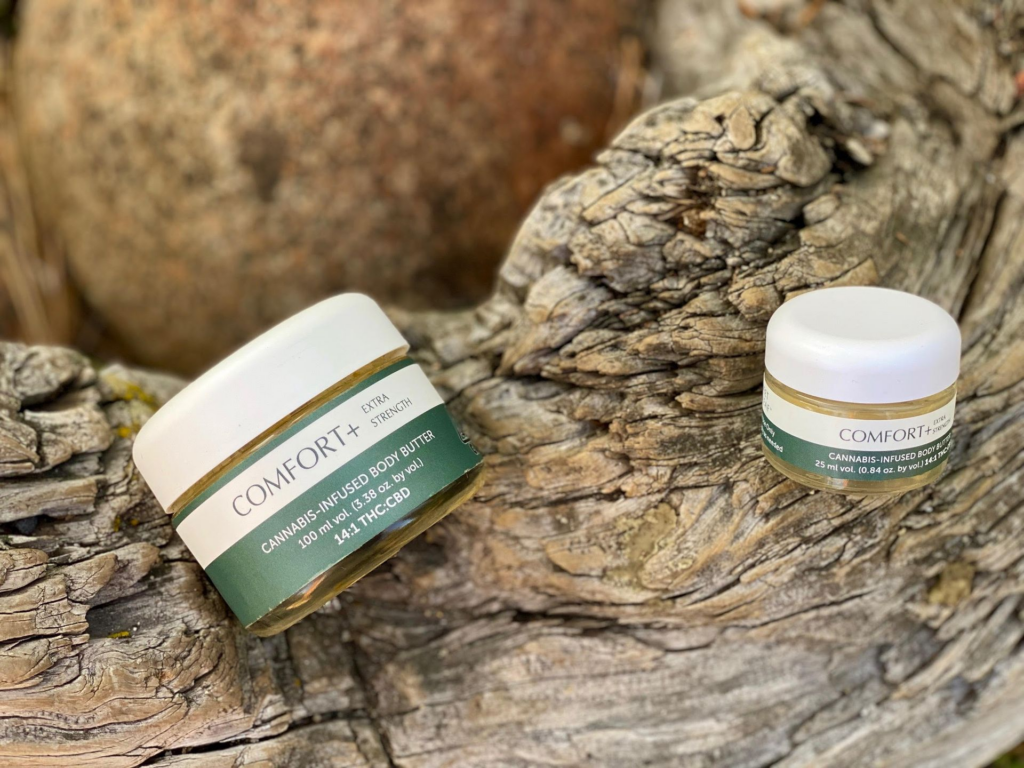
We chose an emulsion-based body butter, which absorbs quickly and moves deeper into the area of discomfort.
It took years to get right, but the result is a formula that sinks in cleanly, delivers cannabinoids where they’re needed, and explains why one product feels like nothing, while another actually works.
The Comfort Body Butter
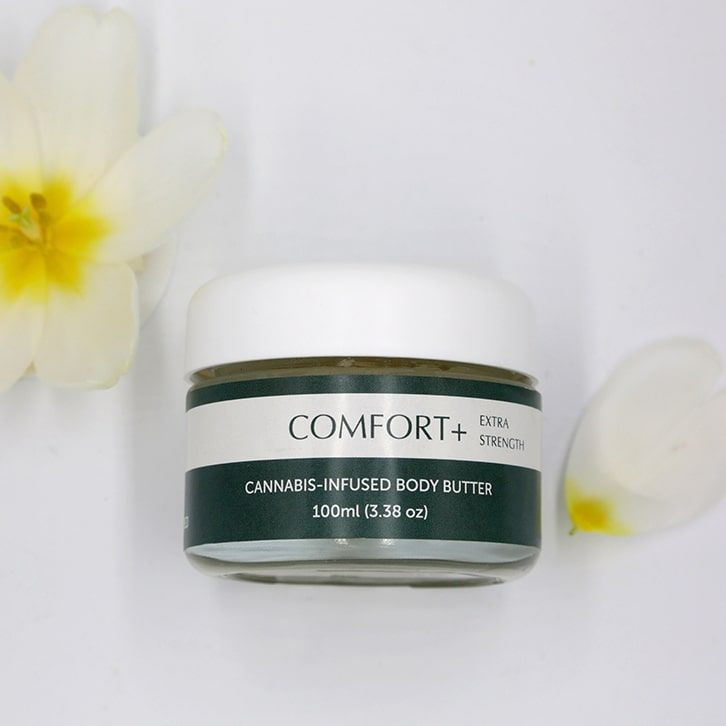
This is the product we reach for after a long day in the garden or a hard hike.
Comfort Body Butter is built specifically for:
- Arthritic joints that feel stiff and resistant
- Post-activity inflammation that creeps in later
- Daily wear-and-tear that builds up over time
It’s non-psychoactive, fast-absorbing, and designed to start working within minutes for many people.
But here’s the part that matters most, and often gets overlooked.
It’s not just what you apply. It’s how you use it.
I always tell people:
- Apply it where it hurts
- Take a minute to massage it in
- Then gently move the joint, open and close your hand, rotate your shoulder, take a short walk
That combination, application, touch, movement, is where the shift happens.
It’s especially helpful:
- In the morning, when everything feels tight
- In the evening, when the day has caught up with your body
Give it 10–15 minutes… and then notice what’s different.
Let’s Clear Up The Biggest Questions
When you start looking into CBD and THC for arthritis pain, the same questions tend to come up again and again. Not vague ones, but practical concerns about what actually works, what to expect, and what’s worth trying.
Let’s walk through them clearly, without the usual confusion or mixed signals.
Will THC Make Me Feel High?
Not in a properly formulated topical.
THC in this form works locally in the skin and underlying tissue. It doesn’t enter the bloodstream, which means no psychoactive effect. You get relief where you apply it, without anything happening in your head.
Why Does Cannabis Work For Some People But Not Others?
There are a few variables at play:
- Product quality: not all formulations are equal
- Potency: too little THC or CBD won’t move the needle
- Application method: topical vs oral vs inhaled
- Body chemistry: everyone responds a little differently
In my experience, when people say “it didn’t work,” it’s usually one of those factors, not the plant itself.
Can I Use This During The Day?
Yes, and that’s one of the biggest advantages of topicals.
You can apply it and go about your day:
- Work
- Drive
- Stay focused
No fog, no impairment. Just localized support where you need it.
What If I’m Sensitive To THC?
Start small. See how your body responds.
Topicals are a great place to begin because they don’t carry the same systemic effects as ingestible THC. If you want to be cautious, look for balanced formulas and apply a small amount first.
Most people find that topical THC gives them the relief they were hoping for, without the side effects they were worried about.
A Better Way To Think About Arthritis Relief

This is where a lot of people get stuck. They’re told to choose, CBD or THC, this product or that one, but that framing misses the point.
A better question is: do you need inflammation support, or real pain relief?
If your joints are swollen and irritated, calming inflammation matters, and CBD can help there.
But if you’re dealing with that deeper, persistent ache, the kind that stops you mid-step or wakes you up at night, that’s where pain signaling comes in, and where THC tends to make the bigger difference.
For most people, it’s not either/or.
It’s whether the product you’re using is strong enough, and well-designed enough, to actually do something you can feel.
Where This Leaves You
Arthritis has a way of quietly reshaping your life.
It affects how you move, how long you stay active, how well you sleep, and even how much you look forward to things you used to enjoy without thinking twice.
And when something helps, even a little, it’s not small. You notice it in how you get out of a chair, how far you walk, or how your body feels at the end of the day.
If CBD hasn’t worked for you, it usually doesn’t mean cannabis failed, it means the formulation did.
A well-made, high-THC topical can feel like a completely different experience.
If you’re curious, something like Sweet Releaf’s Comfort Body Butter is a simple place to start, apply it, take a moment to work it in, then move.
That’s usually when people realize something has shifted.
If you’re ready to see how your body responds to something more effective, there’s a simple way to try it.
Find Sweet Releaf at a dispensary near you and experience what that shift can feel like.
Disclaimer:
This article is for informational purposes only and isn’t medical advice. Sweet Releaf products are designed to support comfort, not to diagnose or treat medical conditions.
Everyone’s body is different, so results can vary. If you have a medical condition or are taking medications, it’s always a good idea to check with your healthcare provider.