Topical THC is absorbed into the skin but does not enter the bloodstream in meaningful amounts, so it won’t cause a high or show up on most drug tests.
Instead, it works locally by interacting with cannabinoid receptors in the skin.
High-quality options like Sweet Releaf’s THC creams are designed for deep relief without systemic effects.
The Big Mix-Up: Topical Vs. Transdermal THC Explained

We’ve spent years making cannabis topicals by hand, and we can tell you, this is where most of the confusion starts.
People hear “THC on your skin” and assume it all works the same. It doesn’t.
Topical THC is what most people are actually using: creams, balms, oils, body butters. You rub them into your shoulder, your knee, your lower back, wherever the pain is speaking up.
These are designed to stay local, working right there in the tissue.
Transdermal cannabis, on the other hand, is built very differently. These are patches or specially engineered gels that are designed to push THC through the skin barrier and into the bloodstream.
So here’s the clean distinction:
- Topicals = localized relief (where you apply it)
- Transdermals = systemic delivery (through your bloodstream)
That one difference explains almost everything.
Why People Get Mixed Up
You’ll see products with nearly identical ingredient lists, coconut oil, cannabis extract, essential oils, but they behave completely differently depending on how they’re formulated.
And labeling isn’t always as clear as it should be.
Then you’ve got homemade products. Someone infuses coconut oil in their kitchen, shares it with a friend, and suddenly we’re trying to compare that to a professionally formulated emulsion.
It muddies the waters fast. And then there are the stories.
A massage client says they “felt high” after a session. Someone else swears their eyes got red.
What’s usually happening isn’t THC flooding the bloodstream, it’s a mix of deep relaxation, increased circulation from massage, and sometimes a product that wasn’t actually a standard topical to begin with.
The Question Behind the Question
When someone asks me, “Does topical THC get absorbed into the bloodstream?”, that’s not really what they’re asking.
What they mean is:
- Am I going to feel high?
- Is this going to mess up a drug test?
- Can I use this every day and still function normally?
Those are real concerns. Especially for people who have been burned before, maybe they tried a CBD cream that did nothing, or they’re trying to stay off pharmaceuticals but still need to show up clear-headed for work.
So let’s get into what’s actually happening in your body.
How Topical THC Is Absorbed Through The Skin
When you apply a THC cream, it doesn’t just sit on the surface, it starts working beneath it. The cannabinoids move into your skin’s layers, interacting with local receptors that regulate pain and inflammation.
This is how topical THC delivers targeted relief without entering your bloodstream or affecting your mind.
What Actually Happens When You Apply THC Cream
When you rub a THC cream into your skin, it doesn’t just sit there.
It moves into the outer and mid layers, where your body already has cannabinoid receptors waiting, CB1 and CB2 in nerves, immune cells, and connective tissue.
That’s where the interaction happens. THC binds locally and gets to work on tight muscles, inflamed joints, and irritated nerves, right where you applied it, not throughout your body.
Why Relief Happens Without A “High”
You don’t need THC in your bloodstream to feel relief. For localized pain, like arthritis, back tension, or post-surgical soreness, keeping it in the skin is actually the advantage.
Topical THC doesn’t meaningfully circulate or reach the brain, so it doesn’t trigger psychoactive effects. You get reduced pain and inflammation without mental fog, that’s by design, not a limitation.
Why Some People Think It Entered Their Bloodstream
When people say they “felt high,” there’s usually something else going on.
Massage increases circulation and relaxes the nervous system, which can feel almost euphoric on its own.
Add in sensory effects, warming, cooling, strong aromas, and it’s easy to misread the experience. In some cases, the product may not have been a true topical at all, which is where the real confusion starts.
The Science: Why THC Doesn’t Reach The Bloodstream Easily
If you really want to understand this, you have to respect what your skin is built to do.
Your skin isn’t just a covering, it’s a gatekeeper. And a pretty stubborn one.
The Skin Barrier (Stratum Corneum)
The outermost layer of your skin, the stratum corneum, is like a tightly packed brick wall. Dead skin cells are the bricks, lipids are the mortar.
Its job is simple: keep things out. Toxins, bacteria, environmental irritants… it blocks them all.
And THC? It gets treated the same way.
Even when you apply a well-made cream, most of that activity happens in the upper and mid layers of the skin, because the barrier is doing exactly what it was designed to do: limit anything from passing all the way through into your internal systems.
That’s why topicals can be powerful without becoming systemic.
THC’s Molecular Challenge
THC is what we call a large, lipophilic molecule, it loves fat, which is why it blends beautifully into oils and butters. That’s helpful for getting into the skin layers.
But being fat-loving doesn’t mean it can freely pass through the entire skin barrier.
It can move into those upper layers, yes. It can interact with receptors there, absolutely. But getting all the way through, into capillaries, into circulation, that’s a different challenge entirely.
Without help, it stalls out.
That’s why standard topicals stay local. Not because they’re weak, but because they’re working where the body will actually let them go.
Will Topical THC Show Up On A Drug Test?
Standard topical THC is highly unlikely to show up on a drug test.
For THC to appear on a test, it has to:
- Enter your bloodstream
- Be processed by your liver
- Break down into detectable metabolites
Topicals, when they’re truly topical, don’t follow that path in any meaningful way.
That’s why so many people (from professionals to athletes to folks managing chronic pain), lean on them as a safer option.
What People Get Right (And Wrong)
No one wants to risk their livelihood over something meant to help them feel better. Where things go sideways is in how different forms of cannabis get lumped together.
Applying something to your skin is not the same as:
- Using a transdermal patch
- Using a product designed for mucous membranes
- Ingesting or inhaling THC
Those routes behave very differently in the body.
We’ve seen people compare a topical cream to something like a suppository or an engineered patch and assume the risk is the same.
Targeted Relief: Why THC Doesn’t Need Your Bloodstream

When people hear that topical THC doesn’t enter the bloodstream, it can sound like a drawback. In reality, it’s what makes it so effective.
Pain is usually specific, and your body is pretty clear about where it needs attention.
Localized THC meets that signal directly. Instead of spreading effects across your whole body, it focuses right where the discomfort lives.
Why Local Relief Is Actually An Advantage
A well-made topical doesn’t send THC wandering, it places it exactly where it’s needed. That means faster, more precise relief without waiting for anything to circulate.
There’s no mental fog, no impairment, and no trade-off between feeling better and staying sharp.
You can use it during the day, at work, or before driving, without stepping out of your routine.
Ideal Use Cases
Localized THC works best when pain is concentrated in one place. Arthritis in the hands, sore knees, tight shoulders, these are all situations where targeted relief makes more sense than full-body exposure.
It’s also ideal for muscle recovery, post-surgical areas, and nerve discomfort. In these cases, the body doesn’t need more THC, it needs it in the right spot.
For People Who Tried CBD And Felt Nothing
A lot of people try CBD creams and walk away disappointed. Usually, it’s not that topicals don’t work, it’s that the formula wasn’t strong enough to meet the pain.
THC interacts more directly with pain pathways, especially when delivered properly into the skin. And because it stays local, you get stronger relief without affecting your entire system.
Why Sweet Releaf THC Topicals Work Differently
We didn’t set out to make just another cannabis cream.
We were trying to solve a very specific problem: how do you get THC to actually relieve pain without pushing it into the bloodstream?
That’s what led to our two core formulas, Comfort Body Butter and Comfort+ Extra Strength Body Butter.
Both are built around the same idea: keep the THC working in the skin, where it matters most.
Comfort Body Butter: Everyday Relief That Stays Local
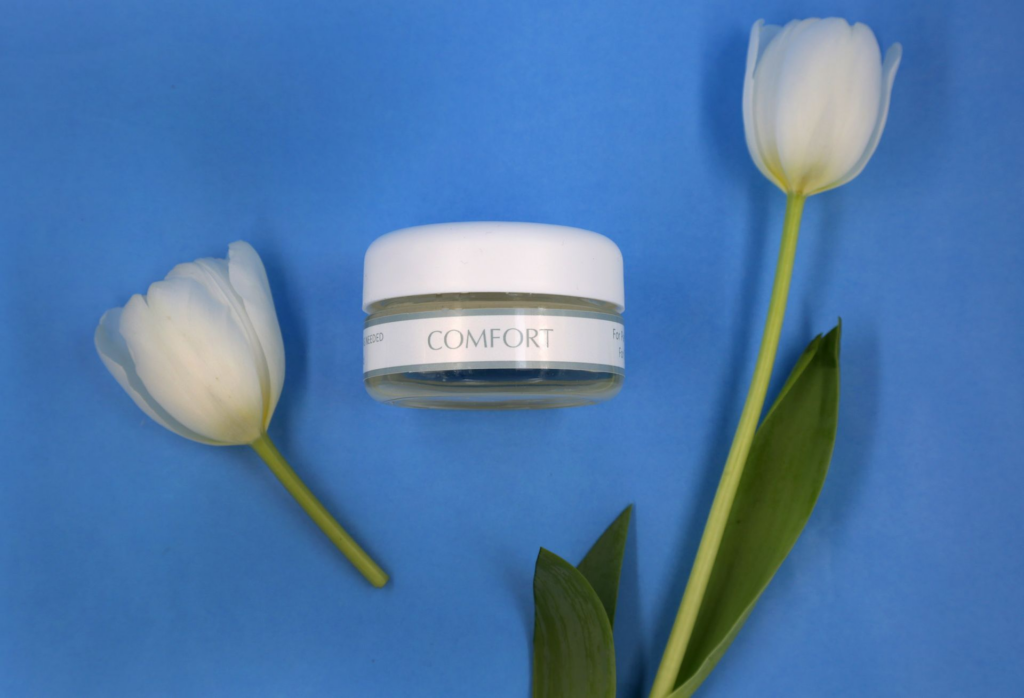
Comfort Body Butter is where most people start, and for good reason. It’s an emulsion-based formula, not a heavy salve, which means it absorbs quickly and moves into the skin instead of sitting on top of it.
It’s made with full-spectrum, high-THC cannabis, blended into a base that allows it to spread.
People reach for this daily:
- Morning stiffness in hands or knees
- Tight shoulders after work
- General wear-and-tear from staying active
It’s consistent, reliable, and designed for real life, relief you can use without slowing down.
Comfort+ Extra Strength: When Pain Demands More

Then there’s Comfort+ Extra Strength Body Butter. Same philosophy, but turned up where it counts.
This formula delivers a higher concentration of THC, along with a deeper-penetrating emulsion that’s built for more persistent pain.
It’s what people turn to when standard creams haven’t cut it, chronic joint issues, post-surgical discomfort, or long-standing inflammation.
What matters here is balance:
- Stronger THC presence for deeper interaction with pain pathways
- Botanicals and vasodilators to guide absorption into the tissue
- Still non-psychoactive, because it stays in the skin, not the bloodstream
It’s not about overpowering the body. It’s about meeting more intense pain with a formula that can keep up.
Built for Depth, Not the Bloodstream
Both formulas are designed to work with your skin, not push past it. The emulsion and supporting ingredients guide cannabinoids into deeper layers where relief actually happens.
That means focused results, no mental fog, no systemic effects, just targeted comfort where you need it.
Where This Shows Up In Real Life
This is how people actually use it, after a long day in the garden, a tough hike, or waking up with stiff joints. It’s also where it shines in recovery, when the body needs support without added strain.
The goal isn’t to medicate your whole body, it’s to respond to the exact place that needs it, and keep THC working right there.
What People Really Want To Know About THC Topicals
After enough conversations, you start to notice the same questions coming up again and again. Not surface-level questions, but the ones people are almost afraid to ask because they don’t want to get it wrong.
Let’s walk through them honestly.
Why Can’t THC Just Soak Into My Bloodstream?
It seems logical, but your skin isn’t a sponge, it’s a barrier.
The outer layer is designed to block entry, and THC’s structure makes it difficult to pass all the way through.
THC can move into the skin and work there, but getting into the bloodstream is a completely different process, one standard topicals aren’t built to do.
Can Homemade THC Topicals Get Me High?
It’s unlikely. Most homemade topicals lack the formulation needed to drive THC deep into the skin, let alone into the bloodstream.
In reality, they’re often less effective due to inconsistent potency, poor activation, and weak absorption, more moisturizer than medicine.
How Much Would It Take To Feel Anything Mentally?
In theory, you could apply enough THC to feel something, but it’s not practical. You’d need an excessive amount far beyond normal use.
In real life, with properly formulated topicals, that threshold simply isn’t reachable, so it’s not something you need to worry about.
What This All Comes Down To
If you’re dealing with pain, the goal isn’t to flood your system.
It’s to listen to your body, and respond where it’s asking for help.
That’s what a well-made topical does.
At Sweet Releaf, we’ve spent years refining that idea. High-THC body butters that move into the skin, meet the pain where it lives, and stay out of your head.
No fog. No trade-offs. Just relief that lets you keep living your life the way you want to.
If you’ve tried creams before and felt nothing, we understand the hesitation. But when the formulation is right, you don’t have to guess.
You feel it.