THC cream for pain works by interacting with cannabinoid receptors in the skin to reduce inflammation and dull pain signals, without getting you high.
Effects are localized and fast-acting.
Well-formulated options like Sweet Releaf go further by improving absorption, helping relief reach deeper tissues where pain actually starts.
THC For Pain, Explained: Why Creams Work Differently

THC is the primary cannabinoid in cannabis responsible for how the plant interacts with pain.
Most people associate it with getting high, but that’s only true when it enters your bloodstream through inhalation or digestion. That’s not what we’re doing here.
When you apply THC to the skin, it works locally. It doesn’t travel through your lungs or your gut. It stays right where you put it.
Your body already has a built-in system designed to receive cannabinoids, the endocannabinoid system. Think of it as a communication network.
- CB1 receptors are mostly in the brain and central nervous system.
- CB2 receptors are found throughout the body, including in your skin, muscles, and connective tissue.
Topical THC is talking primarily to those CB2 receptors.
How THC Cream Targets Pain At The Source
Pain isn’t just a sensation, it’s a message. Inflammation, tension, nerve irritation… your body is constantly signaling what’s going on beneath the surface.
A well-made THC cream doesn’t numb everything. It interacts with those local receptors to turn down the volume on that signal.
When you rub it into your shoulder, knee, or lower back, a few things start happening:
- Inflammatory signaling begins to settle down
- Nerve pain messages get dampened
- Tight, overworked muscles start to release
This is why people often describe the feeling as surprisingly direct, like something is actually happening in that exact spot.
And that’s the key distinction: it works where you apply it, not throughout your entire body.
You’re not chasing relief system-wide. You’re addressing the problem right where it lives.
Why Some THC Creams Work (And Others Don’t)
Here’s where a lot of people get burned: they try a cannabis cream once, feel nothing, and assume the whole category doesn’t work.
In reality, many products are weak by design, too little THC, isolate-based formulas, or waxy bases that just sit on the skin.
If it doesn’t get into the tissue, it can’t do its job. That’s the part most people miss: penetration is everything.
A high THC number on the label means very little if the formula can’t carry it through the skin barrier.
This is why creams and emulsions outperform basic salves. When oil and water are properly combined, the formula can actually move through the skin.
THC matters, but how you deliver it is what determines whether someone feels real relief or nothing at all.
Onset Time: What to Expect
Most people feel relief within 15 to 30 minutes, sometimes sooner with a well-formulated cream. It’s not a dramatic jolt, but a noticeable shift.
The pain softens, tension eases, and things start to feel more manageable.
The usual way people describe it is simple: it feels like strong ibuprofen, but only in that one spot. That’s a good way to think about it, targeted, not overwhelming.
Duration Of Relief
Once it kicks in, relief typically lasts 2 to 4 hours. For joint pain, muscle tension, and surface-level inflammation, it can last even longer depending on how your body responds.
Deeper or more complex pain may require reapplication.
That’s normal, this isn’t a one-time fix, it’s something you can use throughout your day as needed.
How Often Can You Use THC Cream?
You can use THC cream as often as you need. Most people apply it 2 to 4 times a day, but pain doesn’t follow a schedule, and neither should your relief.
Apply it to clean, dry skin, massage it in, and give it time to absorb.
Since it works locally, you’re not stacking effects in your system, just supporting your body where it needs it most.
Does THC Cream Affect Your Mind Or Drug Test Results?
If THC is involved, it’s natural to wonder about getting high or failing a drug test.
The reality is simpler than most expect: topical THC works locally, not systemically, which changes how your body responds entirely.
Can THC Cream Get You High?
This is usually the first concern, and the answer is no.
A standard THC cream stays localized in the skin and doesn’t enter the bloodstream in meaningful amounts. There’s no head change, no fog, you can use it and go about your day.
The only exception is transdermal products, which are designed to cross into the bloodstream.
Traditional creams and body butters don’t work that way, they stay in the body, not the mind.
Will It Show Up On A Drug Test?
With normal use, it’s highly unlikely. Since THC topicals don’t circulate through your system, they don’t typically produce the metabolites drug tests look for.
That said, there are edge cases. Extremely heavy use or applying to broken skin could increase absorption slightly, but for most people using it as intended, this isn’t something that shows up.
Side Effects To Know About
THC itself is rarely the issue with topicals. If there’s a reaction, it’s usually from supporting ingredients like essential oils or botanicals.
You might notice mild irritation, redness, or sensitivity to warming or cooling agents. A quick patch test on your inner wrist can help you avoid surprises and make sure the product works well with your skin.
What Conditions Does THC Cream Actually Help?
Pain isn’t one thing. It shows up differently depending on where it lives and what caused it.
That’s why topical THC shines in very specific situations, especially when the problem is local and accessible.
Joint & Nerve Pain
This is where THC topicals tend to shine. Arthritic joints, stiff fingers, aching knees, these are areas where inflammation sits close to the surface and nerve irritation creates sharp, persistent discomfort.
A strong THC cream feels more direct here than CBD alone.
When pain shifts from a dull ache to something sharper and more stubborn, that’s usually where people notice the difference.
Muscle Pain & Physical Strain
This is the kind of pain that builds quietly over time. Tight shoulders, sore backs, overworked hands, it’s not always labeled “chronic,” but it adds up.
Applied topically, THC helps muscles relax and inflammation settle.
It’s less about masking discomfort and more about helping your body recover so you can keep moving.
Chronic Pain Conditions
This is where people often arrive after trying everything else.
Fibromyalgia, lingering nerve pain, or sensitive scar tissue that never quite resolves.
Topical THC offers a targeted approach. Instead of affecting your whole system, it focuses on specific areas, giving relief without the trade-offs that often come with systemic treatments.
Skin-Related Pain & Inflammation
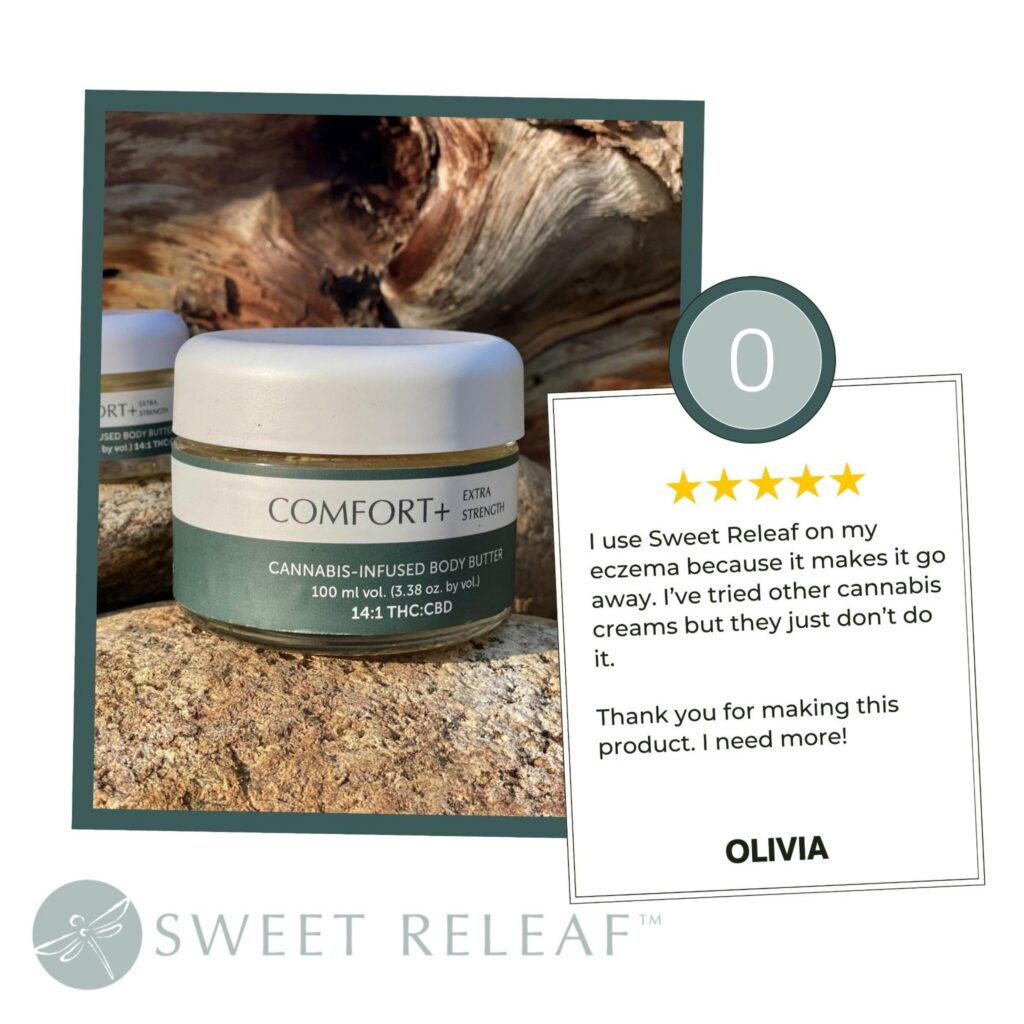
Some pain starts at the skin itself, irritation, sensitivity, or inflammation that makes even light contact uncomfortable.
A well-formulated THC cream can calm what’s happening underneath while supporting the skin barrier on the surface.
The result isn’t just less pain, it’s healthier, more resilient tissue over time.
What Makes a THC Cream Truly Effective?
Most THC creams promise relief, but only a few actually deliver it.
The difference isn’t just how much THC is inside. It’s how the formula is built to absorb, interact with your body, and reach the tissue where pain lives. Real effectiveness comes from how everything works together.
1. High THC Content (But Not Alone)
THC is the engine. It’s what drives the pain-relieving effect.
But people look at a big number on the label and assume that’s enough. It’s not.
You need a meaningful amount of THC, yes, but if it’s not delivered properly, that number doesn’t translate into results. It just sits there, unused.
Potency matters. But it’s only one part of the equation.
2. Full-Spectrum Formulation
We don’t work with isolates. Never have.
The plant is more intelligent than that.
When you keep it whole (THC, CBD, and the smaller cannabinoids like CBG), you get a broader response. Each compound supports the others. Inflammation, nerve signaling, tissue recovery, they’re all being addressed at once.
That’s what people are feeling when they say, “this one works better.” They’re not always sure why. But this is a big part of it.
3. Deep Skin Absorption
If we had to choose one factor that makes or breaks a topical, it’s this.
Absorption.
A waxy salve might feel nice. It might smell good. But if it just sits on the surface, it’s not doing much beyond that.
A true cream, or better yet, a properly made emulsion, can carry cannabinoids through the skin barrier and into the tissue below.
That’s where the receptors are. That’s where the inflammation lives.
But getting that right is not simple. You’re balancing oil and water, temperature, shear, timing. If it’s off, even slightly, the whole system falls apart.
When it’s right, though, you feel it.
4. Supporting Ingredients That Actually Matter
The other ingredients in a formula should be there to help the cannabinoids do their job.
That means:
- Botanicals that calm inflammation
- Compounds that increase circulation and help delivery
- Ingredients that support the skin while everything else is happening
In our work, we pay close attention to how these elements interact.
Some help open pathways. Some help carry. Some soothe immediately while the cannabinoids do their slower work underneath.
None of it is random.
Because at the end of the day, you’re not just making a cream.
You’re building a system that needs to reach the exact place someone is hurting, and respond in a way they can actually feel.
How Sweet Releaf THC Cream Is Designed For Real Pain Relief

When we started making this, it wasn’t about entering a market, it was about solving a real problem. The people coming to us weren’t dealing with mild aches.
They were living with chronic pain, post-surgical recovery, and inflammation that changed how they moved through life.
So the formulation had to meet that level of need.
We use high levels of THC supported by the full plant, not as a selling point, but because that’s what it takes when everything else has fallen short.
Emulsion-Based Body Butter
This is where most topicals fail.
Our Comfort Body Butter is an emulsion, oil and water working together in a stable system. It takes precise temperature control and careful handling to get right, but when it is, the difference is immediate.
Instead of sitting on the surface, it absorbs cleanly and carries cannabinoids into the skin. That’s what separates something that feels good from something that actually relieves pain.
Whole-Plant, Not Isolates
We’ve never believed in isolating one compound and expecting it to do everything.
THC leads, but it works better with support. CBD, CBG, and other cannabinoids create a broader, more balanced response in the body.
When you keep the plant whole, you’re not forcing a single pathway, you’re working with the body in a more complete way.
Enhanced Penetration Through Thoughtful Ingredients
Every ingredient in the formula serves a purpose.
Some calm inflammation, some nourish the skin, and others help carry cannabinoids deeper into the tissue where the receptors actually are.
We’re not just making a cream. We’re building a delivery system that can reach the source of pain and respond to it.
Designed for Real Life
Relief shouldn’t come at the cost of clarity.
You can use this before work, before a walk, or before doing the things that matter to you. There’s no intoxication, no fog, just support where you need it.
Because the goal isn’t just less pain. It’s getting back to your life without constantly negotiating with your body.
When Pain Stops Running The Show

Pain has a subtle way of reshaping your day.
You move less, think twice before simple tasks, and start organizing your life around what might hurt instead of what you actually want to do.
A well-made THC cream doesn’t just take the edge off, it changes that pattern.
It gives you back small wins first: a walk that feels easier, tension that lets go, a moment where your body isn’t the center of your attention. And over time, those moments start to stack up.
If you’ve tried CBD creams or generic topicals and felt nothing, it’s easy to write the whole category off. But more often than not, it’s not the plant, it’s the formulation.
Sweet Releaf was built to close that gap, with a focus on absorption and real, localized relief.
When you’re ready for something that works with your body, not just on it, you can explore the collection or find a trusted retailer near you.