
The best THC for pain is typically Delta-9 THC in a full-spectrum formula, ideally combined with CBD for enhanced relief.
High-THC topicals can target pain locally without causing a high, making them a practical option for daily use, like Sweet Releaf’s THC body butters designed for fast, non-psychoactive relief.
Why THC Became A Go-To For Pain Relief
We’ve spent years watching people chase pain relief through pills and prescriptions that promise help but often take something in return.
Eventually, many turn to cannabis, not out of curiosity, but because they’re tired of hurting. Most start with CBD, and just as often, they’re left wondering why it didn’t do much.
CBD has its place, especially for inflammation, but deeper pain, nerve issues, joint damage, lingering injuries, usually needs more. That’s where THC comes in.
It works directly with your body’s endocannabinoid system, not just dulling pain but changing how it’s experienced, so it stops taking over your attention.
The problem is, THC isn’t one thing. Different forms and delivery methods can lead to completely different outcomes.
Get it wrong, and you either feel nothing, or something you didn’t want at all, which is why so many people end up asking what actually works.
The Different Types Of THC (And How They Work For Pain)

Delta-9 THC (The Primary Pain-Relieving Cannabinoid)
If we’re talking about real, measurable pain relief, Delta-9 THC is the workhorse.
It’s the most studied cannabinoid for pain, and for good reason. It binds strongly to CB1 receptors, which play a key role in how pain signals are processed. That’s why it’s often used for moderate to severe pain, things like arthritis, nerve damage, post-surgical discomfort.
Most people associate Delta-9 with getting high, and that’s true, if it enters your bloodstream. That’s what happens with edibles, smoking, or tinctures.
But Delta-9 can also be used topically, where it works locally without that psychoactive effect.
Same molecule. Completely different experience.
That distinction changes everything for people who want relief but still need to drive, work, or just think clearly.
THCa (Raw, Non-Activated THC)
Before THC becomes THC, it exists as THCa.
In its raw form, THCa doesn’t produce a high. It hasn’t been “activated” by heat yet. But it still interacts with inflammation pathways in the body, which makes it valuable in its own right.
In a well-built formulation, THCa works alongside activated THC.
One helps with inflammation, the other with pain signaling. Together, they create a broader effect than either could alone.
That’s part of what people mean when they talk about “full-spectrum”, you’re not isolating one function, you’re supporting the system as a whole.
Delta-8 THC (Milder Alternative)
Delta-8 gets a lot of attention because it’s marketed as a gentler version of THC.
And it is. It’s less potent, produces a softer psychoactive effect, and some people prefer it if they’re sensitive to THC.
But when it comes to deeper, more persistent pain, Delta-8 often falls short. It can take the edge off, but it’s not typically the cannabinoid people rely on when things get serious.
Synthetic THC (Avoid For Pain Relief)
Then there’s synthetic THC, lab-created compounds designed to mimic the effects of the plant.
On paper, it sounds efficient. In practice, it’s missing something important.
Cannabis works as a system. When you isolate or recreate one compound, you lose the natural balance between cannabinoids, terpenes, and other plant elements. That balance is where a lot of the effectiveness comes from.
Synthetic versions also tend to come with more unpredictable side effects. For most people dealing with chronic pain, that’s not a trade worth making.
Why “Type” Alone Isn’t Enough
Knowing the “type” of THC is only part of the equation. Pain relief depends on:
- How much THC is present
- How it’s delivered
- What it’s paired with (like CBD or terpenes)
A lot of people get stuck chasing strain names, Indica, Sativa, hybrids like Blue Dream or Northern Lights, thinking that’s the key. But those labels are inconsistent, often blended, and rarely tell you what’s actually in the product.
That’s why someone can try one product and feel nothing… then try another and feel overwhelmed.
It’s not that cannabis doesn’t work. It’s that the delivery and formulation weren’t right for their body or their pain.
Why Delivery Method Matters More Than Strain Names

Most people get stuck choosing between indica, sativa, or specific strains, but that’s rarely what determines real pain relief.
How THC enters your body changes everything.
The delivery method affects onset, intensity, duration, and whether you feel clear-headed or not, making it far more important than the strain name on the label.
Edibles (Long-Lasting, Hard To Control)
Edibles get recommended a lot for chronic pain because they last, but that duration comes with tradeoffs. They can take 1–2 hours to kick in, and once they do, you’re in it for 5–7 hours with no easy way to dial it back.
There’s also inconsistency.
One gummy can feel completely different from another, and some people barely feel anything at all.
When someone asks why edibles work for others but not for them, it usually comes down to metabolism, it’s not predictable.
Tinctures (More Control, Still Systemic)
Tinctures offer more control. You can start low, 2.5 mg or 5 mg, and adjust gradually, which makes them a better option for people trying to avoid getting too high.
But they still enter the bloodstream. That means the psychoactive effects are still there, just easier to manage.
For some people that’s fine, but for others, especially those who want to stay clear-headed, it’s a limitation.
Smoking/Vaping (Fast, But Not For Everyone)
Inhalation works fast. Within minutes, you know if it’s helping, which makes it useful for sudden or intense pain.
But it’s not for everyone.
If you’re recovering from surgery, sensitive to smoke, or simply don’t want to inhale anything, this option is off the table, something many guides overlook.
Topical THC (Targeted Relief Without the High)
Topical THC works in a completely different way. You apply it directly to the source of pain, and it interacts with local receptors in the skin and tissue without entering the bloodstream.
That means no high, no mental fog, and no waiting around.
For joint pain, arthritis, and muscle soreness, it’s often the most practical solution, and yes, it lets you use THC for pain without feeling high.
The Difference You Feel: Inside Sweet Releaf’s Formulas

Most people don’t realize how much formulation changes the outcome until they feel it for themselves.
It’s not just about adding THC, it’s how it’s activated, combined, and delivered into the body.
When everything works together, the difference isn’t subtle. It’s the moment relief actually makes sense.
Activated Delta-9 THC For Real Pain Relief
Delta-9 THC is the most effective cannabinoid when it comes to pain because it binds directly to CB1 receptors involved in how your body processes discomfort.
When used in sufficient concentrations, it can reduce pain intensity and shift how strongly those signals are felt.
The key difference is topical application. Instead of entering the bloodstream and affecting your mind, activated Delta-9 THC works locally, interacting with receptors in the skin, muscles, and joints.
That means you get targeted relief at the source, without cognitive side effects or a lingering high.
Combined With CBD For The Entourage Effect
THC does a lot of the heavy lifting for pain, but it’s not meant to work alone.
CBD supports inflammation and helps balance the overall effect, making the experience feel smoother and more complete.
When combined properly, they amplify each other. That’s the entourage effect, and it’s often the missing piece for people who tried CBD alone and felt nothing.
With both working together, relief tends to feel more noticeable and more reliable.
Full-Spectrum, Whole-Plant Approach
There’s a tendency to isolate cannabinoids and simplify the plant. We’ve never found that approach to work as well in real life.
Cannabis is naturally complex, THC, THCa, CBD, and other compounds all play a role.
Keeping them together in a full-spectrum formula allows the body to respond more fully, instead of relying on a single, isolated effect.
Ayurvedic Additions For Functional Relief
Cannabis is powerful, but it’s not the only way to support the body. I’ve always believed in combining it with other functional ingredients that serve a purpose.
That’s where Ayurvedic botanicals come in.
Cooling ingredients help calm inflammation, while warming ones support circulation and loosen tight muscles, adding another layer of relief beyond cannabinoids alone.
Featured Solutions: Sweet Releaf’s Approach To Pain Relief
Comfort Body Butter (High-THC Emulsion)

This is where everything we’ve talked about comes together.
Our Comfort Body Butter is a high-THC, full-spectrum emulsion designed to go deep. It’s not greasy. It doesn’t sit on the surface. It absorbs quickly and gets to work where the discomfort actually is.
People use it for:
- Arthritis in the hands and joints
- Chronic back and neck pain
- Old injuries that never quite healed right
It’s the kind of product you reach for when you want something reliable, something that doesn’t require guesswork every time you use it.
Comfort+ Extra Strength
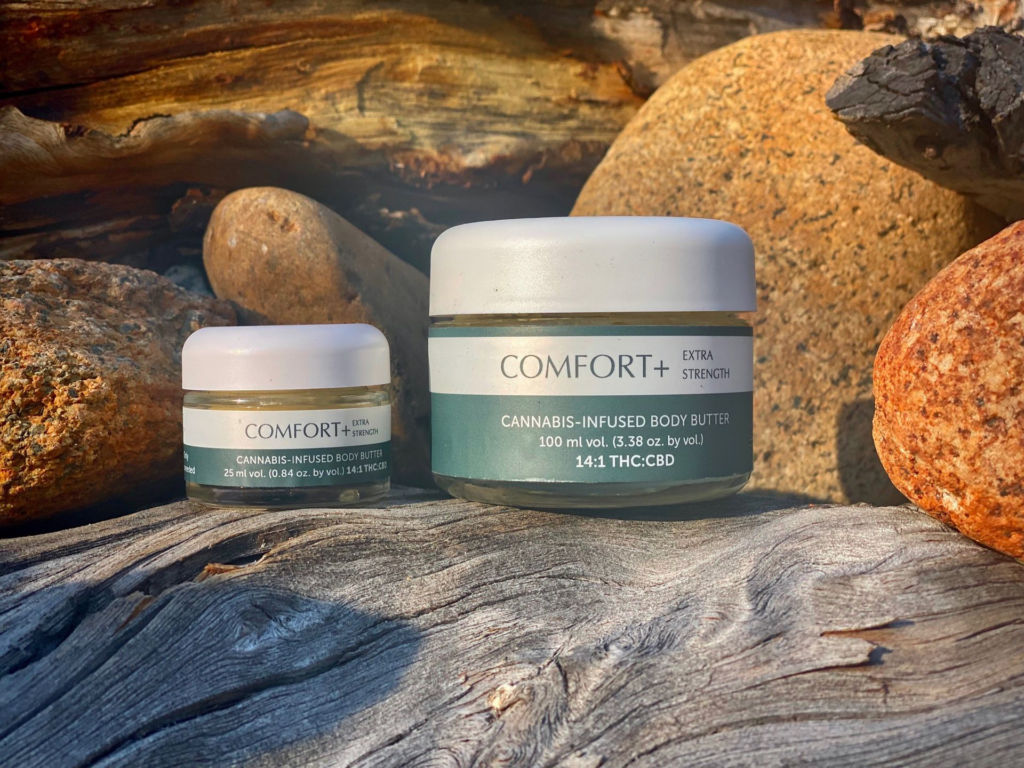
Some pain asks for more.
Whether it’s post-surgical recovery, long-term nerve issues, or just a flare-up that won’t back down, there are moments when a standard formula isn’t enough.
That’s where Comfort+ Extra Strength comes in.
Same foundation, higher THC concentration. It’s used by people who’ve been dealing with pain for years, people who know the difference between mild relief and something that actually changes their day.
Dry Oils (Cooling & Warming Ayurvedic Roll-Ons)

Not every situation calls for a full-body application.
Sometimes you need something quick. Targeted. Easy to carry with you.
The Dry Oils were built for that.
- The cooling roll-on helps calm inflammation and heat, great for overworked joints or acute flare-ups
- The warming roll-on helps loosen stiffness and tight muscles, especially useful in the morning or before movement
They roll on clean, absorb fast, and give you that immediate directional effect, cooling or warming, on top of the cannabinoid relief.
It’s a small thing, but when you’re dealing with pain throughout the day, having something you can grab and use in seconds makes a difference.
From Confusion To Relief: Getting THC Right

Finding the right THC for pain isn’t about chasing the perfect strain, it’s about cutting through the noise and finding what actually works for your body.
If CBD didn’t go far enough or THC felt overwhelming, that’s not failure, it just means the approach wasn’t right.
Relief gets clearer when you simplify things. Use what works, apply it where it hurts, and adjust as your body responds.
That’s the thinking behind Sweet Releaf, products you can use without overthinking, so you can get back to your day feeling like yourself.
Find Sweet Releaf at a dispensary near you and see how simple pain relief can feel.
Disclaimer:
This article is for informational purposes only and isn’t medical advice. Sweet Releaf products are designed to support comfort, not to diagnose or treat medical conditions.
Everyone’s body is different, so results can vary. If you have a medical condition or are taking medications, it’s always a good idea to check with your healthcare provider.