THC is banned in sports mainly due to anti-doping rules around performance, safety, and the “spirit of sport,” not because it clearly enhances performance.
Detection challenges and outdated stigma also play a role.
Non-psychoactive options like Sweet Releaf’s THC topicals offer localized relief without these risks.
Cannabis In Modern Sports: Legal, Yet Still Restricted
A decade ago, cannabis in sports was something athletes kept quiet about. Now it’s out in the open, used for sleep, pain, and recovery from the constant strain on the body.
And that part makes sense.
Pain is communication, not something to ignore. But here’s the contradiction: cannabis is becoming more accepted, while THC remains heavily regulated in sports.
Organizations like WADA haven’t moved at the same pace as public opinion. So even as athletes use cannabis for recovery, the question remains, if it’s legal, why is it still banned?
The answer starts with one key idea: not all THC is treated the same.
Not All THC Is Treated The Same
One of the biggest misconceptions we see is that THC is just one thing. It’s not. How it enters the body changes everything.
- Ingested or smoked THC → enters the bloodstream → affects cognition, coordination, perception
- Transdermal THC → also enters the bloodstream → similar systemic effects
- Topical THC → stays local → interacts with skin receptors → no high or mental impairment
That distinction matters more than most people realize. When sports organizations regulate THC, they’re really targeting anything that could affect reaction time or decision-making.
But the rules are broad, applied to products that behave very differently, creating confusion and, for many athletes, a sense of unfairness.
The Real Reason THC Is Banned In Sports
To understand why THC is still restricted, you have to think like the organizations making the rules. They’re not asking whether cannabis helps recovery or eases pain.
Their focus is much narrower: does it impact competition, fairness, or safety in the moment that matters?
That lens changes everything. Even if THC is used responsibly off the field, regulators are concerned about what could happen during performance.
So the conversation isn’t really about wellness, it’s about control, consistency, and minimizing risk across all athletes.
The “2-Out-of-3” Rule That Drives Everything
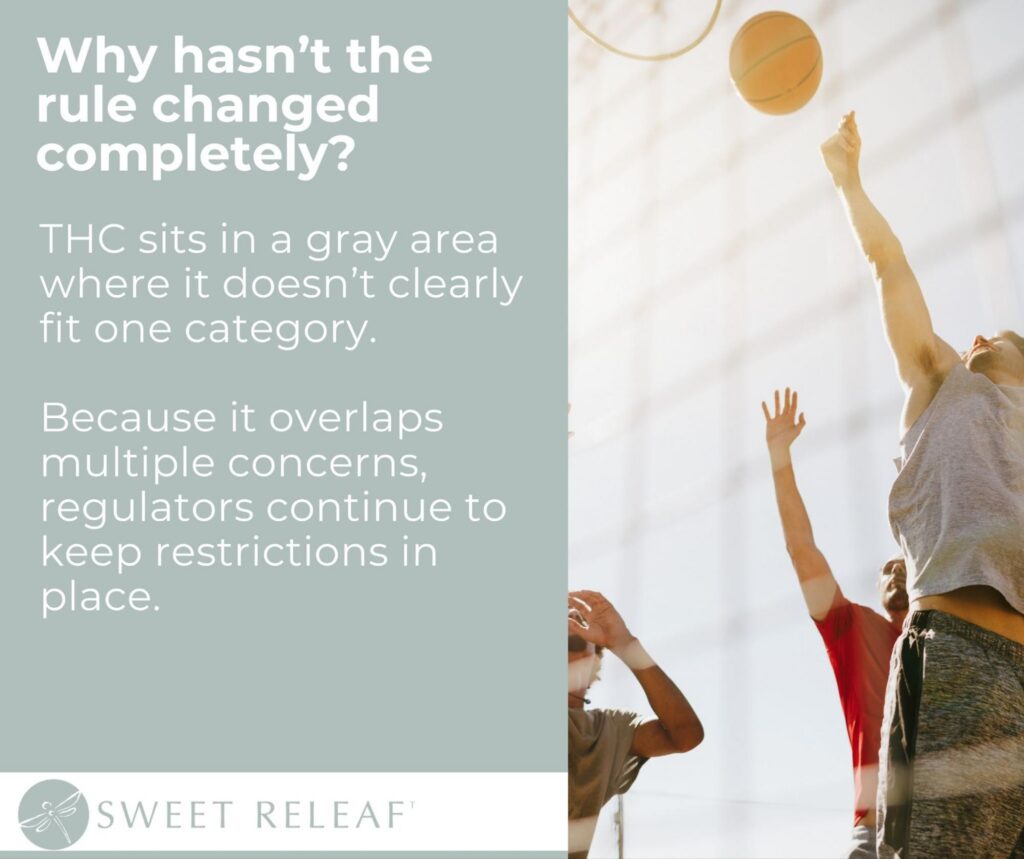
WADA uses a simple but powerful framework. A substance can be banned if it meets two out of three criteria: it may enhance performance, pose a health risk, or violate the “spirit of sport.”
It doesn’t have to clearly dominate one category, just overlap enough to qualify.
THC sits right in that gray zone. It’s not a clear-cut performance enhancer, but it touches enough of the criteria to remain restricted.
That’s why the rule persists, and why the debate around it never really settles.
Is THC Actually Performance-Enhancing?
There’s an argument that THC could help athletes by reducing anxiety, easing pain, or helping them stay relaxed under pressure.
For some, that mental shift can feel like an advantage.
But physically, the data points in the opposite direction. THC can slow reaction time, affect coordination, impair balance, and even reduce strength output.
So while it may help you feel better, it can also make you perform worse in measurable ways.
That contradiction leads to a fair question: if THC doesn’t clearly improve performance, why is it banned more strictly than alcohol?
Alcohol impairs many of the same functions, yet it’s treated differently, highlighting a gap shaped by both science and history.
Athlete Safety & Liability Concerns
From a regulatory standpoint, safety is non-negotiable. In high-speed or high-risk sports, like skiing, cycling, or motorsports, even a slight delay in reaction time can have serious consequences.
Organizations are tasked with protecting not just the athlete, but everyone involved.
That’s where THC raises concerns. It may affect judgment, perception, and split-second decision-making, even if subtly.
The risk isn’t just about performance, it’s about potential harm.
So the line gets drawn around competition itself. Not around recovery practices or personal use, but around ensuring that every athlete competing is fully alert and capable in that moment.
The “Spirit of Sport” (The Most Controversial Rule)
The “spirit of sport” includes values like fairness, integrity, and athletes serving as role models. But it also carries decades of cultural baggage.
Cannabis was long labeled as an illicit drug, and that perception still influences policy today. Even as laws and public opinion evolve, large institutions tend to move slowly.
The result is a rule that can feel out of sync with modern reality.
From an athlete’s perspective, this is where frustration builds. It can start to feel less about biology and more about image, sponsors, public perception, and what sports organizations want to represent.
The real tension isn’t about removing rules, but about updating them to reflect how the body and the plant actually work today.
The Testing Problem: Why THC Is So Easy To Punish
It’s not that they don’t understand the rules, it’s that the rules don’t always match how the body actually works.
THC behaves differently than most substances, and that difference makes it easier to detect and penalize.
From a biological standpoint, THC lingers. What stays local, what goes systemic, and what clears quickly all matter, but THC doesn’t follow the same timeline as other drugs. And that mismatch is at the core of the problem.
Thc Stays In The Body Longer Than Other Drugs
THC is fat-soluble, which means it gets stored in the body and released slowly over time. Even a single use can show up days later, while regular use may be detectable for weeks depending on the person.
Compare that to alcohol or cocaine, which clear much faster.
Alcohol is gone in hours, and cocaine typically leaves within a few days. THC operates on a completely different timeline, creating a gap between when it’s used and when it’s detected.
Tests Detect Metabolites, Not Impairment
Here’s the key issue: THC tests don’t measure whether someone is high. They only show that the body processed THC at some point in the past.
A positive result doesn’t prove use during competition, impairment, or any real advantage.
So the question becomes: can drug tests actually prove an athlete was high during competition?
Right now, not reliably. And that’s where fairness concerns grow, especially for athletes who used cannabis legally and off-duty.
From their perspective, the risk isn’t just about competition, it’s about what they did days or even weeks before. That creates a real fear of being penalized for something that had no impact when performance actually mattered.
Where THC Rules Are Actually Evolving
Now, here’s where things start to shift a bit.
Not All Leagues Agree Anymore
In the U.S., several major organizations have started rethinking their approach:
- The NFL has reduced testing windows and shifted toward treatment over punishment
- MLB has removed natural cannabinoids from its “drugs of abuse” list
- UFC has taken a more relaxed stance unless there’s clear intent to enhance performance
The trend is subtle but important.
Less focus on presence of THC. More focus on misuse or actual competitive impact.
It’s not a free-for-all, but it’s a recognition that the old framework might not fit today’s reality.
The Olympics vs Pro Sports Divide
Then you’ve got the Olympics.
And that’s a different world entirely.
WADA sets a global standard, which means:
- Rules need to apply across countries with very different laws
- Consistency is prioritized over nuance
- Change happens slowly
So while professional leagues can adapt based on culture and new data, Olympic-level competition tends to hold the line.
The result?
A fragmented system where:
- One athlete can be fine in a pro league
- But face suspension in an international event
That kind of inconsistency creates confusion, not just for fans, but for athletes trying to navigate their careers responsibly.
And when you add in everything we’ve talked about, testing limitations, evolving science, and different forms of THC, you can start to see why this topic isn’t going away anytime soon.
A Smarter Approach to Recovery: THC Without The Risk With Sweet Releaf

Instead of trying to push THC deeper into the body, we focused on keeping it exactly where it’s needed.
Our formulas are:
- High in THC, because that’s where real pain relief comes from
- Full-spectrum, because the plant works best as a whole
- Non-psychoactive, because nothing enters the bloodstream
That last part matters.
You get the benefit of THC interacting with your body’s endocannabinoid system, right at the source of discomfort, without affecting your mind, coordination, or awareness.
No fog. No delay. No trade-off.
Just relief where it hurts.
When to Use Sweet Releaf Products
Pre-Game: Loosen Up Without Compromising Performance
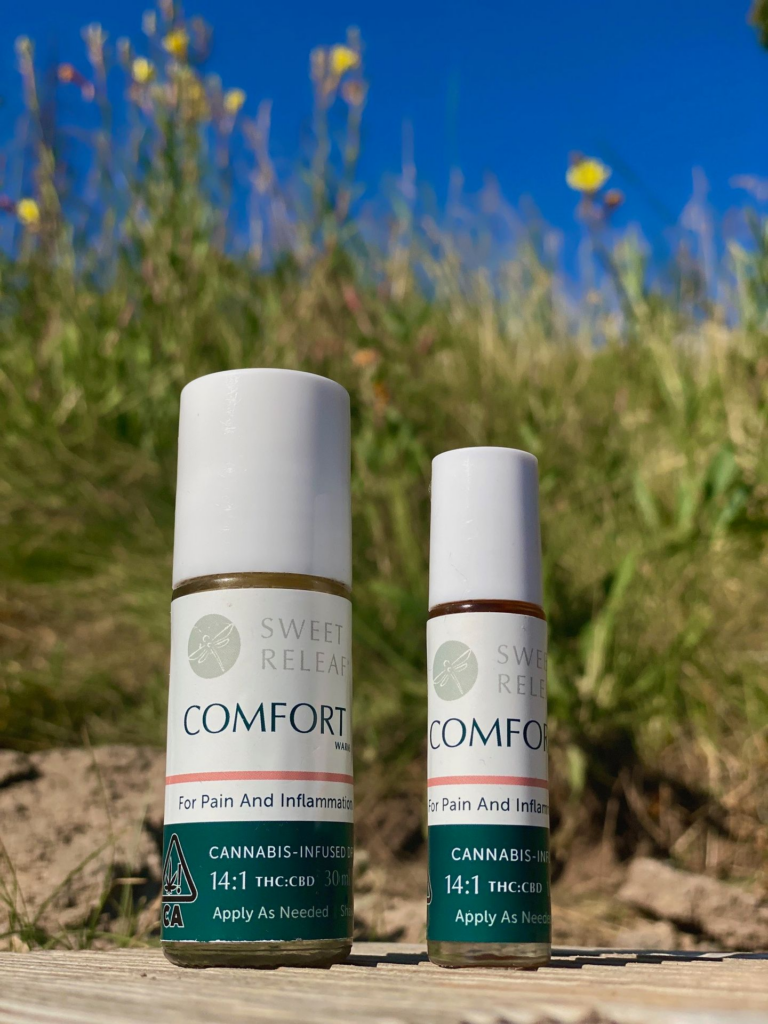
Before movement, the goal isn’t to numb the body, it’s to free it up.
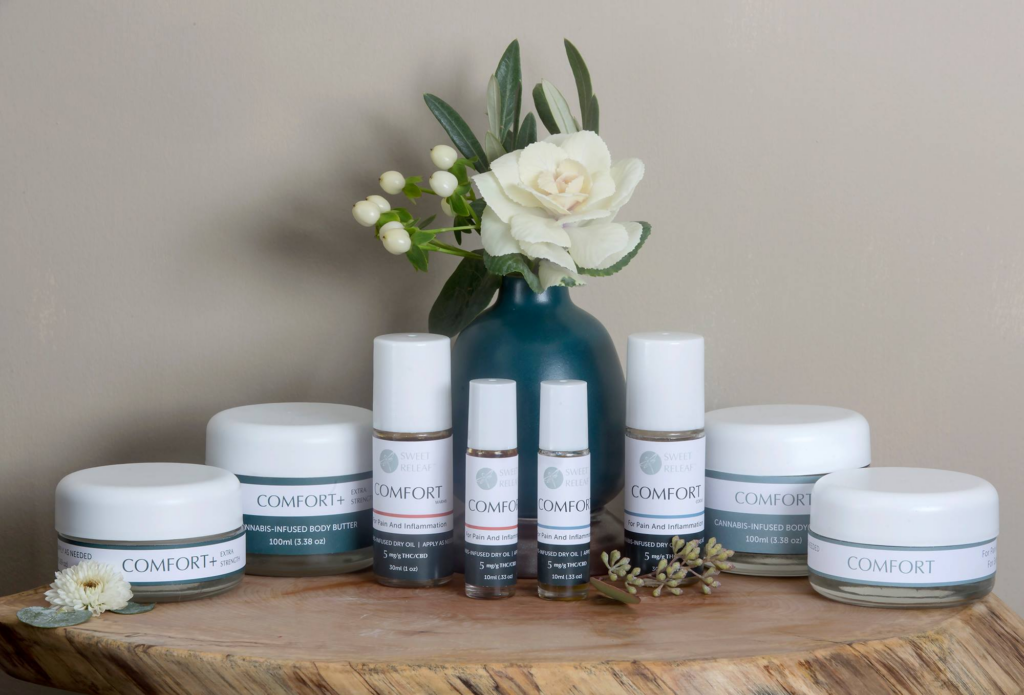
That’s where our Comfort Cools and Comfort Warms Dry Oils come in.
- Roll-on application, no mess, no buildup
- Cooling or warming sensation depending on what your body needs
- Helps muscles relax and move more freely
And most importantly:
No cognitive impact. You stay sharp. Present. In control.
Post-Game: Deep Recovery Without Pills
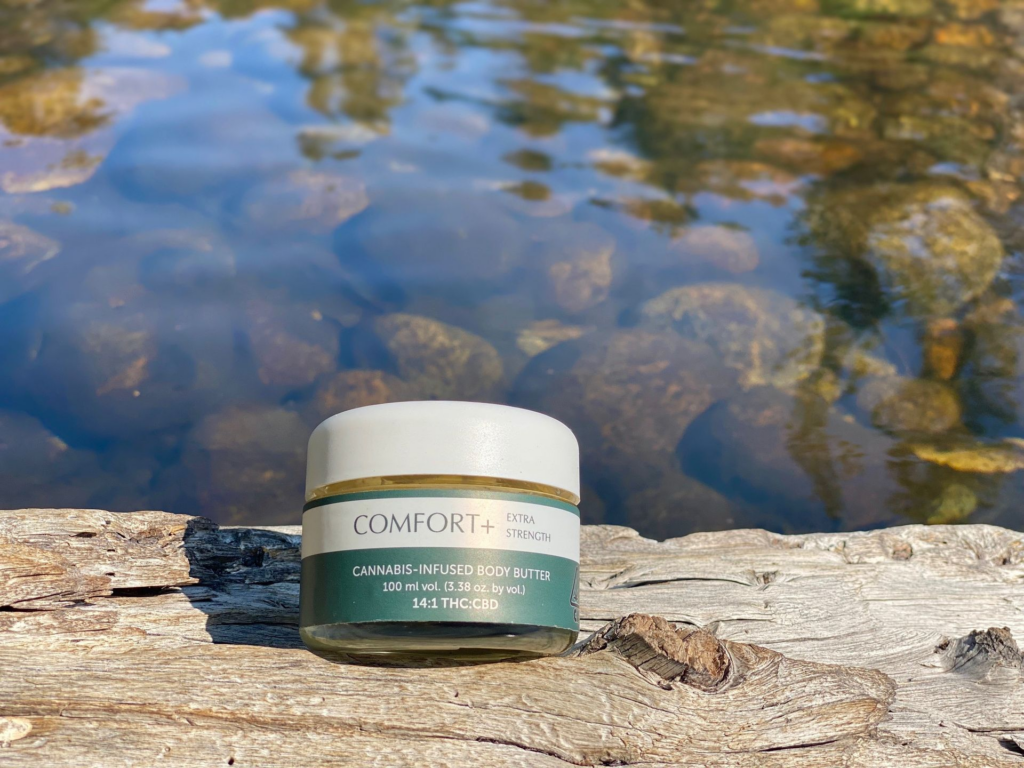
After the work is done, recovery becomes the priority.
That’s where Comfort+ Body Butter really shines.
We built it as an emulsion, part water, part oil, which allows it to absorb deeper and faster than traditional salves.
- Penetrates beyond the surface
- Targets inflammation and soreness
- Leaves the skin feeling nourished, not greasy
It’s the kind of product you reach for when your body is talking to you, and you actually want to listen.
So… Should THC Still Be Banned In Sports?
Safety and fairness matter, no one wants impaired athletes competing in high-risk environments.
But the current system still relies on outdated assumptions, blunt testing methods, and a one-size-fits-all view of THC that doesn’t reflect how it’s actually used today.
We’re grouping all THC together, even though delivery method changes everything. We’re testing for presence, not impairment. And in many cases, athletes are being judged for what they did days ago, not how they perform in the moment.
So the question naturally shifts: should rules focus on impairment instead of presence?
That’s where things are heading. Not toward removing rules, but refining them. Separating use from abuse. Understanding that not all THC affects the body the same way.
If you’re looking for relief without risking performance, clarity, or compliance, there are smarter options.
Sweet Releaf’s high-THC, non-psychoactive topicals stay local, no bloodstream, no high, no interference.
Try the Comfort+ Body Butter post-activity or Dry Oils before movement, and experience what targeted relief is supposed to feel like.
Find Sweet Releaf at a dispensary near you and see how your body responds.
Disclaimer:
This article is for informational purposes only and isn’t medical advice. Sweet Releaf products are designed to support comfort, not to diagnose or treat medical conditions.
Everyone’s body is different, so results can vary. If you have a medical condition or are taking medications, it’s always a good idea to check with your healthcare provider.